Acting work, far from the spotlight's glow, is a profession of high physical and mental wear and tear. From the pressure of an audition to the fatigue of an eight-hour rehearsal, the performer's body is their primary and most vulnerable tool. This article analyzes the occupational risks of acting from a technical perspective, using 3D modeling to identify critical points on stages and sets, and proposing ergonomic solutions that improve safety without sacrificing artistic expressiveness.
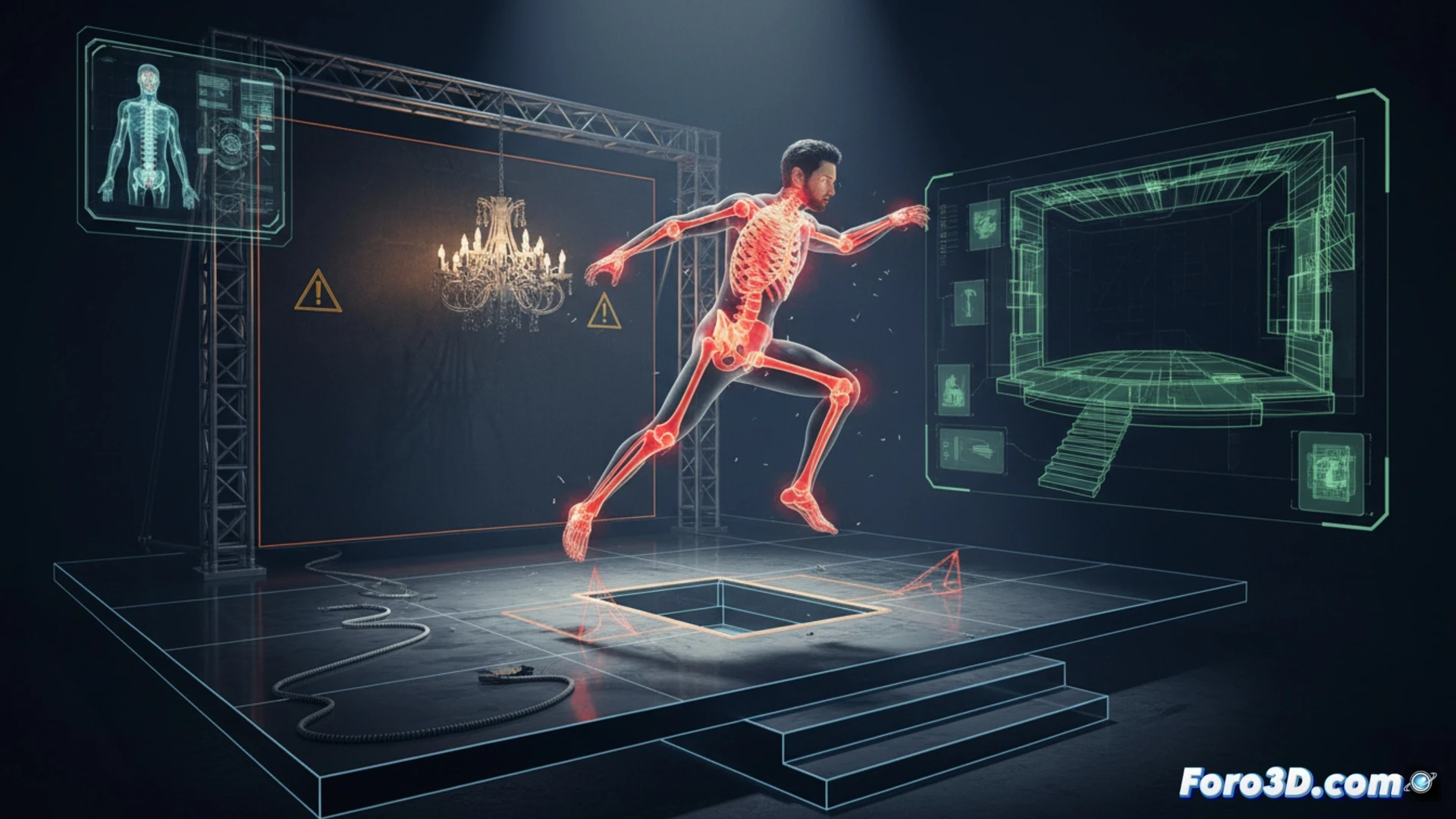
Risk modeling: forced postures and fall trajectories 🎭
3D visualization allows for precise simulation of the most dangerous areas on a theater stage or film set. Using animation software, we can map high-traffic zones, identify obstacles such as poorly lit steps or exposed cables, and calculate potential fall trajectories. Furthermore, ergonomic modeling helps analyze forced postures during rehearsals, revealing joint angles that lead to musculoskeletal disorders. Including lighting data (color temperature and spotlight angles) allows for predicting eye strain and overheating in specific areas of the stage.
Safe stages: design as a care tool 🛠️
Integrating prevention into stage design does not limit creativity; it enhances it. By simulating in 3D the impact of irregular schedules and mental fatigue on an actor's coordination, technicians can redesign the arrangement of props or the height of platforms to minimize falls. Including interactive infographics on dysphonia and exposure to chemicals in makeup allows for adjusting ventilation and vocal rest protocols. The result is a more humane workspace, where 3D technology becomes the performer's best ally.
How can 3D simulation predict and mitigate less obvious physical risks for actors, such as cumulative muscle fatigue or repetitive strain injuries, during virtual rehearsals of complex set designs?
(PS: Modeling an audience in 3D is easier than the real thing: they don't complain, they don't record with their phones, and they always applaud)