The profession of massage therapist, essential in public health, hides a paradox: those who relieve others' pain accumulate a high risk of suffering severe musculoskeletal disorders. Recent epidemiological data indicate that 70% of these professionals will suffer from wrist tendinitis or chronic low back pain within five years of practice. Forced postures, repetitive manual pressure, and static load on the spinal column turn this profession into a critical case study for ergonomics and health prevention.
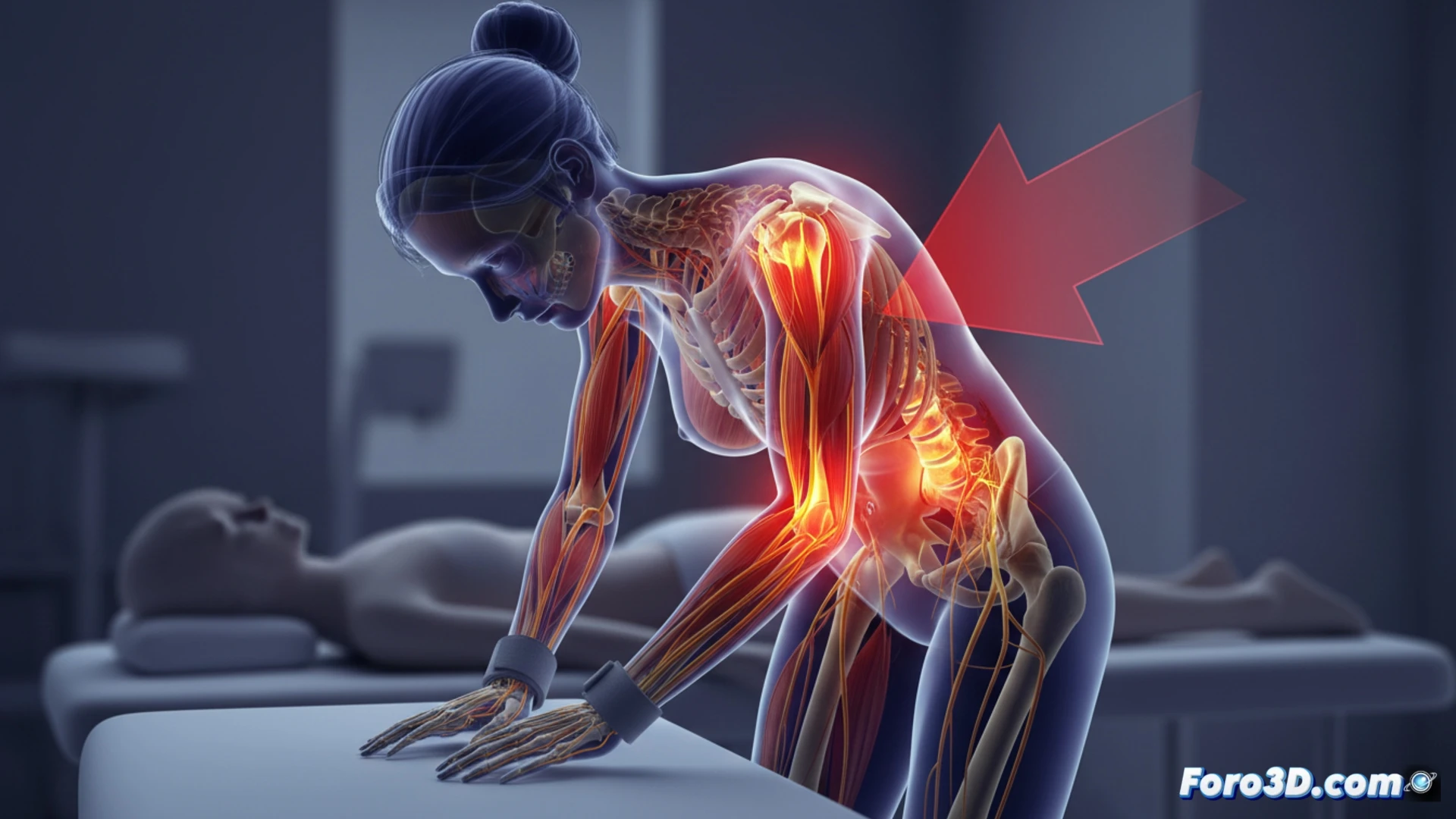
Heat map of incidence: wrist, shoulder, and lumbar spine 🧠
3D visualization allows identifying critical overload points. The biomechanical model reveals that the wrist supports an average pressure of 45 Newtons per minute during a back massage, while the shoulder rotates in forced abduction exceeding 90 degrees. The lumbar spine, meanwhile, accumulates a compressive load of up to 3,200 Newtons when leaning over the table without support. These data, represented in interactive heat maps, show a direct correlation between exposure time and the onset of rotator cuff tendinitis and carpal tunnel syndrome. Real-time simulation of forced postures allows the professional to visualize cumulative damage before it becomes an irreversible injury.
Visual prevention: the cost of healing without protection 🛡️
The comparative infographic between occupations places the massage therapist at a risk similar to that of a bricklayer regarding low back pain, but with a higher incidence of hand and wrist injuries. Physical demand stress and biological risk from contact with fluids worsen the outlook. The main ergonomic recommendation, visualized in 3D models, is regulating the table height and using elbow supports. Raising awareness through visual epidemiology not only saves joints but also extends the working life of those who care for our health.
How the biomechanical trajectories of chronic injuries in the hands and wrists of massage therapists can be visualized in 3D to design specific prevention protocols in public health.
(PS: visualizing obesity in 3D is easy; the hard part is making it not look like a map of solar system planets)