The traditional and manual craft of basketry conceals a high load of biomechanical and biological risks that often go unnoticed. Epidemiological analysis reveals that plant fibers such as wicker, cane, and bamboo are not only work tools but also vectors for cuts, punctures, and exposure to molds. The combination of forced spinal postures and repetitive wrist movements places this trade in a high-risk group for developing tendinitis and chronic lower back pain, data that requires clear visualization for prevention.
3D Modeling of Risk Zones and Incidence Data 🛠️
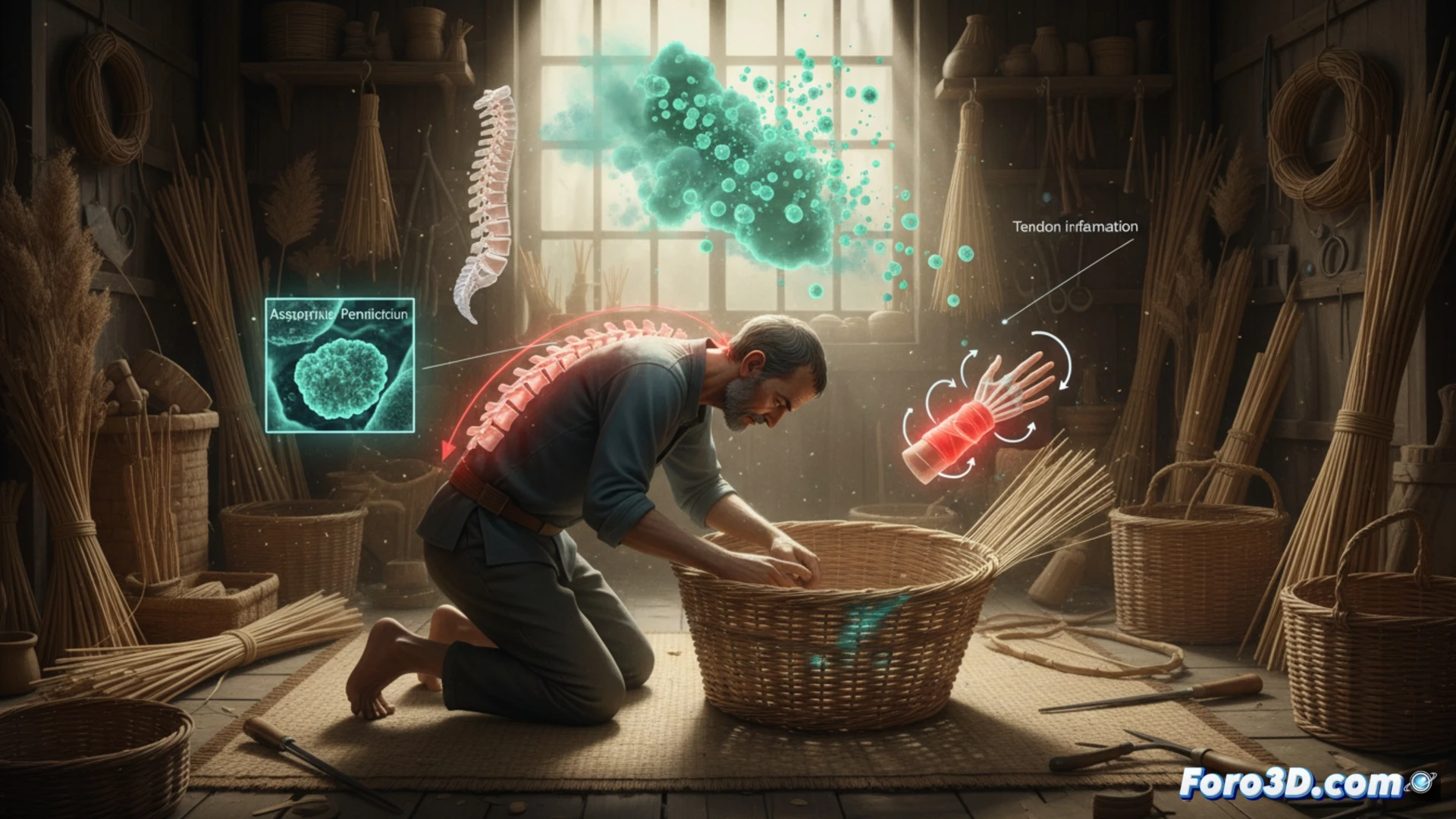
The technical proposal consists of developing an interactive 3D infographic that overlays an epidemiological heat map onto an anatomical model of the basket maker. The critical areas to highlight are the hands (due to cuts from sharp fibers and dermatitis from chemical treatments), the lumbar region (due to overexertion when soaking and handling wet bundles of up to 15 kg), and the respiratory system (due to inhalation of organic dust and mold spores). Three-dimensional models of each plant fiber will be integrated, indicating with animated markers the specific dangers of each material: bamboo for its splinters, cane for its sharp edges, and wet wicker for its high allergen content. Incidence statistics will be displayed on floating panels that update as the model rotates, allowing the user to correlate forced posture with the percentage of tendinitis cases reported in occupational health studies of artisan crafts.
Visualize to Prevent: The Body as a Warning Map 🧠
Beyond cold statistics, this infographic aims for the artisan themselves to recognize their body as a real-time warning map. By animating the typical forced postures of weaving and soaking, the user can visually identify the exact moment when the spine or wrist exceeds the safe angle. The tool not only informs but also educates on gesture correction, transforming abstract epidemiological data into a visual prevention guide that can reduce the incidence of respiratory allergies and musculoskeletal injuries in this ancient craft.
How can a 3D infographic detail the critical postures and repetitive movements of the basket maker to anticipate musculoskeletal injuries and improve prevention in occupational public health?
(PS: at Foro3D we know that the only epidemic affecting us is the lack of polygons)