FURYU Corporation studio has launched REYNATIS, an action RPG that uses Unreal Engine 5 to recreate Tokyo's Shibuya district with stunning photorealism. The title not only bets on a dark narrative of magic and conspiracies but also turns the night rain and neon lights into an additional character. For developers, this project is a case study on how UE5 can render dense urban environments with high visual fidelity without sacrificing performance on current-generation consoles. 🌃
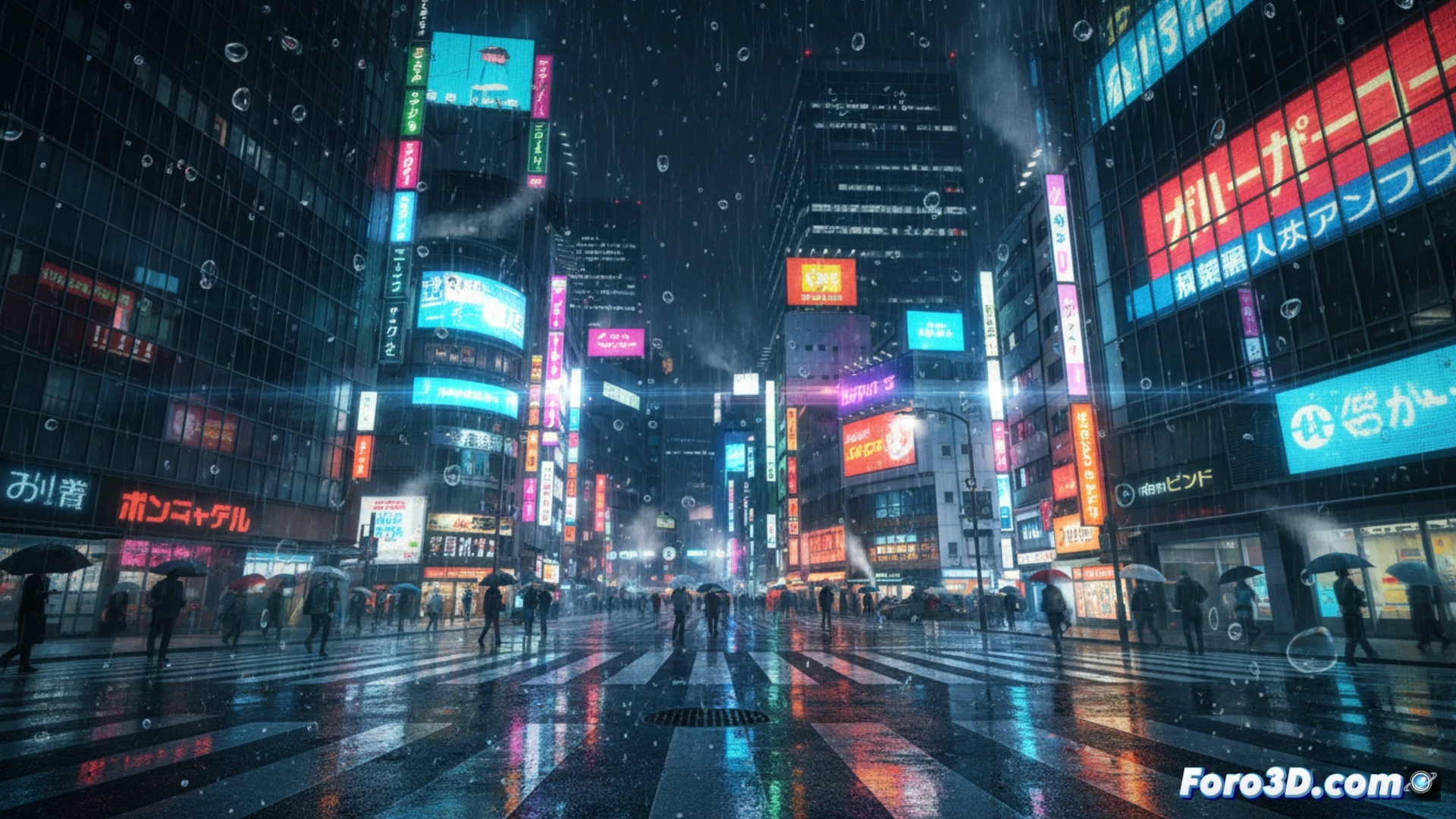
Dynamic lighting and real-time reflections with Lumen and RTX 💡
REYNATIS leverages UE5's dynamic global illumination system, Lumen, to calculate light bounce in real time, essential for simulating the glow of LED signs on wet asphalt. Unlike static baking techniques, Lumen allows moving light sources (such as car headlights or spell effects) to alter the scene without needing precomputation. Additionally, the studio has implemented Reflections using software ray tracing (enhanced SSR) and hardware RTX for puddles and reflective surfaces. The technical key lies in material optimization: high-frequency normal textures are used to simulate asphalt roughness, combined with a wetness mask map that activates specular highlights only in rainy areas. This allows neon reflections to distort realistically without saturating the rendering pipeline. For indie developers looking to replicate this effect, it is recommended to prioritize using Distance Fields instead of full RTX to maintain 60 fps on mid-range hardware, and to limit the number of point lights to fewer than 16 per scene cell.
Lessons for urban RPGs: from Persona 5 to REYNATIS 🎮
While titles like Persona 5 opted for a stylized aesthetic with baked lighting to mimic anime, REYNATIS demonstrates that UE5's realistic direction can compete with that charisma if the nighttime color palette is carefully managed. A common mistake in indie projects is saturating the scene with neon lights without exposure control; REYNATIS uses a very restrained bloom post-process and a tuned dynamic range so the human eye doesn't lose detail in shadows. For those wanting to get started, the trick is to configure UE5's Auto Exposure with a minimum value of 0.1 and a maximum of 2.0, and use Lumen with quality set to High for exteriors and Medium for interiors. This achieves the balance between spectacle and performance that this game achieves on every corner of Shibuya.
How does REYNATIS in Unreal Engine 5 balance dynamic nighttime lighting and NPC density in Shibuya without sacrificing performance on current-generation consoles?
(PS: 90% of development time is polishing, the other 90% is fixing bugs)