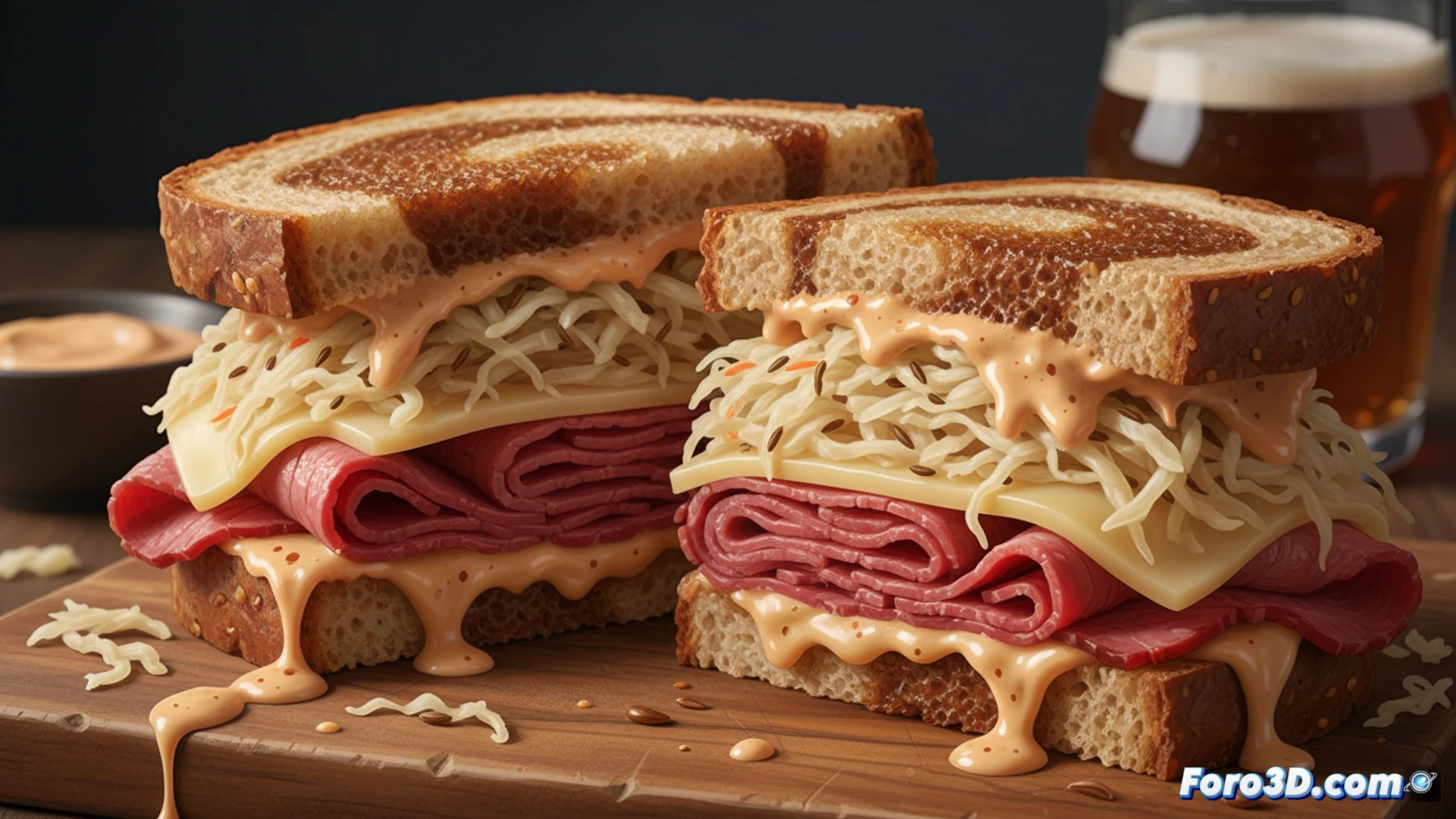
The Reuben is an American classic that doesn't aim for subtlety. Its success lies in the direct confrontation of three elements: salted meat (corned beef or pastrami), melted Swiss cheese, and tangy sauerkraut. All of this is pressed between two slices of rye bread. It's not a sandwich for the indecisive; it's a lesson in balance between salty, fatty, and fermented.
The engineering of the sandwich: how to optimize the layer of fat and acidity 🧀
In developing a Reuben, proportion is key. The rye bread must be firm to support the weight of the filling without falling apart. The Swiss cheese acts as a thermal barrier that melts at 60°C, trapping the meat's juices. The sauerkraut, for its part, must be well-drained before assembling; otherwise, it moistens the bread and breaks the structure. The Russian dressing (or thousand island) provides a fatty emulsion that binds the flavors without dominating them.
When your sandwich gives you a lesson in digestive chemistry 🤯
Eating a Reuben is like getting into a three-way argument between salt, fat, and acid. Your stomach doesn't know whether to thank you for the protein intake or ask for a truce with an antacid. The worst part is, while you chew, the rye bread crunches with the arrogance of someone who knows you'll have another bite. And yes, you will, because the controlled chaos of this sandwich is addictive.