The development of racing simulators has reached a new technical standard with Rennsport, a title that fully exploits the capabilities of Unreal Engine 5. This engine not only enables unprecedented visual fidelity but also introduces two key technologies: Nanite for geometry management and Lumen for dynamic lighting. We analyze how these tools redefine the creation of tracks and vehicles, eliminating the traditional trade-offs between detail and performance.
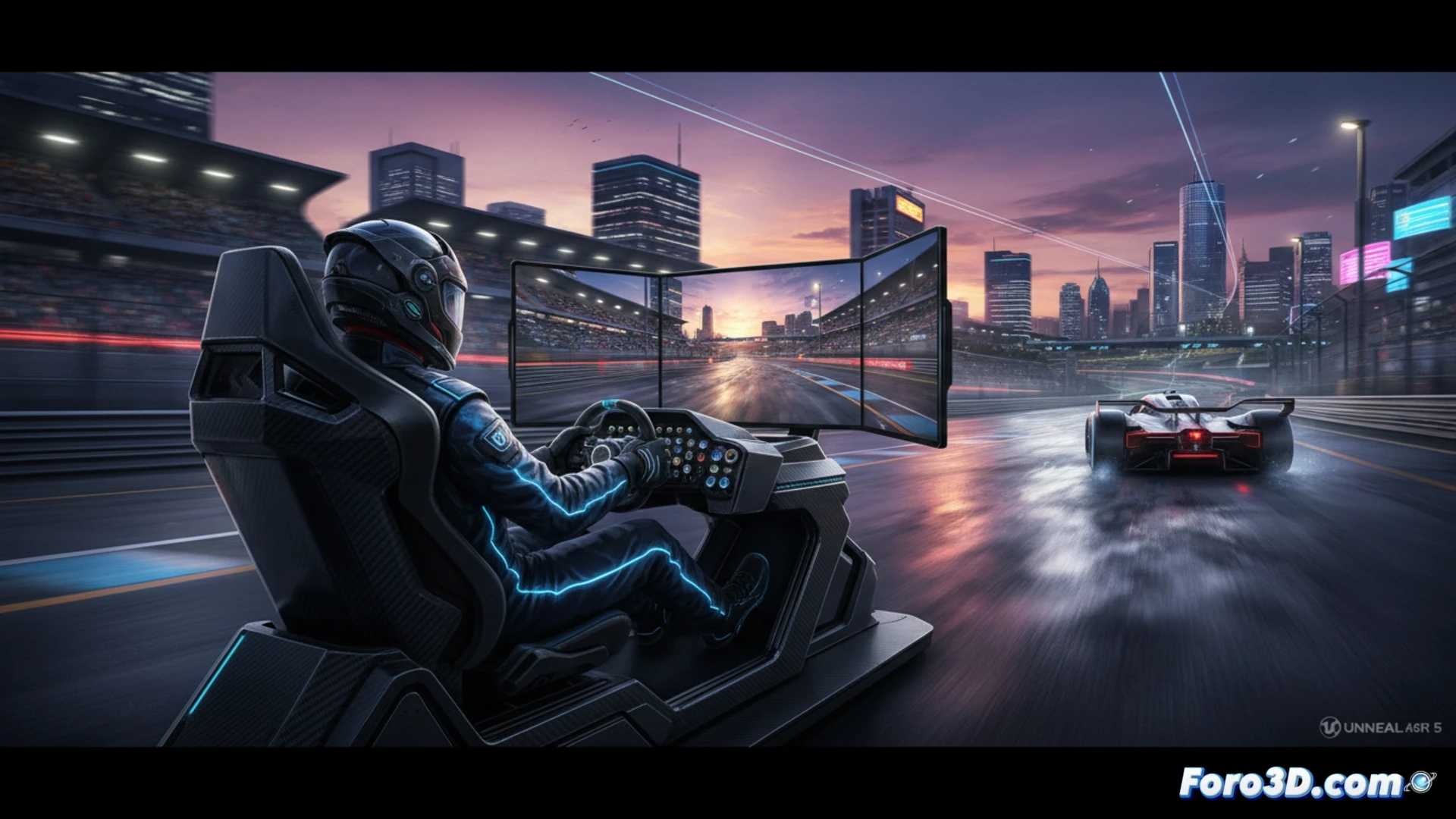
Nanite and Lumen: The technical duo behind realism 🏎️
The implementation of Nanite in Rennsport allows developers to work with highly detailed assets, such as fenders with millions of polygons, without needing to generate LODs (levels of detail) manually. This guarantees geometry without loss of detail at any camera distance, a critical factor in replays and cockpit views. Simultaneously, Lumen manages real-time reflections on lacquered car bodies and wet asphalt. Unlike planar reflection techniques or static cubemaps, Lumen bounces indirect light dynamically, adjusting the reflectivity of the environment based on the sun's position or track lights. This reduces the manual workload in tools like Maya and Substance Painter, as materials react more realistically without extensive baking times.
Optimization and future of the racing genre 🏁
The adoption of these technologies is not without challenges. The combined use of Nanite and Lumen demands robust graphics hardware, especially at stable 60 fps, an indispensable requirement in a simulator. However, Rennsport demonstrates that optimization through UE5's Virtual Shadow Maps (VSM) system can maintain smoothness without sacrificing shadow precision. For developers, this title marks a roadmap: the future of simulators no longer depends on rendering tricks, but on the correct implementation of dynamic systems that save production time and elevate the immersion of the virtual driver.
How is the balance between the visual fidelity of Nanite and Lumen and the critical real-time performance needed for a competitive racing simulator in Unreal Engine 5 managed?
(PS: game jams are like weddings: everyone is happy, nobody sleeps, and you end up crying)