The recent release of Clock Tower Rewind has reignited interest in classic survival horror, but beyond nostalgia, the project represents a fascinating case study in remastering titles from the 16-bit and 32-bit era. WayForward has used its proprietary Carbon Engine to emulate the SNES and PlayStation base, overlaying visual enhancements without altering the original gameplay. This technical approach allows the title to run on modern hardware while maintaining fidelity to the original source code, a challenge many studios face when updating old IPs.
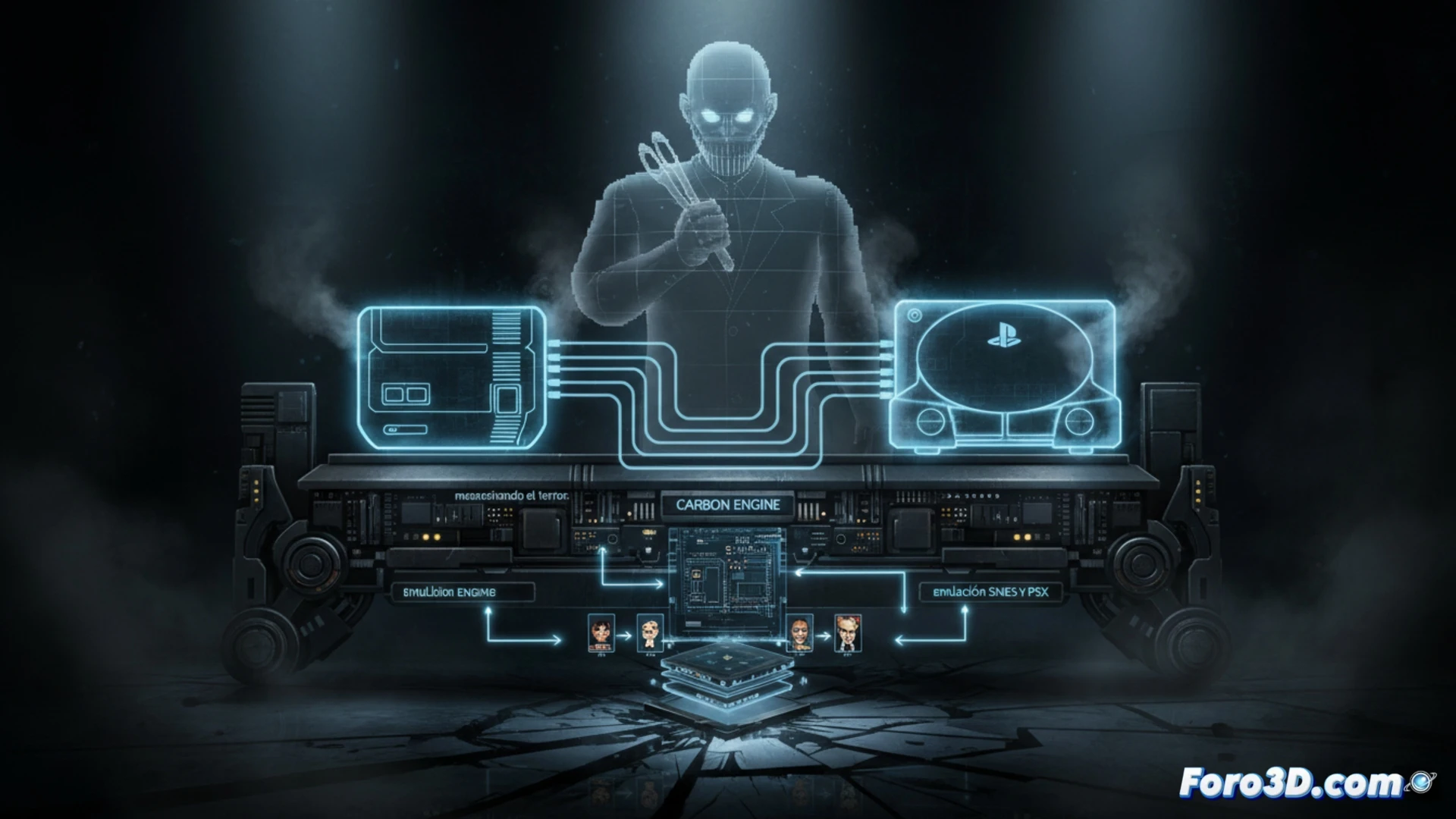
Carbon Engine: Hybrid Emulation and Graphical Enhancement 🎮
The Carbon Engine acts as an abstraction layer that wraps the original game binaries, allowing for the injection of high-resolution assets and texture reassignment without touching the base game's assembly code. For Clock Tower Rewind, the WayForward team extracted the sprites and pre-rendered backgrounds from the PS1 version, redrew and scaled them in Photoshop, and then reinserted them via the engine. The animated cutscenes, originally in low resolution, were remastered frame by frame, using AI-assisted upscaling algorithms and manual color correction. The result is a sharper image that respects the original's dark palette but avoids the typical artifacts of a simple smoothing filter.
The Fidelity Dilemma in Remastering 🧩
The biggest technical challenge was not improving the graphics, but deciding what not to improve. The pre-rendered backgrounds of the original version had a grainy, angular aesthetic that defined the game's oppressive atmosphere. By cleaning these textures in Photoshop, the team risked losing that visual texture that veteran players associate with fear. The solution was to apply a controlled noise filter over the new assets to emulate the feel of the era, a trick that demonstrates that effective technical remastering is not just about resolution, but about preserving the artistic intent of the original title.
What specific technical challenges did preserving the original Clock Tower engine present to ensure its functionality on modern hardware without altering its unique horror atmosphere?
(PS: game jams are like weddings: everyone is happy, nobody sleeps, and you end up crying)