The remaster industry often sacrifices the original visual identity in pursuit of superfluous realism. We Love Katamari Reroll+ Royal Reverie breaks that trend by demonstrating that a technical update doesn't have to betray a game's soul. Developed on Unity, this project is a case study on how to preserve a simplistic, surreal geometric style while optimizing textures, post-processing, and performance.
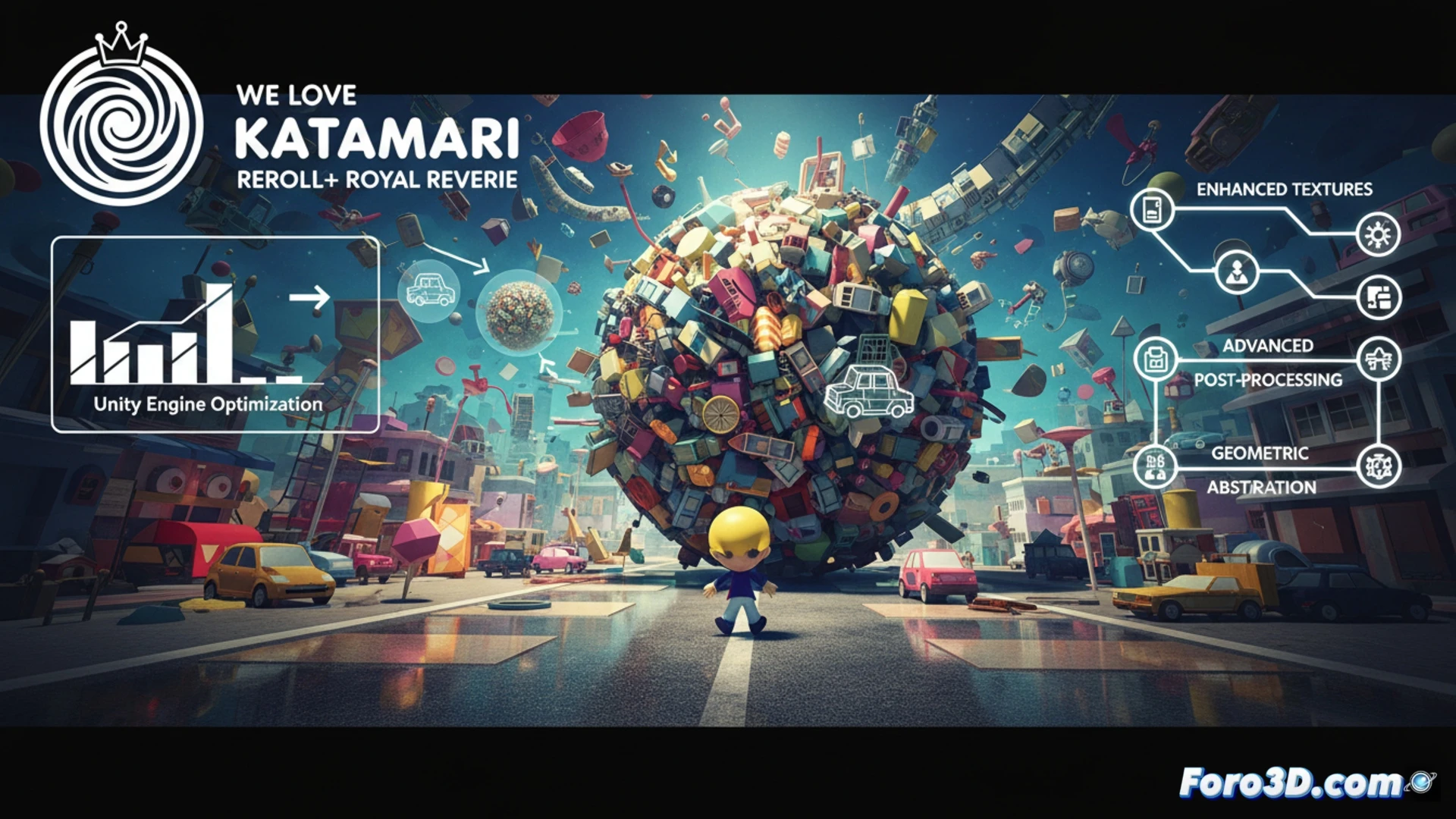
Asset pipeline and technical decisions in Unity 🎨
The workflow for this remaster begins in 3ds Max, where the original models are retopologized to maintain their characteristic simple geometry but with a more efficient polygon distribution for dynamic lighting. Subsequently, textures are redrawn in Adobe Photoshop, increasing their base resolution without adding details that break the digital clay aesthetic. The qualitative leap occurs in Unity, where the team implemented custom shaders that simulate the flat color and soft edges of the original, while post-processing is limited to subtle bloom and color correction to prevent modern effects from obscuring the artistic intent. Frame stability, key in a physics-based game like Katamari, was achieved by optimizing object culling and reducing draw calls without compromising the visual density of the scenarios.
The balance between nostalgia and technical modernity ⚖️
The most valuable lesson from this release is that the Unity engine allows enormous flexibility when the visual DNA of the original title is respected. Instead of applying generic filters or hyper-realistic textures, the team prioritized coherence: every improvement, whether in resolution or lighting, was measured against the question does this still look like a Katamari?. For developers, this remaster demonstrates that the real challenge is not technological, but one of artistic judgment. Knowing when to stop and not over-polish is, in the end, what separates a respectful remaster from an aesthetic betrayal.
What specific technical challenges in Unity did the team face to preserve the psychedelic aesthetic and original artistic fidelity of We Love Katamari without falling into superfluous realism?
(PS: shaders are like mayonnaise: if they break, you start all over again)