The announcement of Legacy of Kain: Soul Reaver 1 & 2 Remastered has sparked intense debate in the development community. Aspyr Media has taken on the titanic task of reverse-engineering a 1990s engine, using proprietary tools to extract the original logic. The result is a technical hybrid that allows players to switch in real-time between the polygonal graphics of the PlayStation era and high-definition remastered models, all without breaking the coherence of the gothic art direction that defined the saga.
Workflow: from reverse engineering to Substance Painter 🛠️
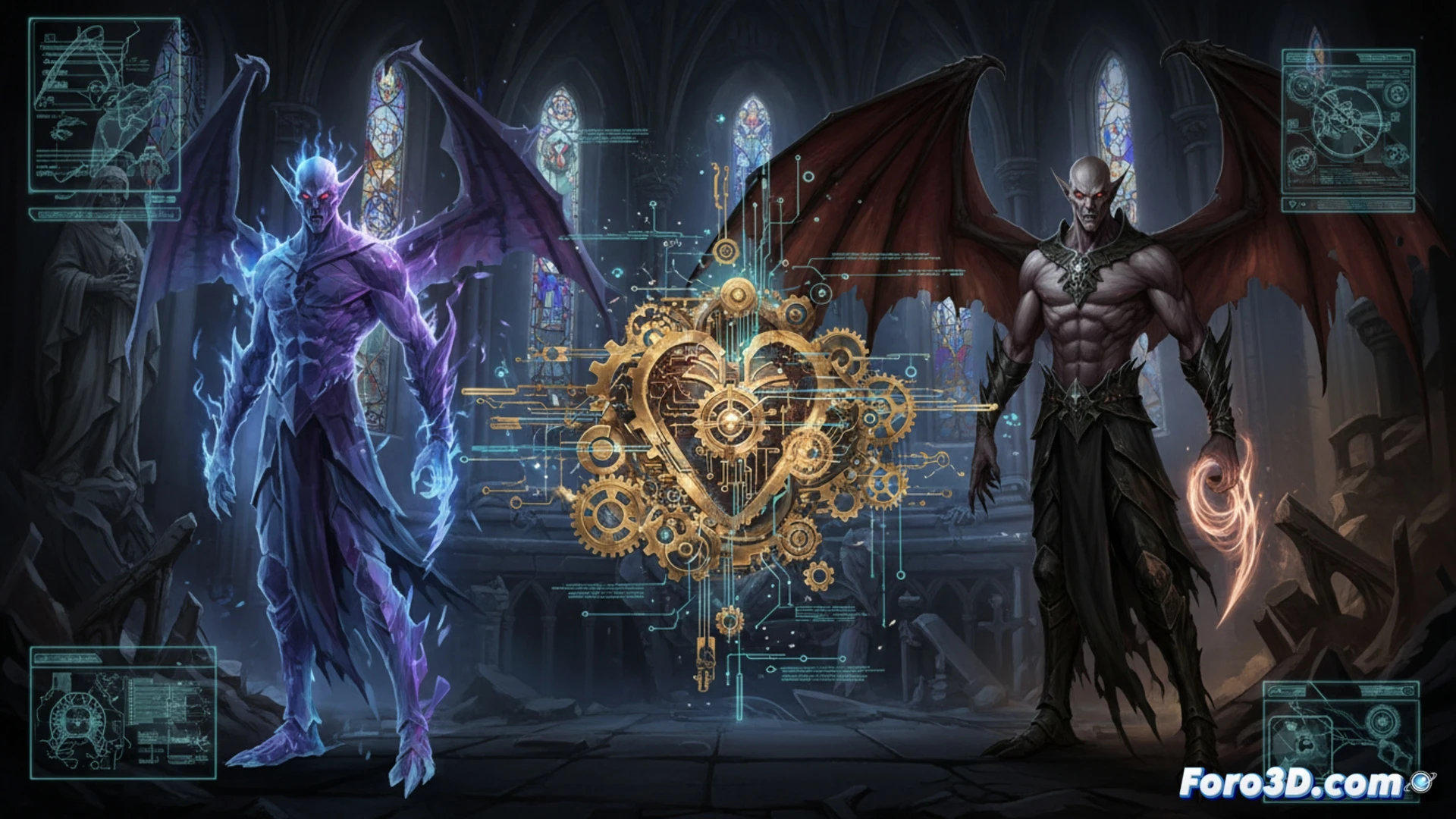
Aspyr's technical process differs from a modern remake. Instead of rebuilding the engine from scratch, the team applied reverse engineering to the original code to identify how the era's hardware managed lighting and collisions. Once the logic was mapped, artists modeled assets in Autodesk Maya, respecting the original proportions of Raziel and Nosgoth. The qualitative leap came with Substance Painter, where PBR textures simulating organic and metallic materials were applied. Dynamic lighting was superimposed on the original's fixed shadow system, creating a depth effect without losing the low-poly aesthetic that fans demand.
Preserving visual identity: the greatest technical challenge 🎨
The real challenge was not increasing resolution, but maintaining the oppressive, gothic atmosphere that the original engine achieved with extreme limitations. Aspyr documented that many environmental effects, such as volumetric fog or water reflections, relied on programming tricks from 90s hardware. Replicating those sensations with modern technology required manually adjusting each material in Substance Painter so that roughness and gloss did not betray the original style. This approach demonstrates that a successful technical remaster does not seek to erase the past, but to understand its internal logic to enhance it without betraying it.
What specific technical challenges does reverse engineering a PlayStation 1-era game engine, such as Soul Reaver's, present for preserving its gothic art direction and original atmosphere during a modern remaster?
(PS: a game developer is someone who spends 1000 hours making a game that people complete in 2)