The return of Garcia Hotspur is not just a nostalgic journey; it's a technical lesson on how to preserve an extreme visual identity. Shadows of the Damned: Hella Remastered forces us to ask how to update a graphics engine without betraying the essence of Suda51. The answer lies in a pipeline that combines the power of Unreal Engine 4 with the controlled chaos of a grindhouse aesthetic. 🔥
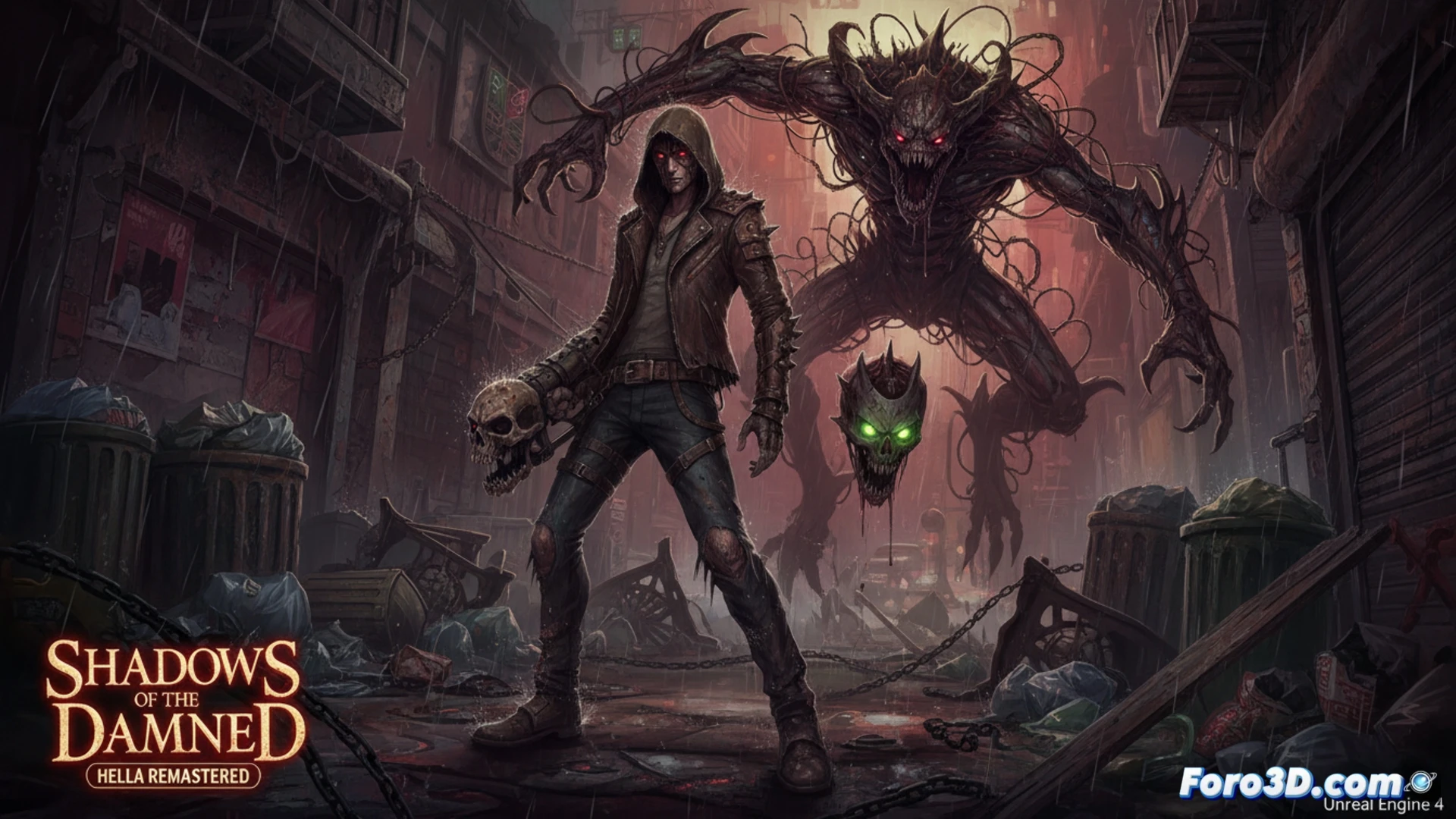
Technical Pipeline: From Maya to Post-Production in UE4 🛠️
The development team used Autodesk Maya to retouch the polygonal modeling of characters and environments, focusing on maintaining the exaggerated silhouettes that define the style. Subsequently, in Adobe Photoshop, the texture layer was worked on, but with a crucial approach: adding detail without cleaning up the dirt. The real challenge came in Unreal Engine 4, where custom shaders were implemented to replicate the high contrast and chromatic aberration of the original. The resolution of the texture maps was improved, and a dynamic grain filter was applied, making the image look sharp in 4K, while maintaining that scratched celluloid and punk-rock feel.
Visual Coherence as a Development Dogma 🎨
Many remasters fail by polishing the original work too much, stripping away the artist's personality. Here, the lesson is clear: technology must serve art, not the other way around. By maintaining saturated colorimetry and hard shadows, Suda51 demonstrates that a modern engine like UE4 can render intentional imperfections. For any developer, this title is a manual on how to update a game without losing its soul, prioritizing aesthetic intent over technical correctness.
As a developer, what technical and design factors in Unreal Engine 4 did you consider key to maintaining the dirty and unique aesthetic of Shadows of the Damned without sacrificing performance during its remaster?
(PS: shaders are like mayonnaise: if they break, you start all over again)