In today's market, smartwatches that promise to measure blood glucose without the need for pricks are proliferating, presenting themselves as revolutionary medical devices for diabetics. However, technical research reveals that these watches lack optical or chemical sensors capable of analyzing the bloodstream. Their operation is based exclusively on estimation algorithms that interpret pulse variability, a methodology not validated for glycemic control. The absence of regulatory approval from agencies such as the FDA or EMA is a red flag for the medical community.
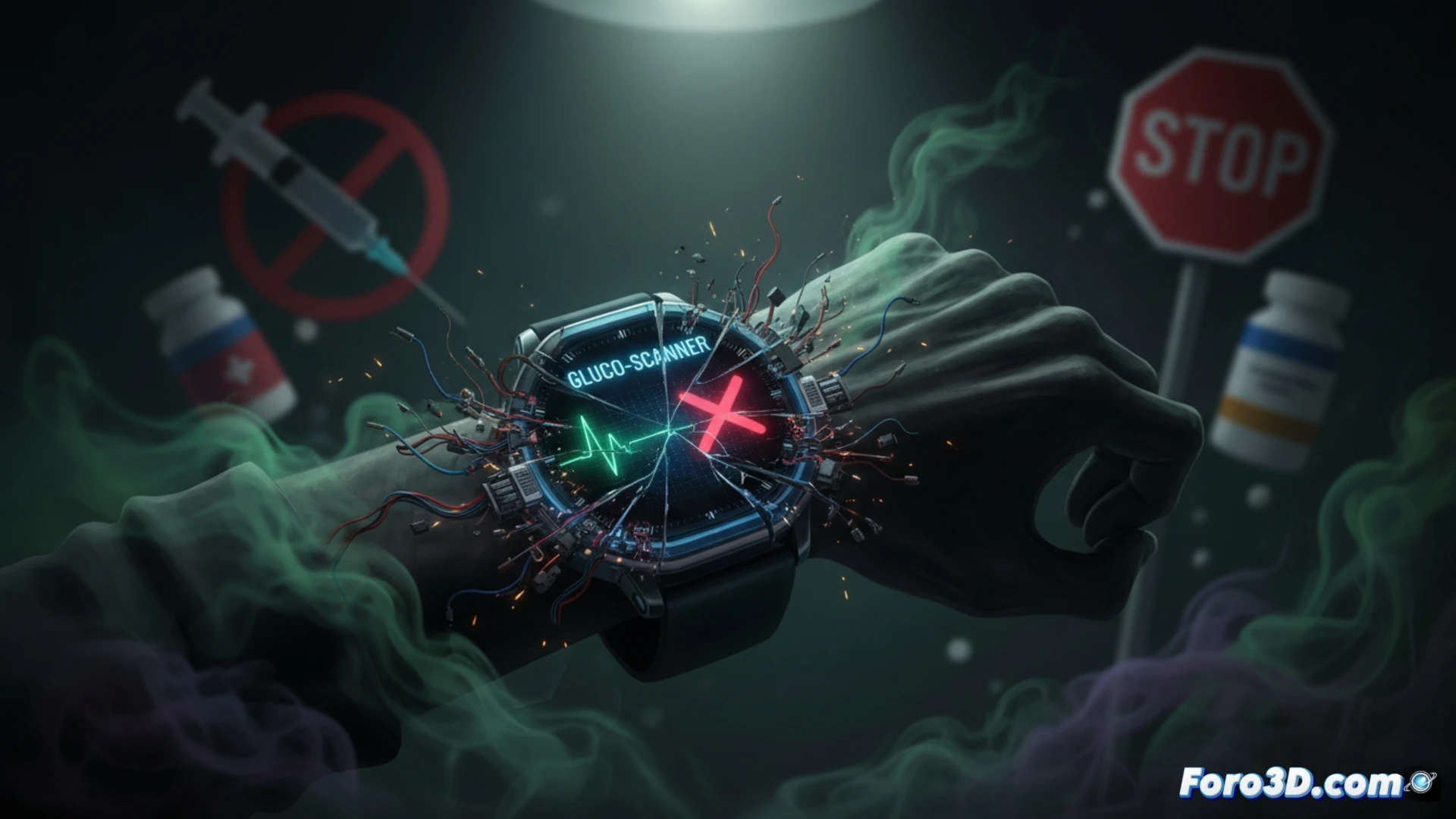
Technical Architecture: Missing Sensors and Fabricated Data 🛑
A real glucose monitor, such as continuous glucose monitoring (CGM) systems, uses an enzymatic filament inserted under the skin to measure glucose concentration in the interstitial fluid every few minutes. In contrast, fraudulent smartwatches only integrate a photoplethysmograph (PPG) to measure heart rate and oxygen saturation. There is no physical component that interacts with glucose. The algorithm trains machine learning models with pulse and movement data, generating random or weakly correlated values. In laboratory tests, these devices show errors greater than 40% compared to real blood glucose levels, a dangerous margin for insulin dosing.
Epidemiological Risk: When Technology Deceives the Patient ⚠️
Trust in these devices can trigger severe diabetic crises. If a patient adjusts their insulin dose based on a false reading of 120 mg/dL when their actual level is 250 mg/dL, the risk of ketoacidosis or hyperglycemic coma skyrockets. From a public health perspective, the mass marketing of these watches without regulatory control represents a threat to millions of people. A comparative 3D infographic would show the inside of a real CGM with its sensor filament versus the empty board of the smartwatch, illustrating how the lack of specific hardware turns these devices into mere statistical toys.
Is it technically viable for a smartwatch to measure interstitial glucose with clinical accuracy without invasive calibration, or does the lack of validation by regulatory bodies turn these devices into a public health risk?
(PS: public health graphs always show curves... just like ours after Christmas)