A recent study has revealed that it is possible to restart the functioning of muscle stem cells through an artificial stimulus, enabling them to recover their regenerative capacity lost with age. This finding, focused on activating a specific molecular pathway, promises to counteract sarcopenia and repair damaged tissue. For biomedicine, this opens a direct door to the development of advanced therapies where three-dimensional visualization is key.
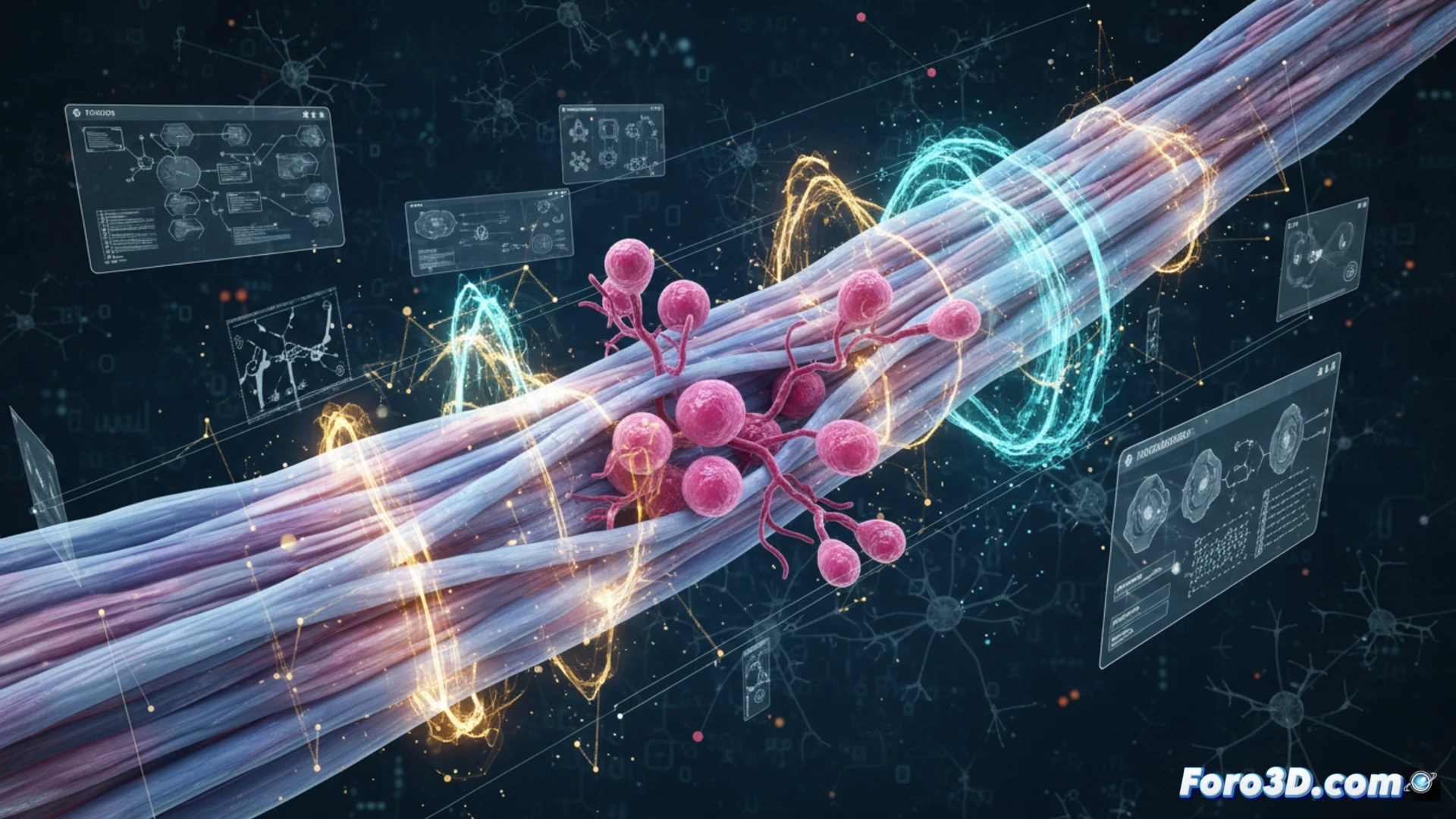
3D Visualization of the Molecular Pathway and Tissue Regeneration 🧬
3D modeling of muscle tissue allows for precise representation of how stem cells interact with their microenvironment. Through volumetric simulations, researchers can observe in real time the effect of the artificial stimulus on the rejuvenating molecular pathway. These digital representations facilitate the study of sarcopenia in complete anatomical models, showing the loss of muscle fibers and subsequent cell repopulation. Furthermore, 3D bioprinting of cellular scaffolds could be integrated with this data to test personalized therapies, accelerating the design of treatments against muscle degeneration.
Towards Personalized Regenerative Medicine 🎯
The ability to rejuvenate muscle stem cells represents not only a biological advance but a paradigm shift in therapy planning. Thanks to 3D tools, specialists can preview the response of aged tissue before applying any intervention. This makes anatomical modeling an indispensable ally in combating sarcopenia, allowing for adjustments in dosages and administration routes with previously impossible precision. The fusion of molecular biology and three-dimensional visualization brings us closer to a future where aging does not mean losing mobility.
How could 3D modeling of the muscle extracellular matrix simulate the microenvironment needed to reactivate stem cells and reverse sarcopenia in computational models?
(PS: and if the printed organ doesn't beat, you can always add a little motor... just kidding!)