A museum of air-raid shelters preserves the memory of those who sought refuge. But there is another reality: thousands of people sleep under tarps or in basements without water. The paradox is evident. While we honor historical drama, we ignore current suffering. The proposal is clear: integrate a module on contemporary shelters that links memory with social action.
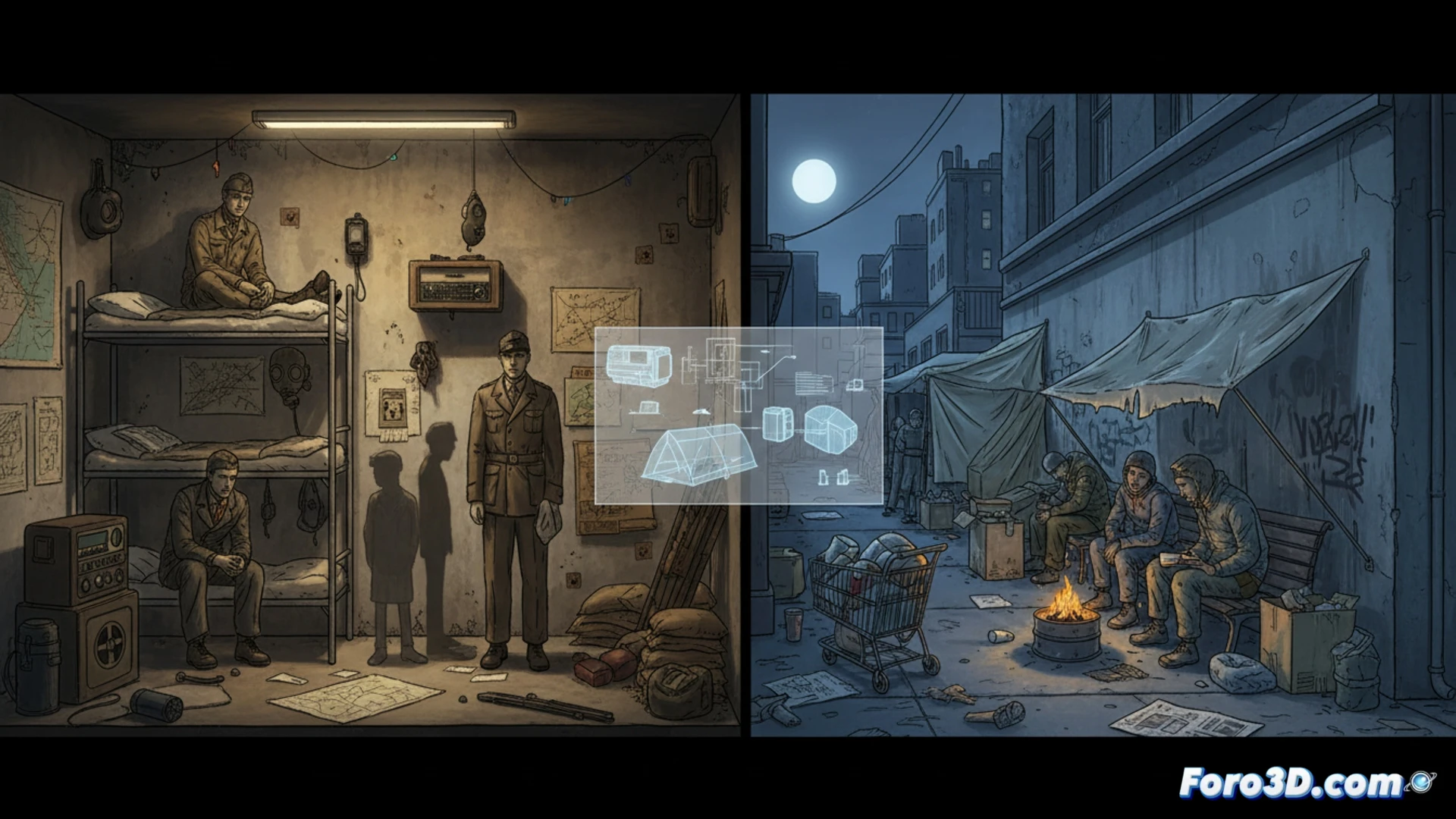
Augmented reality sensors for a living museum 🏛️
The proposed module can use simple technology: proximity sensors and interactive screens. Upon passing, a simulation of a modern shelter is activated: a tent in a park or an improvised storage room. Real-time data on homeless people or nearby shelters. It is not a static exhibition, but a system that updates figures and maps, connecting the visitor with immediate help resources.
The most expensive shelter in the world: your own office 💼
Of course, we could also add a module on the luxury air-raid shelter that some sell online: with a bar, cinema, and king-size bed. Because nothing says preparation for the end of the world like having a bunker with air conditioning while others take refuge in a doorway. Perhaps the next step is a shelter museum with two wings: one for history and another for hypocrisy.