The Guardia Civil urgently needs to upgrade its maritime surveillance to curb drug trafficking along the coastline. The increase in drug shipments using fast boats demands a technological leap combining long-range radars, surveillance drones, and high-speed patrol boats. Without these resources, agents operate at a disadvantage against well-equipped organizations.
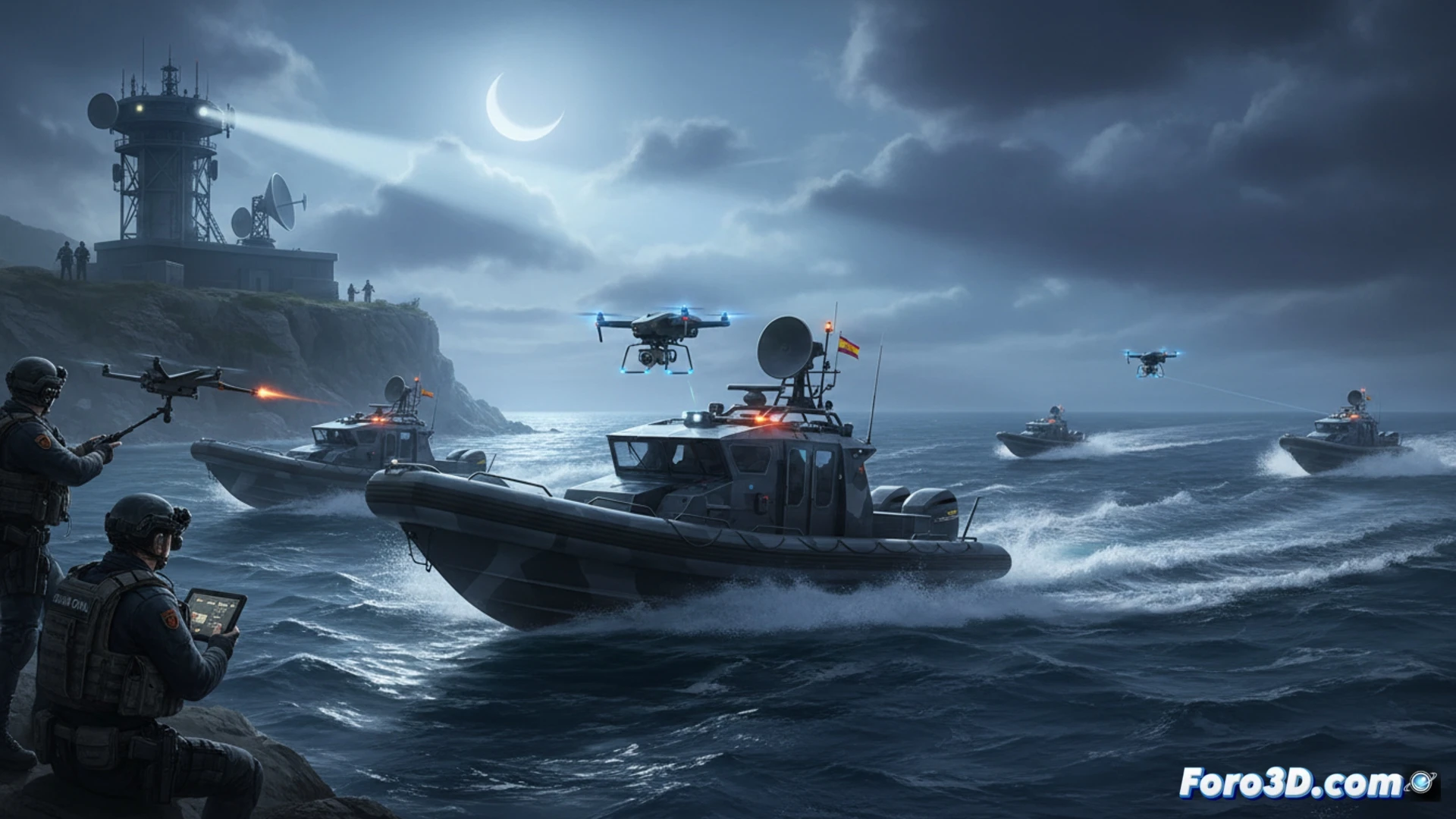
Integration of sensors and unmanned platforms 🚁
The technical proposal involves installing X-band radars at strategic coastal points, capable of detecting small boats up to 30 nautical miles away. This would be complemented by fixed-wing drones with 8-hour autonomy and 15-meter interceptor patrol boats with 2,000 HP engines. The system must integrate data in real-time to coordinate interceptions. The estimated cost is around 40 million euros, a viable investment compared to losses from seized drugs.
Or that, or we rent them a kayak with GPS 😅
Because, of course, while drug traffickers use semi-submersibles and racing boats, agents sometimes patrol with zodiacs that look like they came out of a cologne advertisement. If there's no budget for radars, at least give them a walkie-talkie with new batteries. And if that fails, they can always ask fishermen to alert them when they see a suspicious boat. But hey, don't forget to pay for the coffee.