The manga Hana yori Dango, created by Yoko Kamio, is a benchmark of 90s shojo that stands out for its strong emphasis on character design and fashion as a reflection of status. The uniforms of Eitoku Academy, the evening gowns, and the voluminous hairstyles of the era not only define the characters but also narrate a class war. For a 3D fashion and textile artist, this material offers a perfect field of study on how clothing can communicate power, rebellion, or vulnerability.
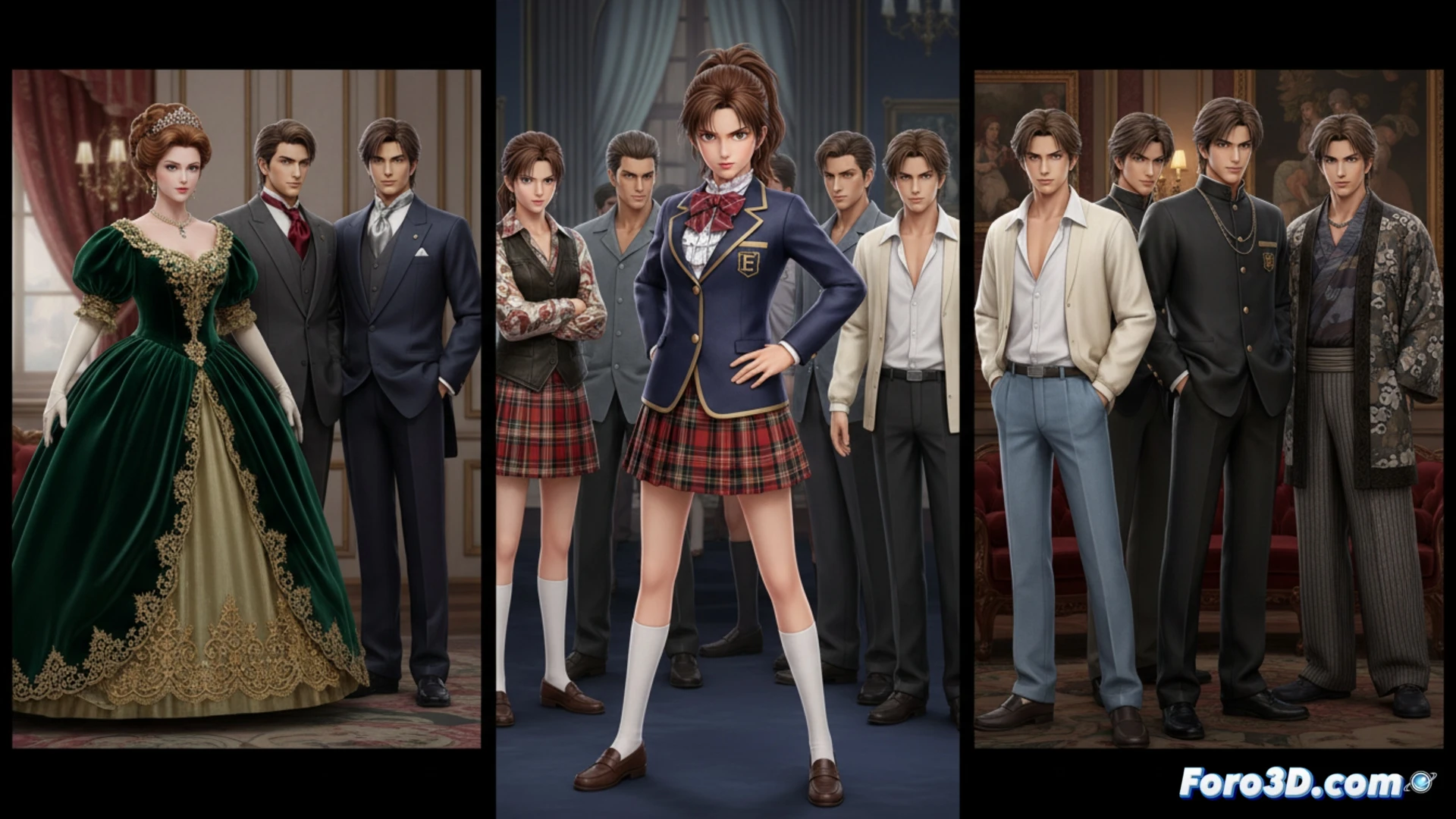
Fabric simulation and accessory texturing at Eitoku Academy 🎨
The academy uniform, with its navy blue jacket, red tie, and pleated skirt, is an ideal exercise for simulating rigid and semi-rigid fabrics in software like Marvelous Designer or CLO 3D. The key is capturing the precise drape of the pleated skirt, which must retain volume without being static. For accessories, such as the gold brooches of the F4 group, it is recommended to use PBR texturing with high roughness and metallic maps to simulate the shine of metal. The hairstyles, with long bangs and marked waves typical of the 90s, require hair models with smooth curves and translucent materials that mimic the shine of gel or hairspray, a detail that distinguishes the high-status characters from the protagonist Tsukushi, whose simpler hair reflects her humility.
From Yoko Kamio to 3D modeling: reinterpreting textile hierarchy ✨
Kamio's style is characterized by clean lines and exaggerated silhouettes, such as broad shoulders in jackets or huge bows on party dresses. When translating this to 3D, the challenge is to maintain the drawing's exaggeration without losing physical realism. For example, reinterpreting the evening gown Tsukushi wears at the academy ball requires a silk simulation with high drape and deep folds, while the F4 boys' suits must have impeccable cuts and opaque fabrics that suggest cold power. Fashion here is not decorative: it is a visual language that marks who dominates and who challenges the established order.
What do you think about this advancement?