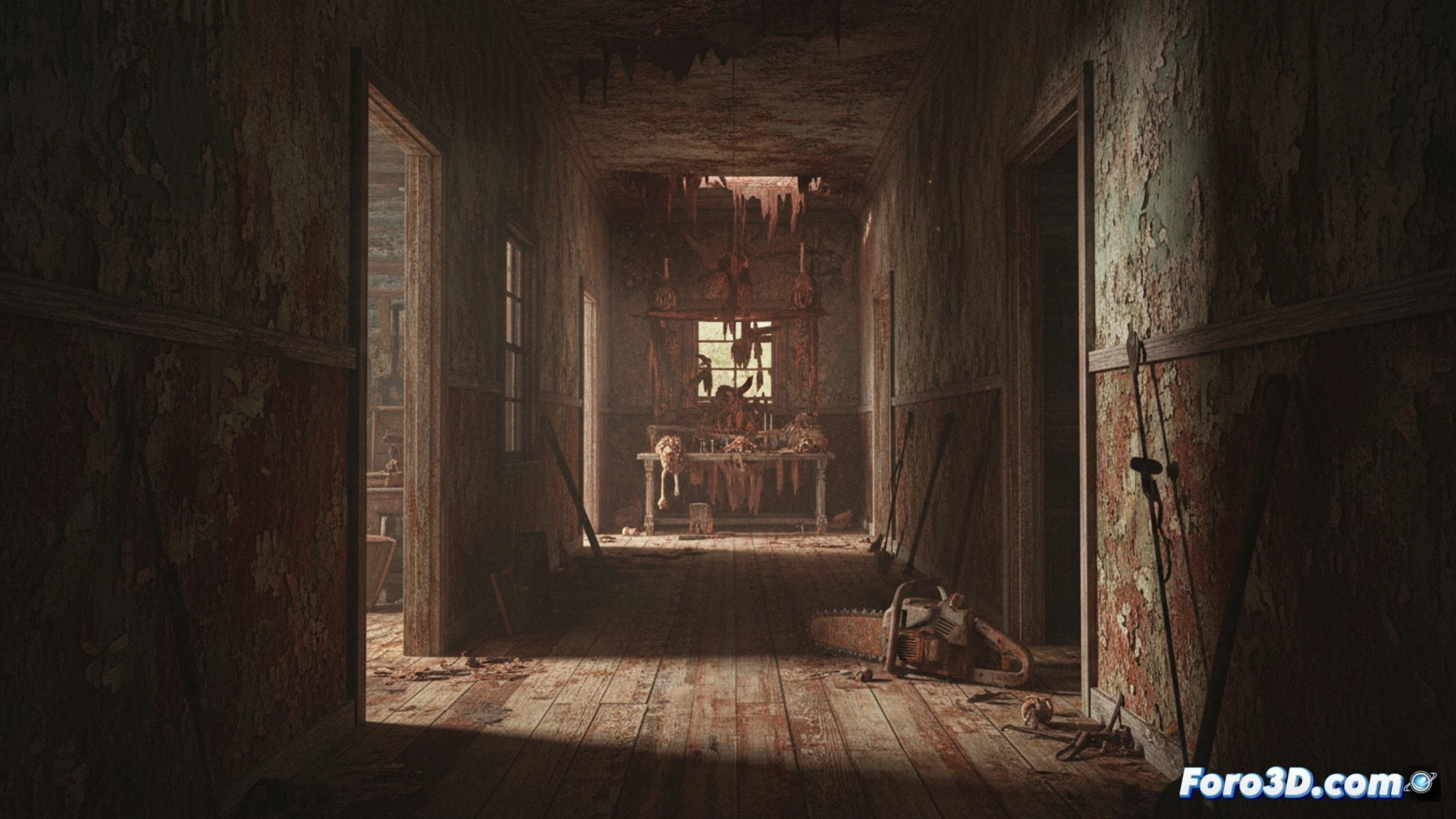
Sumo Nottingham has achieved a milestone in adapting horror licenses by transferring the grainy aesthetic of the 1974 film to Unreal Engine 4. The team not only replicated the architecture but used photogrammetry to capture every texture of rotten wood and rust from the original locations. The result is an environment that breathes the same oppression as the film, where aggressive naturalistic lighting eliminates any concession to visual comfort.
Technical Pipeline: From the 16mm Film to the Game Engine 🛠️
The process began with digitizing the real sets using photogrammetry, generating high-density meshes that were then retopologized in Maya to optimize performance in UE4. The key to photorealism lay in Substance Designer, where procedural organic materials were created to simulate the dirt and wear of the arid Texas landscape. Lighting, however, was the greatest challenge: a dynamic sunlight system with high-definition shadows was implemented, mimicking the scorching midday heat, avoiding the soft fill lights typical of other games. This decision forced designers to build levels where limited visibility and extreme contrasts were part of the gameplay.
The Lesson of Visual Discomfort as Narrative Design 💡
When comparing frames from the film with captures from the game, the fidelity is chilling. But the most interesting part is how the Sumo Nottingham team understood that horror does not depend on darkness, but on the truth of light. By rejecting beautifying cinematic lighting and embracing the rawness of real sunlight, they force the player to see every crack and every bloodstain with the same harshness they would feel if they were there. It is a technical reminder that, sometimes, the best optimization is not to smooth over reality.
How the Sumo Nottingham team managed to balance the visual fidelity of the original film with the technical demands of photogrammetry and real-time rendering in Unreal Engine 4 to maintain the grainy atmosphere of horror cinema
(PS: shaders are like mayonnaise: if they break, you start all over again)