The digital reconstruction of war conflicts has evolved into a key tool for historians and developers. Recreating a historical battle in 3D involves a rigorous technical process that merges primary sources, terrain modeling, and unit simulation. This article breaks down the workflow to achieve an accurate and educational visual representation of an armed confrontation, analyzing everything from data capture to final rendering.
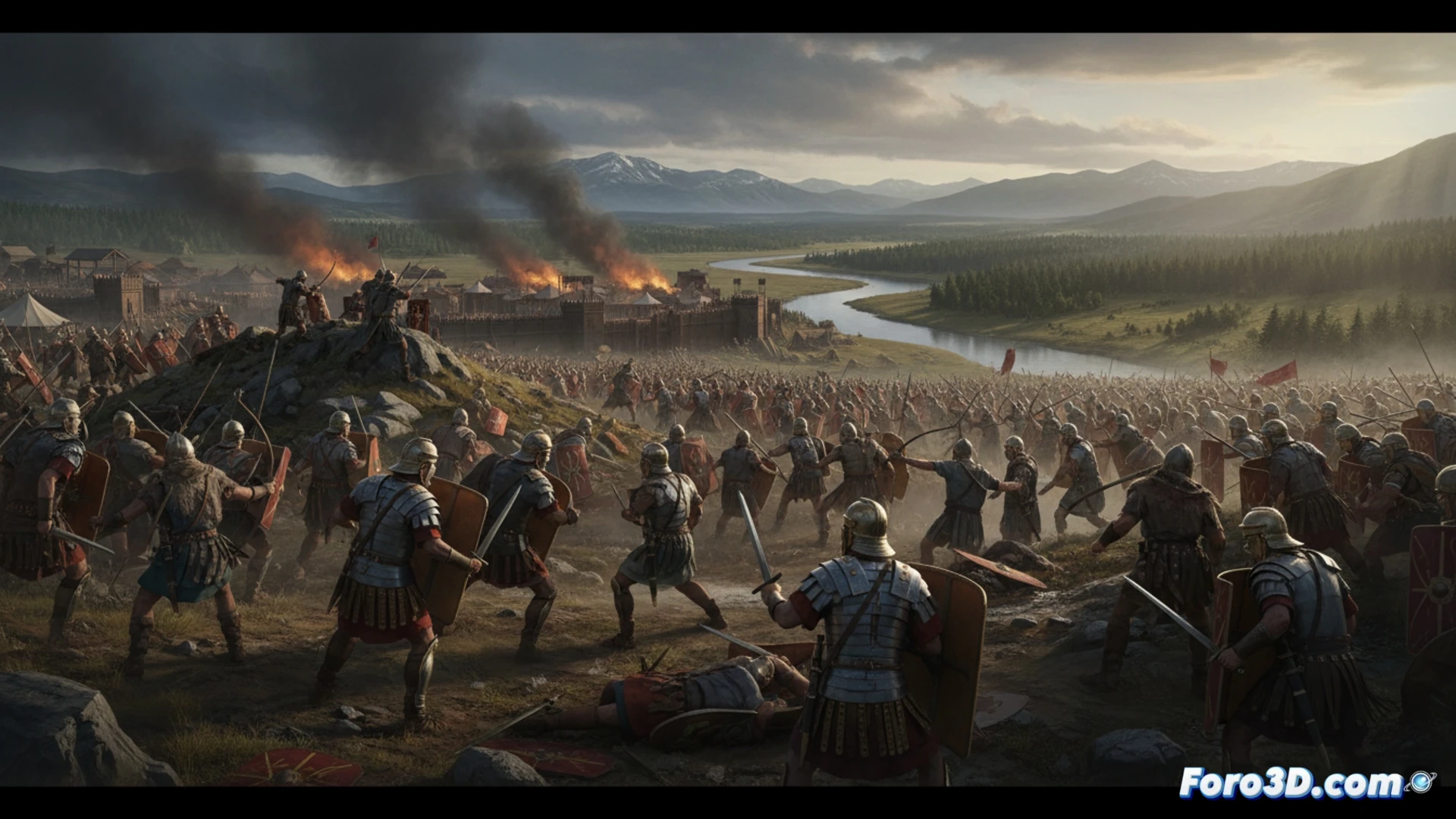
Terrain Modeling and Tactical Simulation 🎯
The first step is the analysis of historical sources: period maps, military chronicles, and archaeological studies. With this data, terrain modeling proceeds using tools like World Machine or Blender, where hills, rivers, and forests are sculpted based on the original topography. For military units and weaponry, game engines like Unreal Engine 5 are used, allowing the import of soldier models and assault machines with high fidelity. The simulation of tactical movements is achieved through AI pathfinding systems, adjusting infantry and cavalry formations according to historical records. The final rendering uses global illumination and particle techniques for smoke and gunpowder effects, achieving a realism that facilitates strategic analysis.
Outreach and Future of War Simulation 🚀
The comparison between professional military simulation software, such as VBS4, and commercial game engines reveals complementary advantages: the former offer precision in ballistics and logistics, while the latter excel in visual accessibility for the general public. The final result has direct outreach applications: virtual museums, interactive documentaries, and educational tools in history classrooms. By visualizing tactical decisions in real time, a static narrative is transformed into an immersive experience that brings the viewer closer to the reality of the conflict, demonstrating the power of 3D to preserve historical memory.
How is historical rigor balanced with creative license when modeling a 3D battle for which there are contradictory or incomplete testimonies?
(PS: at Foro3D we document war damage with the same precision as our meshes: millimeter-level)