FireFly Studios has released Stronghold: Definitive Edition, a remaster that goes beyond a simple facelift. The team has opted for a complete rebuild of the original engine, a complex technical process that allows maintaining classic gameplay while updating the software's foundations. This decision marks a crucial difference compared to other remasters that only package legacy code under layers of modern patches.
Engine re-engineering and 2D asset pipeline 🛠️
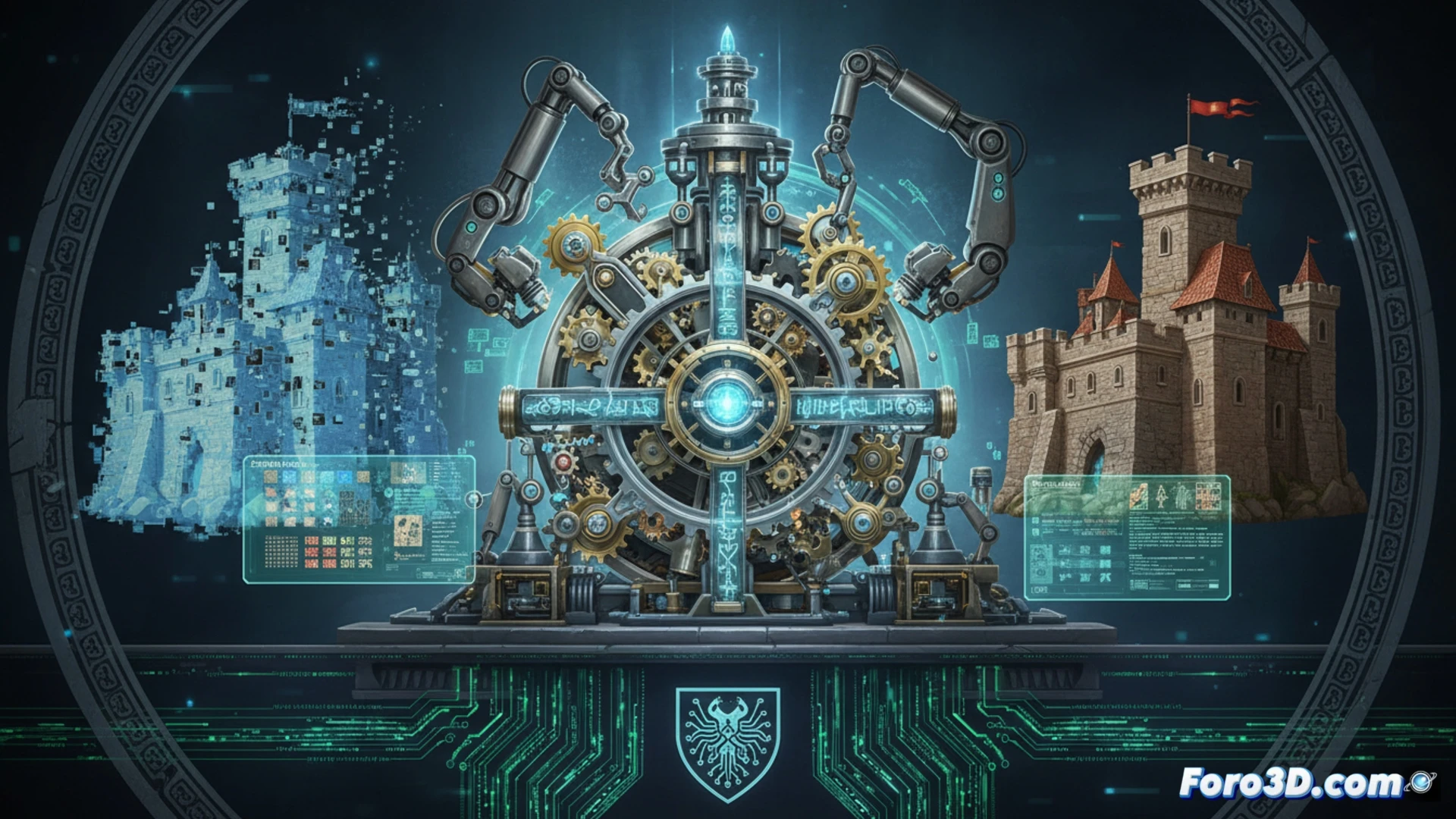
The biggest technical challenge was rebuilding the original proprietary engine, a 2D sprite system with severe resolution and color palette limitations. The developers redesigned the graphics pipeline using internal remastering tools that allow scaling the original assets without losing the pixelated artistic intent. For the new sprites, Photoshop was used as a base for creating high-resolution textures, strictly maintaining the proportions and lighting of the original art. Improving the animations required frame-by-frame work, interpolating movements that were previously abrupt frame jumps, while the new dynamic lighting was implemented on the 2D shadow system without breaking compatibility with the base game's physics.
The balance between fidelity and modernity in pixel art 🎨
The true technical test was not increasing the resolution, but preserving the visual essence of 2001. Each remade high-definition asset had to pass through a stylistic coherence filter to avoid the clean but soulless image effect that affects other remasters. The team meticulously documented the original color palette and dithering techniques to replicate them in the new renders. The result demonstrates that a successful 2D remaster depends less on the graphics engine and more on the rigor in reconstructing the original artistic pipeline.
How did FireFly Studios manage to rewrite Stronghold's 2D graphics engine to support modern resolutions and multiplayer matches without breaking the original's physics and collision logic?
(PS: game jams are like weddings: everyone is happy, nobody sleeps, and you end up crying)