The Cathedral of Saint John the Baptist in Albacete is a unique building: its construction began in the 16th century on top of an old Gothic church, but work was halted due to lack of funds. The result is a Renaissance temple that never got its monumental facade or the two planned towers, an architectural void that digital archaeology can now virtually restore.
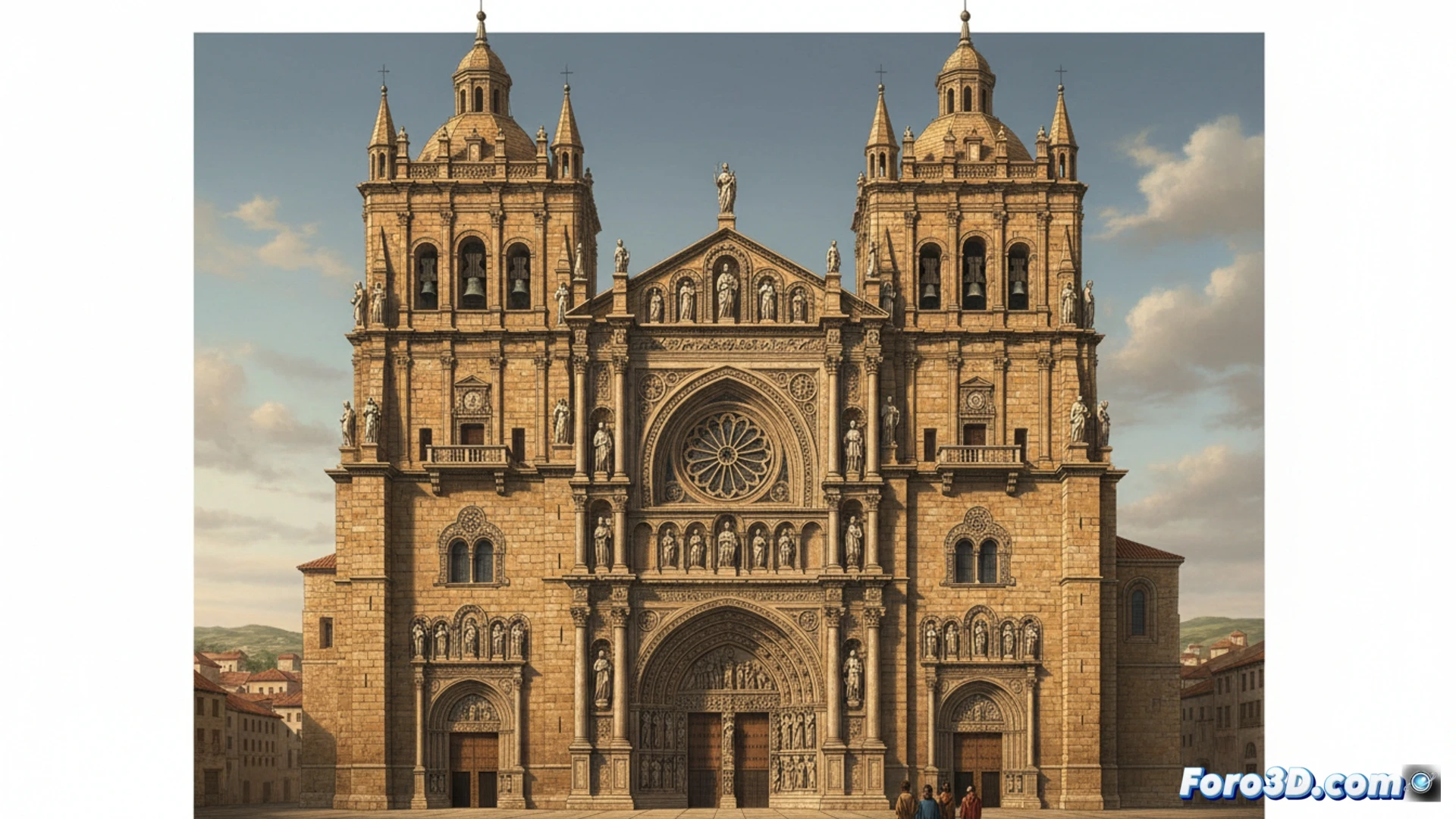
3D modeling based on 16th-century historical plans 🏛️
For our hypothetical reconstruction, we started from the original plans preserved in the Provincial Historical Archive and the documentation of the time, including the sketches of the architect Diego de Siloé. The modeling process in Blender began with the digitization of those sketches through document photogrammetry, correcting scales and proportions. The projected facade showed a large triumphal arch of three sections, flanked by two 60-meter towers, with Plateresque pinnacles and balustrades. The final visualization, rendered with dynamic lighting, allows us to appreciate the lost volume and understand how the cathedral would have transformed the urban skyline of the city.
Disseminating unfinished heritage with 3D technology 🖥️
This virtual reconstruction exercise not only satisfies historical curiosity but also serves an essential educational purpose. By showing the unexecuted original project, citizens and students can understand the ambition of the 16th century and the fragility of funding in religious architecture. 3D technology thus becomes a tool for preserving intangible heritage: that which was never built, but remains alive in documents and in our collective imagination.
What methodological criteria and historical sources were used to resolve the architectural unknowns of the lost facade of the Cathedral of Albacete in its virtual reconstruction?
(PS: If you dig at a site and find a USB drive, don't plug it in: it could be malware from the Romans.)