Mintrocket Studio has presented a technical demo that redefines historical photorealism. Using Unreal Engine 5 and a photogrammetry-based workflow, the project achieves a millimeter-accurate recreation of Joseon-era architecture in Korea. The result is not just a video game, but a digital time capsule that demonstrates technology's potential to preserve cultural heritage with unprecedented visual fidelity.
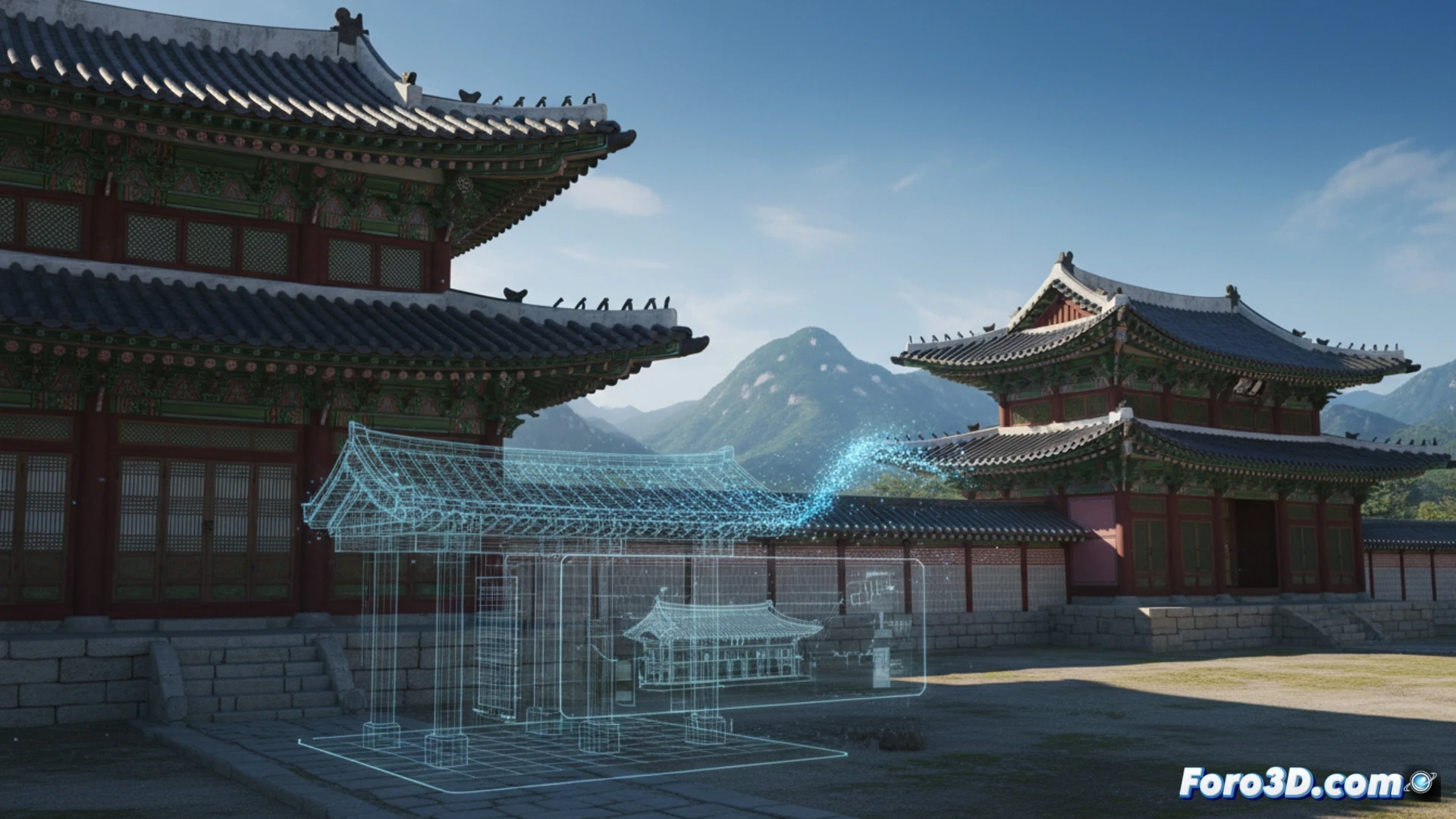
Technical Workflow: Scanning, Maya, and Lumen in Action 🛠️
The process begins with capturing the real world through photogrammetry, where hundreds of photographs of historical structures are processed to generate high-density polygonal meshes and PBR textures. These meshes are refined in Autodesk Maya, where artists correct geometry, optimize polygon counts for real-time performance, and reconstruct details lost to time. The final assembly takes place in Unreal Engine 5. Here, the dynamic global illumination system Lumen calculates sunlight and bounces naturally, eliminating the need for static bakes. This allows wood, stone, and window paper to react to light as they would on a real day in the Joseon dynasty, achieving a level of immersion crucial for digital archaeology.
The Value of Cultural Digital Twins 🏛️
Beyond the visual impact, this technique offers a revolutionary tool for conservation. The digital twins created allow historians and archaeologists to analyze architecture from any angle without risk of damaging the original. Furthermore, they democratize access to heritage, enabling anyone to virtually explore spaces that might be in ruins or restricted. Mintrocket demonstrates that the game engine serves not only for entertainment but as a virtual laboratory to preserve and disseminate history with impeccable scientific and artistic precision.
How does Mintrocket balance historical rigor with the artistic licenses necessary to optimize photorealism in Unreal Engine 5 without compromising the archaeological accuracy of the Joseon reconstruction?
(PS: and remember: if you can't find a bone, you can always model it yourself)