A heavy transport truck powered by hydrogen suffered a catastrophic explosion inside a logistics tunnel. The forensic investigation focused on the 3D reconstruction of the Type IV carbon fiber tanks to determine the root cause. By using RealityCapture for scanning the debris and VGSTUDIO MAX for volumetric analysis, characteristic micro-fractures of hydrogen-induced fatigue were identified, a critical phenomenon in composite materials subjected to high-pressure cycles.
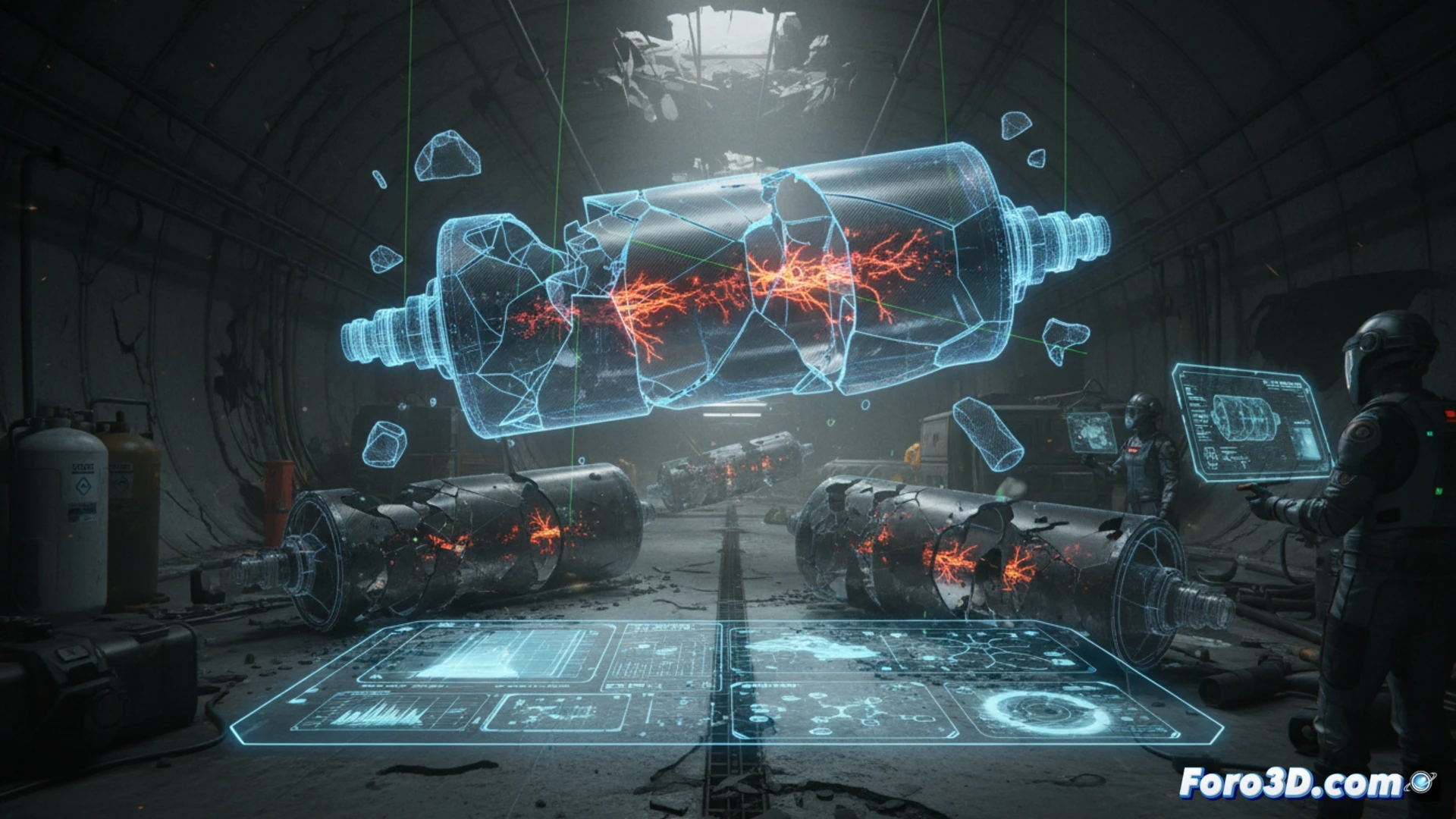
Forensic Workflow: Scanning, Fatigue, and CFD in Confined Space 🔥
The technical process began with photogrammetry of the tank fragments in RealityCapture, generating a high-fidelity mesh. This geometry was imported into VGSTUDIO MAX to perform a computed tomography analysis that revealed delaminations and micro-cracks in the epoxy matrix. With this data, a finite element model was calibrated in Abaqus to simulate the fatigue of the composite material under cyclic service pressure, correlating the location of the fractures with the ignition point. Finally, FLACS-CFD was used to model the flame propagation and overpressure inside the tunnel, validating that the hydrogen release from the cracks was the trigger for the explosion.
Lessons for Material Integrity in Hydrogen 💡
This case demonstrates that hydrogen fatigue in Type IV tanks is not only a design challenge but also an operational risk in critical infrastructures. The combination of forensic 3D scanning and multiscale simulation allows engineers to predict failure modes before they occur. For the heavy transport industry, monitoring the structural integrity of tanks through digital twins based on these workflows becomes an unavoidable necessity to prevent catastrophes in confined spaces.
How does the microstructure and manufacturing process of Type IV tanks affect the propagation of fatigue cracks during a hydrogen explosion, and how can 3D reconstruction help identify critical failure points in these composite materials?
(PS: Material fatigue is like yours after 10 hours of simulation.)