Simulating a hit-and-run is one of the most common insurance scams, but 3D forensic technology has raised the precision level in investigations. By combining photogrammetry, laser scanning, and physical simulations, experts can recreate the incident with millimeter accuracy. This article analyzes the technical pipeline used to dismantle these frauds, from scene capture to hypothesis validation, exposing the tools that turn suspicion into irrefutable evidence.
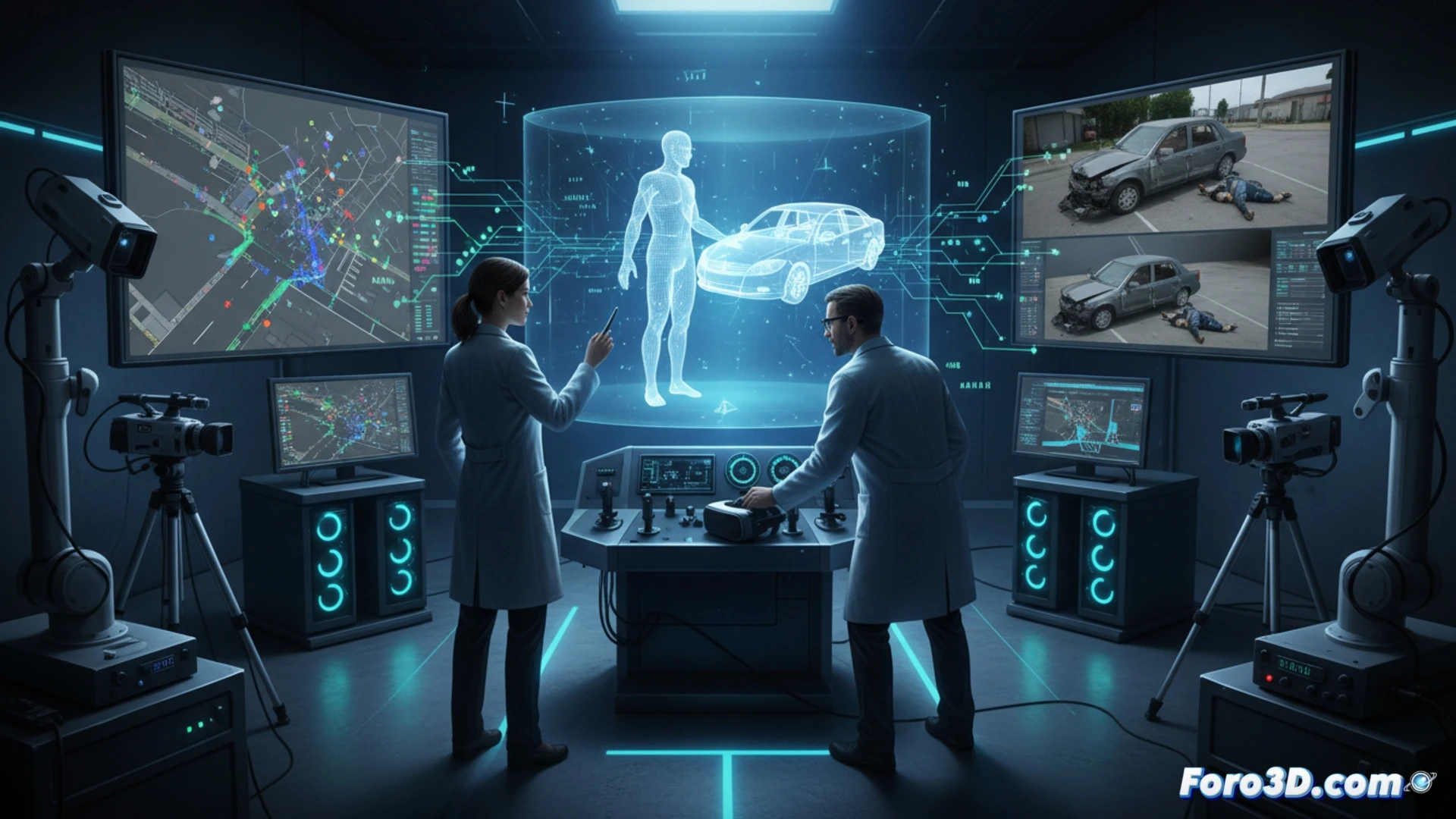
Photogrammetry and dynamic simulation at the fraud scene 🕵️
The process begins with three-dimensional documentation of the site. Drones and high-resolution cameras are used to capture multiple angles of the vehicle, the pedestrian, and the roadway. With photogrammetry software, a point cloud is generated and merged with data from a terrestrial laser scanner to obtain a high-fidelity textured mesh. Subsequently, this geometry is introduced into a physics simulation engine, such as Blender with its Bullet engine or Unreal Engine with Chaos Physics. There, the impact conditions are recreated: the pedestrian's position, the car's speed, and the body's dynamics upon being struck. Comparing the real vehicle damage with the simulated deformations allows identifying inexplicable discrepancies, such as flight trajectories that do not match the laws of physics or impact speeds that would not cause the alleged injuries.
Inconsistency as irrefutable proof ⚖️
The value of this reconstruction lies not only in the model's aesthetics but in the ability to generate objective expert reports. By contrasting the simulation with testimonies or medical documentation, the digital forensic expert can point out fracture points in the scammer's narrative. For example, a fall without lateral displacement or a glass breakage pattern incompatible with the impact angle. These tools not only save millions for insurance companies but also protect the integrity of the judicial system by turning a street theater into a lesson in applied physics.
How
(PS: don't forget to calibrate the laser scanner before documenting the scene... or you might be modeling a ghost)