The SS Ourang Medan, a Dutch cargo ship, was found adrift in the Strait of Malacca in 1947. The crew lay dead on deck, their faces frozen in absolute terror and arms outstretched as if fleeing an invisible horror. Minutes after rescue, the ship exploded and sank, taking any evidence to the bottom of the ocean.
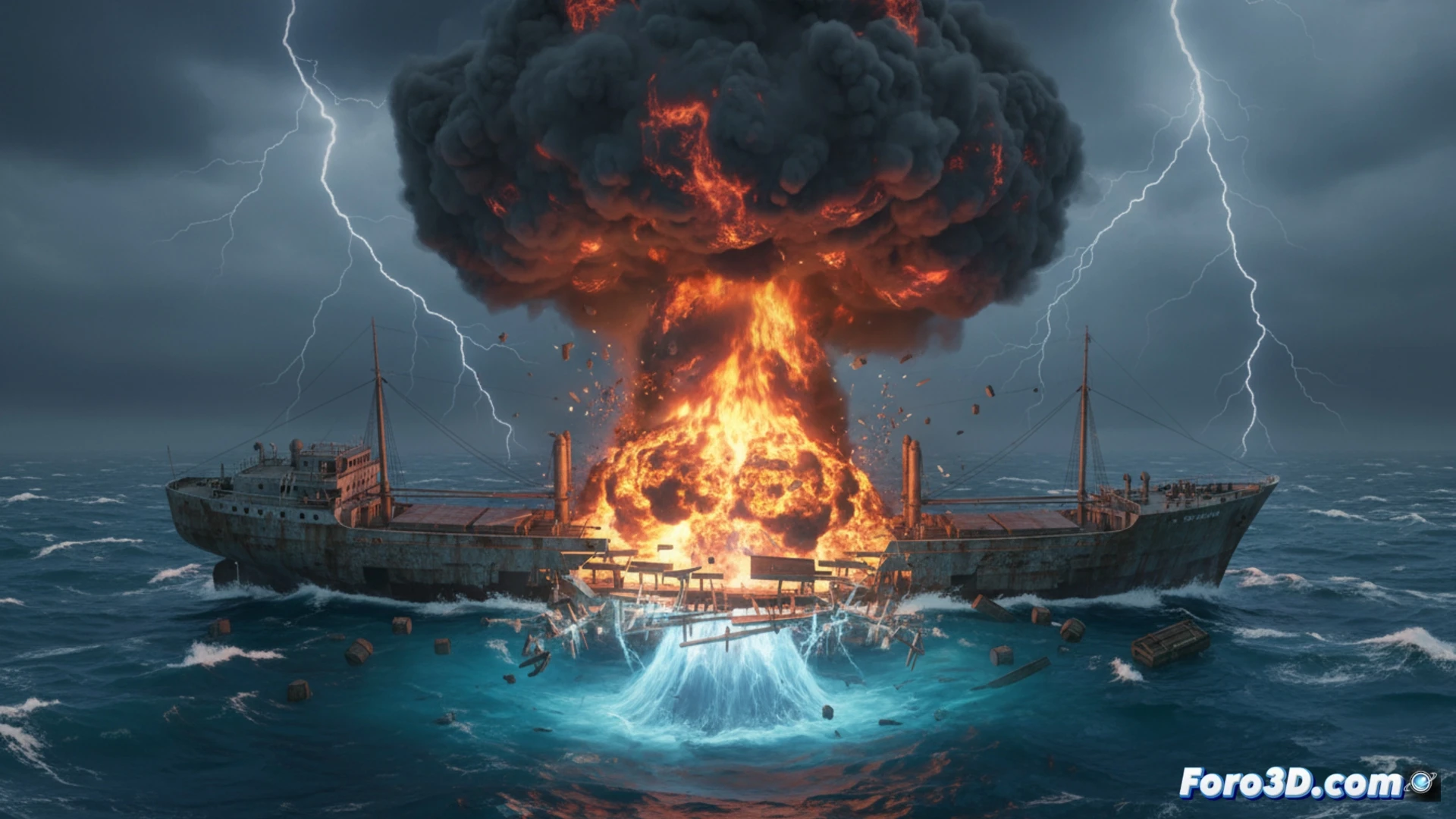
Technical modeling and simulation of the disaster 🛠️
To recreate the scene in 3D, we first modeled the ship's hull with textures of rust and wear. Then, we positioned human figures in extreme poses: rigid arms, twisted torsos, and expressions of panic, based on the rescuers' testimonies. The simulation of the final event, the explosion, is achieved through a particle system that fragments the model in real time. To explore scientific hypotheses, we integrated volumes of toxic gas (such as cyanide) and infrasound waves that distort the virtual environment, replicating biological panic.
Visual narrative of the inexplicable 🎥
The reconstruction seeks not only historical rigor but also to create an immersive experience that tells the chronology of horror: from the calm of the sea to the cadaveric rigidity and the final explosion. By visualizing the hypotheses, the viewer can explore the ghost ship and decide whether it was a lethal gas or an acoustic phenomenon. The mystery of the Ourang Medan remains open, but in 3D we can walk among its dead.
What technical and ethical challenges did the 3D reconstruction team face when modeling the final explosion scene of the SS Ourang Medan, considering the lack of reliable data on its internal structure and the state of the corpses?
(PS: Simulating catastrophes is fun until the computer melts down and you are the catastrophe.)