The crash of Commercial Jet 815 has become a fundamental case study for aeronautical forensic engineering. 3D reconstruction allows investigators to visualize the exact sequence of the catastrophe, from structural failure to final impact. This technical article breaks down the modeling process, critical variables, and lessons learned for global aviation safety.
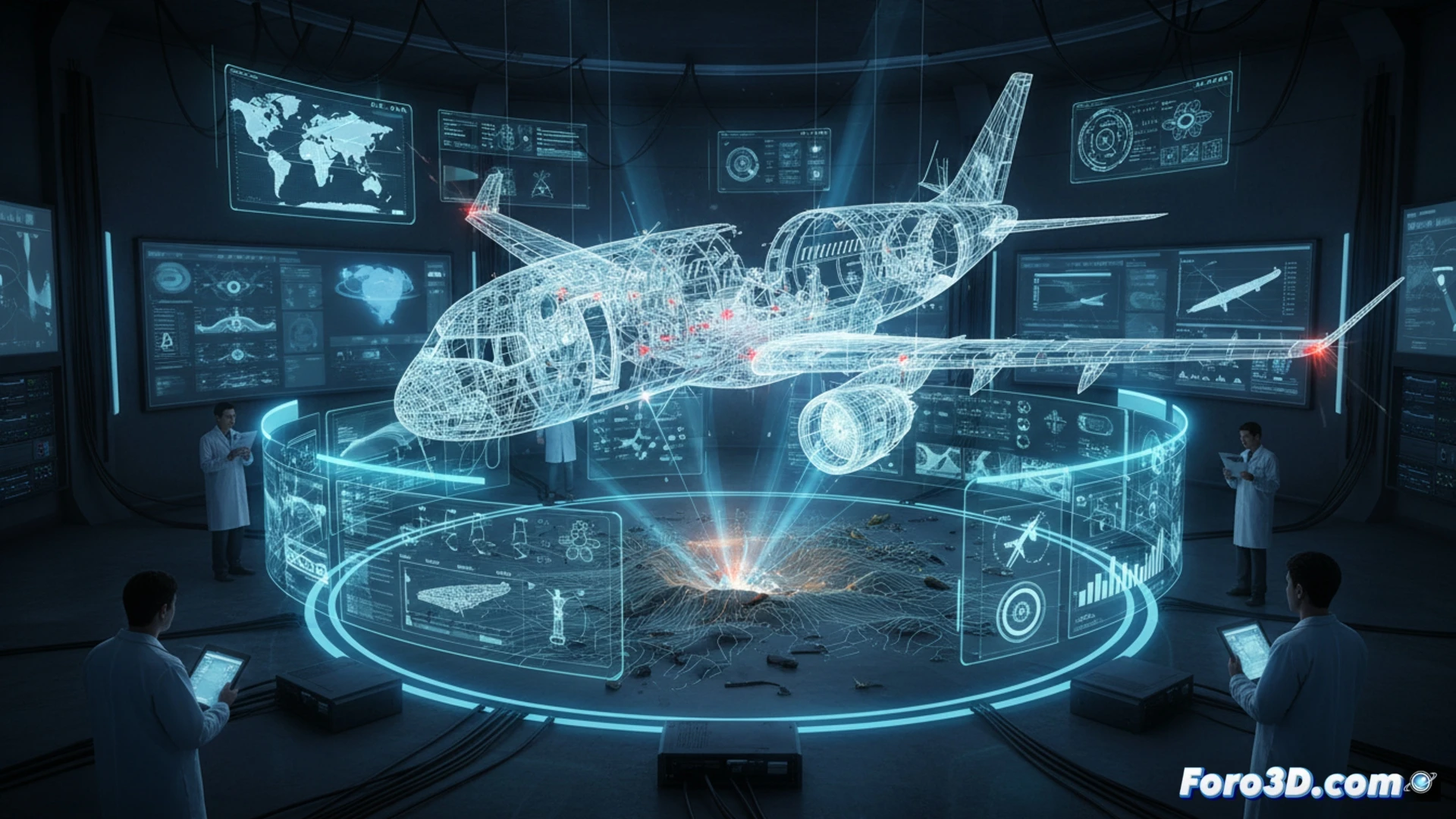
Trajectory Modeling and Material Fatigue 🛩️
The first step in the simulation involved recreating the Jet 815 fuselage through reverse engineering from black box reports. Computational fluid dynamics algorithms were applied to assess environmental conditions, such as wind shear and high-altitude turbulence. Finite element analysis focused on the right wing spar, where a microcrack from cyclic fatigue was identified. The 3D animation shows how this crack propagated in milliseconds during maneuver overload, causing wing separation and subsequent loss of control.
Visualization as a Prevention Tool 🔍
Beyond the disaster chronicle, the three-dimensional model allows researchers to simulate hypothetical scenarios. By altering parameters such as descent speed or material temperature, it is possible to predict how to avoid fracture. This technique not only clarifies the accident but also trains response teams to identify similar failures in future inspections. Forensic visualization thus consolidates itself as a pillar in the evolution of aeronautical maintenance protocols.
Which photogrammetry and finite element simulation techniques were most effective in validating the structural failure hypothesis in the 3D reconstruction of Jet 815?
(PS: Simulating catastrophes is fun until the computer melts down and you are the catastrophe.)