A 50,000-ton forging press destroyed a titanium die by applying pressure outside of parameters. The piezoelectric sensors of the load cell recorded an erroneous value, causing the titanium block to collapse under unforeseen stress. The main hypothesis points to radio frequency interference (EMI) that falsified the signal, triggering a catastrophic failure due to material fatigue.
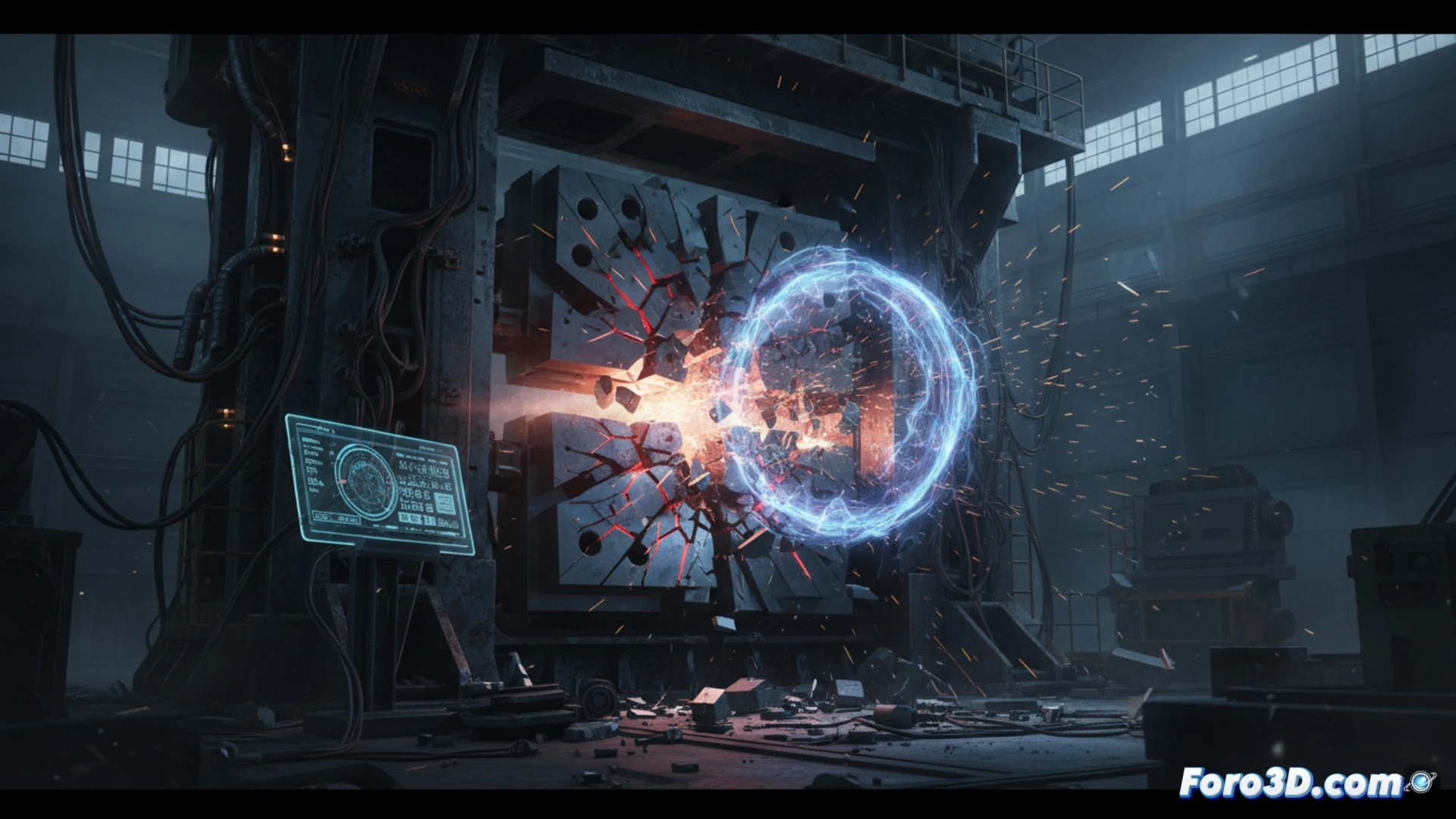
Forensic simulation with CST Studio and PolyWorks 🔧
The forensic process began with the 3D capture of the damaged sensors using PolyWorks, generating a high-precision point cloud that allowed the reconstruction of the deformed geometry of the die and the piezoelectric elements. Subsequently, CST Studio Suite was used to model the electromagnetic environment of the press, simulating how an external RF source could induce parasitic voltages in the load cell wiring. The results showed that an interfering signal in the 2.4 GHz band could superimpose on the actual pressure reading, altering the control system's response and causing the actuator to exceed the titanium's load limit.
Lessons for fatigue in industrial machinery ⚙️
The analysis with nCode revealed that the titanium and the forging die withstood an extreme fatigue cycle, but the instantaneous overload exceeded their strength threshold. This case demonstrates that sensor integrity depends not only on their mechanical precision but also on their electromagnetic shielding. The 3D reconstruction of the failure now allows for redesigning EMI filters and establishing cross-verification signal protocols, preventing an electronic error from destroying critical components in future high-tonnage forging operations.
How to integrate data from piezoelectric sensors with the 3D reconstruction of the fracture to differentiate between a cyclic fatigue failure and a monotonic overload in a 50,000-ton press?
(PS: Material fatigue is like yours after 10 hours of simulation.)