A fisherman was taken to hospital after suffering a blow to the head while fishing off the Isla de las Palomas, in Cartagena. The incident occurred when the man lost his balance and hit himself against the boat. Witnesses alerted emergency services, who quickly arrived to stabilize the injured man. He was subsequently evacuated in a medicalized ambulance to a hospital, where the severity of the injury was assessed. According to health sources, the fisherman was conscious, although he had a head trauma that required observation.
Technical analysis of the impact and rescue dynamics 🚑
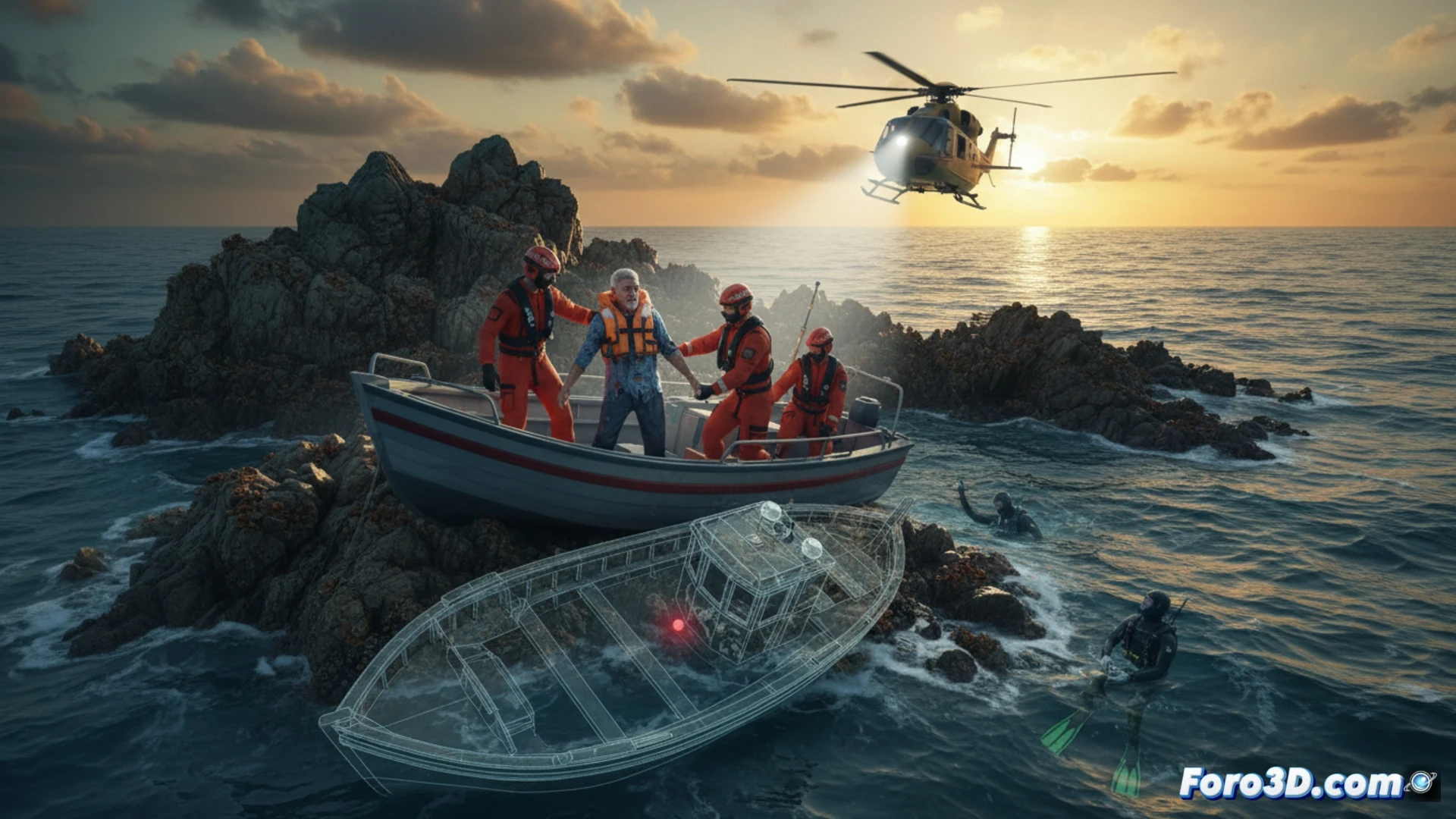
To reconstruct this accident in 3D, we must model the typical fishing boat of the area and the wave conditions. The simulation must begin with the instability factor: a sudden roll caused by a wave or a shift in weight. The fisherman, losing his grip, suffers a fall whose trajectory and angular velocity determine the point of impact against the gunwale or the engine. The model must calculate the kinetic energy of the blow to estimate the severity of the trauma. Subsequently, the rescue simulation must optimize response times, analyzing the distance from the coast to the accident point and the accessibility for the medicalized ambulance. This analysis allows proposing improvements in maritime evacuation protocols and in the location of safe landing points.
Safety lessons for recreational and professional navigation ⚓
The simulation of this accident reveals the need to implement personal restraint systems on deck, such as harnesses or lifelines, especially in groundswell conditions. Furthermore, the 3D model allows visualizing the effectiveness of protective helmets against impacts with hard surfaces. Recreating different wave and visibility scenarios helps define more efficient emergency protocols, reducing the time between the distress call and patient stabilization. This data is vital for the fishermen's guilds and nautical clubs of Cartagena to update their occupational safety plans at sea.
Would you export the results to GIS format?