The integration of smart lighting systems on highways promises energy efficiency but introduces a critical risk: uncalibrated light interference. A recent multi-vehicle accident, simulated using photorealistic 3D modeling, reveals how a smart streetlight's algorithm could have generated a momentary blinding effect. The vehicle crashed into a median after being dazzled by the reflection of its own light on the surrounding glass noise barriers.
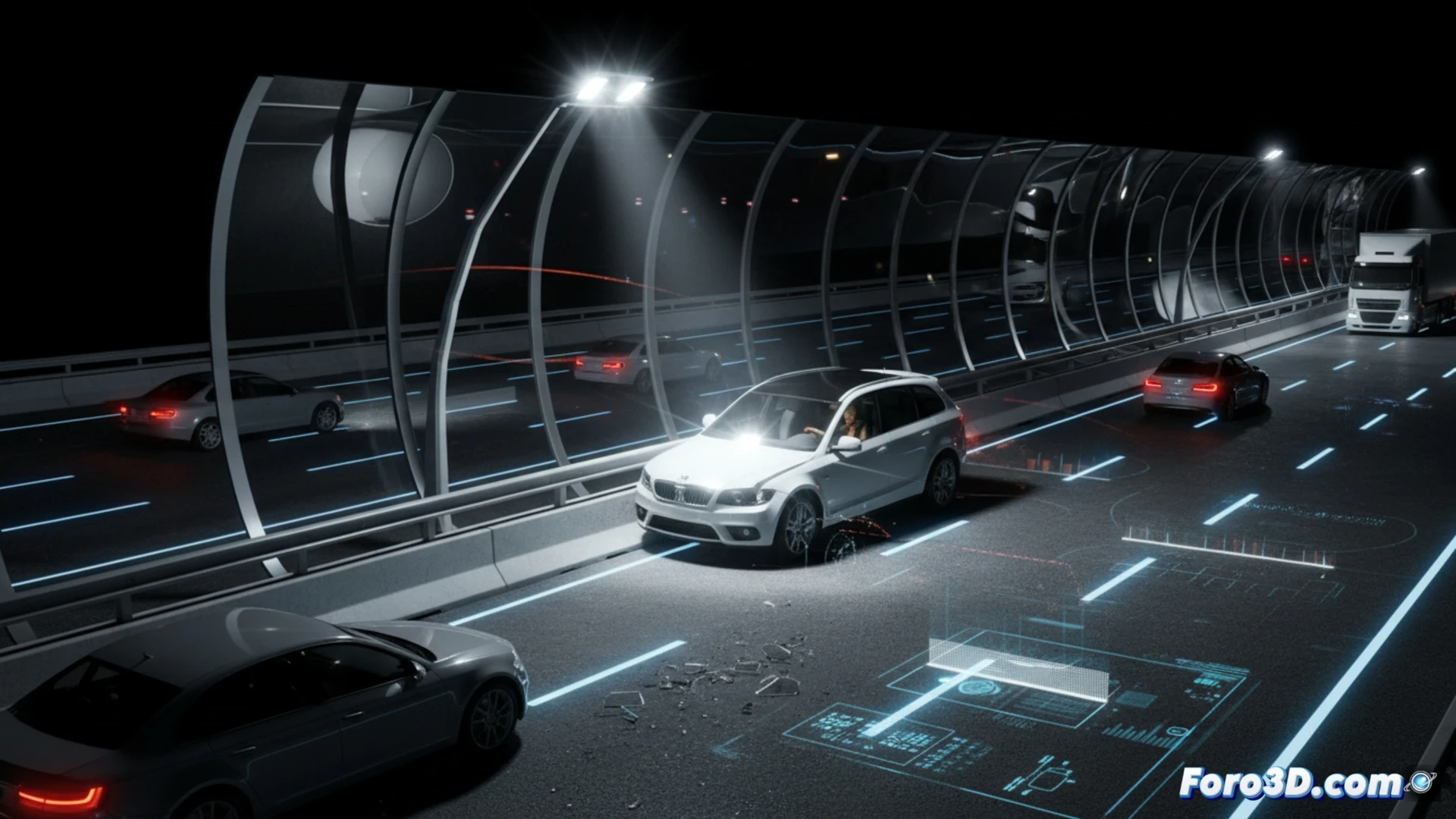
Accident Recreation: Dialux Evo, Unreal Engine, and V-Ray 🚗💥
The investigation began in Dialux Evo, where the exact geometry of the smart road was modeled, including the layout of LED streetlights with traffic sensors. The scene was exported to Unreal Engine to simulate the vehicle's trajectory at 90 km/h. The critical point was the calculation of the specular reflection: when the maximum intensity algorithm (designed to illuminate a phantom pedestrian) was activated, the beam directly hit the vertical glass surface of the acoustic barrier. V-Ray processed the glass material with a realistic refractive index, generating an 8,000-lumen flash directed at the windshield. The visual simulation confirmed a loss of contrast for 1.2 seconds, enough time to deviate the trajectory. Process captures show the sequence: streetlight 14 activates, reflection on the acoustic panel, and the driver's blind spot.
The Algorithm Failure: When Smart Light Blinds ⚠️🔦
The analysis concludes that the control system did not evaluate the angle of incidence relative to nearby reflective surfaces. The smart road prioritized light coverage over the driver's visual safety. In urban environments with glass noise barriers, the absence of an anti-glare filter in the firmware is a design flaw. The 3D reconstruction demonstrates that technology must anticipate not only who it illuminates, but also where that light bounces. A dynamic beam calibration, based on the reflectivity of surrounding materials, would have prevented the accident.
How can the influence of a dynamic change in the luminous intensity of a smart lighting system on driver perception be modeled to ensure the reliability of the 3D reconstruction of a glare-related accident?
(PS: In scene analysis, every scale witness is a small anonymous hero.)