Two green-skinned siblings appeared in Woolpit, England, in the 12th century. They spoke an unknown language and claimed to come from an underground world. This historical enigma, far from being just a legend, becomes a perfect case study for digital archaeology. By applying 3D modeling techniques and forensic anthropology, we can digitally unearth the truth behind this phenomenon.
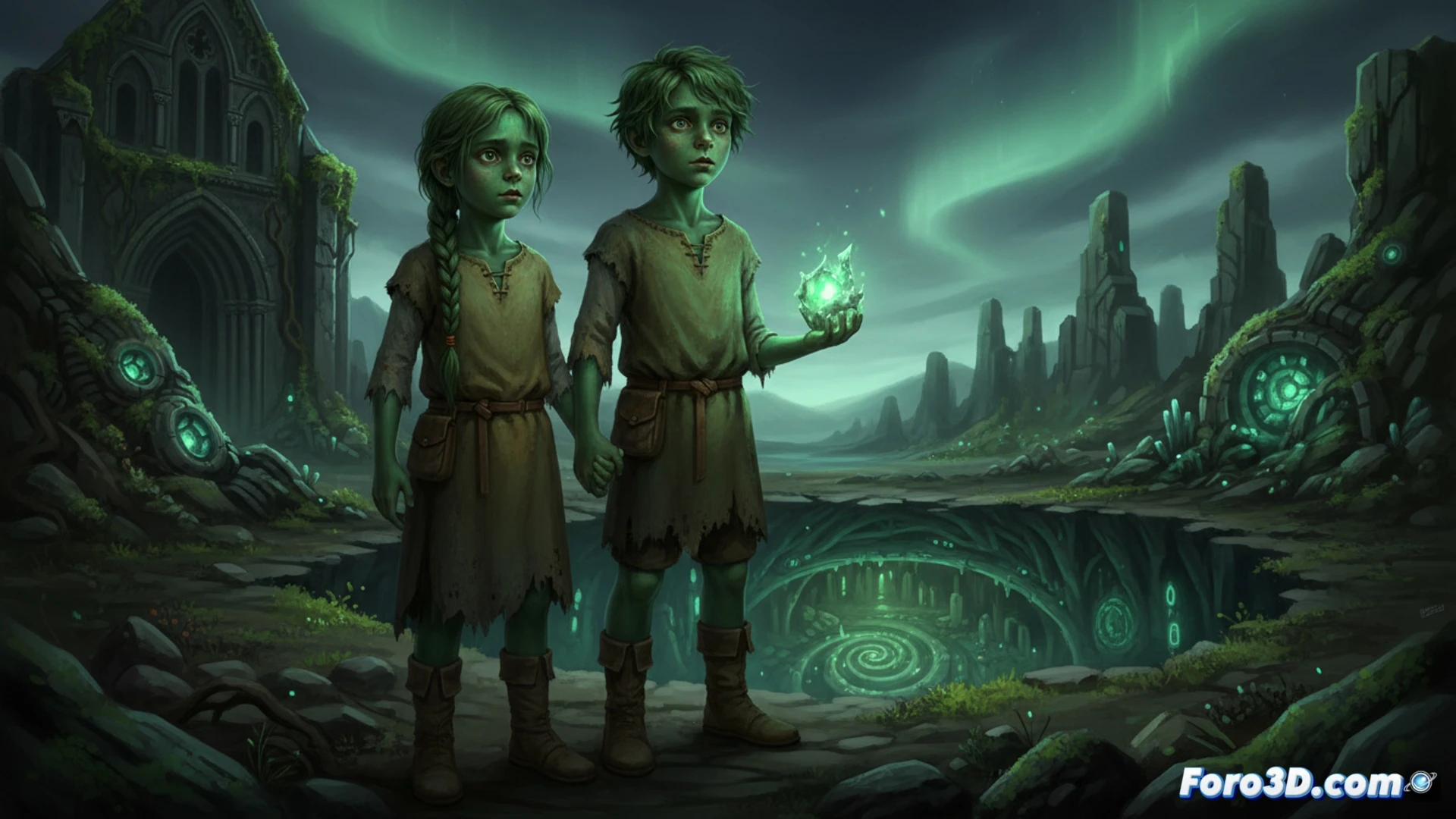
Forensic Photogrammetry and Paleoanthropological Modeling 🧬
To reconstruct the children's appearance, we start from historical data: their green skin, their initial diet of beans, and their adaptation to the outside world. Using 3D sculpting software like Blender or ZBrush, we combine anthropometric data from medieval England with pathological skin textures. We simulate the chlorosis (iron deficiency) that may have caused their greenish tone. In parallel, we model the described underground landscape, a world of twilight and rivers. We contrast these geometries with LIDAR scans of the caves of Bury St Edmunds and the region's passageways, evaluating whether there is a real geological basis for their account.
Hypothesis Visualization: Between Reality and Myth 🎭
Digital reconstruction allows us to visualize the two main hypotheses. On one hand, we model a scenario of Flemish children displaced by war, lost in the woods and affected by food poisoning that gave them a greenish tone. On the other, we recreate the atmosphere of a fictional underground world, analyzing how disorientation and trauma could have distorted their perception. This duality, presented through renders and animations, not only solves a mystery but also demonstrates how 3D technology gives new life to intangible cultural heritage.
As a 3D modeler, what historical and scientific validation criteria should I apply to ensure that the facial reconstruction of the Green Children of Woolpit is not just artistic speculation, but a rigorous visual hypothesis based on medieval descriptions and paleopathology?
(PS: If you dig at a site and find a USB drive, don't plug it in: it could be Roman malware.)