The prosecution in Pavia maintains that Andrea Sempio did not pass by the Poggi house in Garlasco by chance hours after the murder of Chiara Poggi, which occurred on August 13, 2007. According to the prosecutors, the then 19-year-old lied when he stated that he passed by there after noticing an ambulance, since the route from his grandmother's house did not go through Pascoli Street. Investigators consider it implausible that from a distance and with two roundabouts in between, they could see the crime scene.
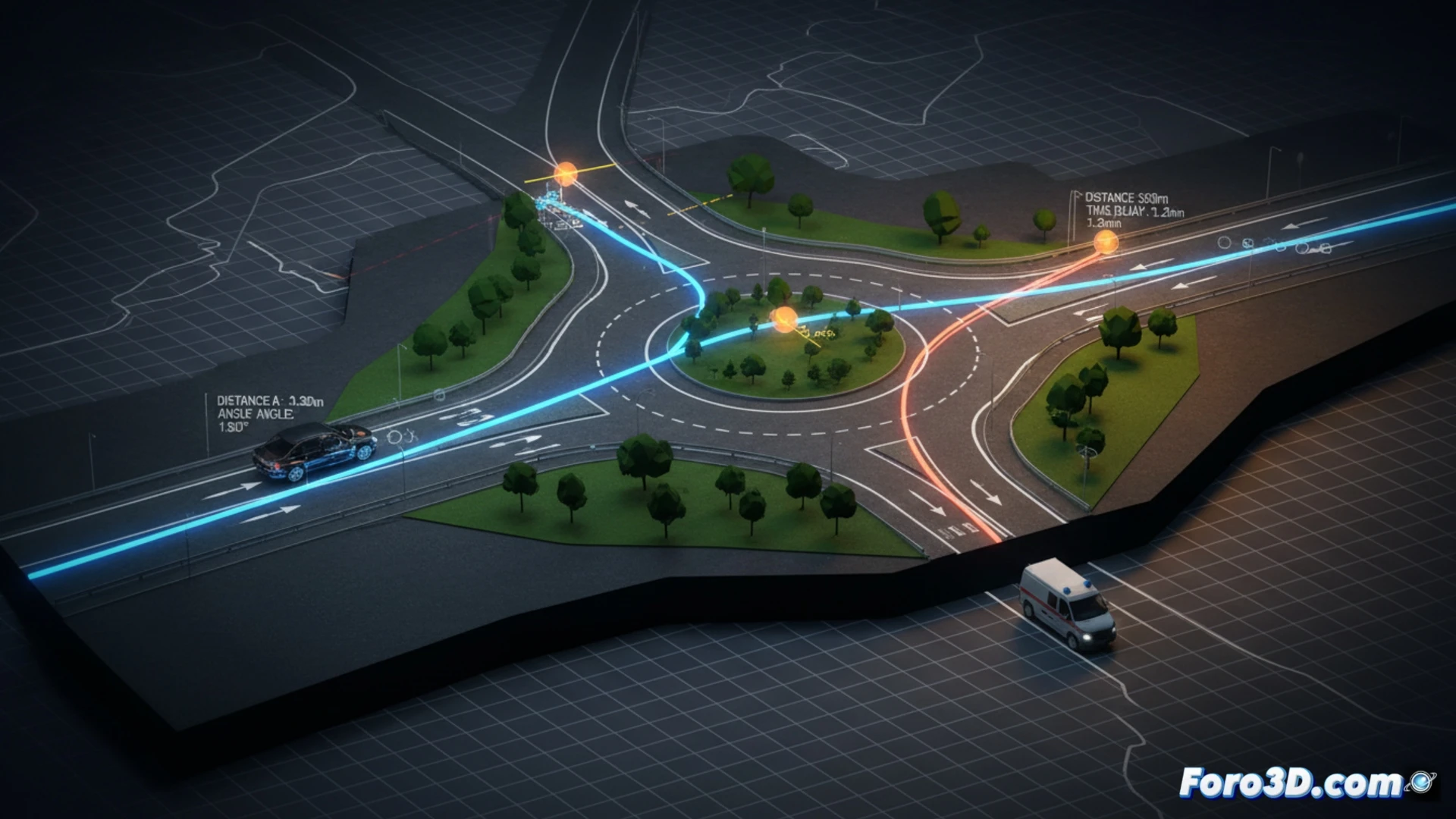
Workflow for geographic alibi verification 🗺️
To contrast Sempio's statements with physical reality, a forensic pipeline based on 3D technologies can be implemented. The process begins with capturing environmental data through aerial photogrammetry with drones and terrestrial LiDAR scanning of Pascoli Street, the roundabouts, and alternative routes. This data is used to generate a digital terrain model (DTM) and a textured mesh of the neighborhood. Subsequently, the model is imported into trajectory simulation software such as Blender or Unity, where the exact route of Sempio and his father's vehicle is recreated. Parameters such as driver height, viewing angle, and time of day (with solar illumination from August 13 at 4:00 PM) are added to calculate the line of sight to the parked ambulance. Occlusion analysis allows determining whether obstacles (trees, buildings, the roundabouts) blocked the view, validating or refuting the alibi.
The value of spatial simulation in judicial investigation 🔍
This approach demonstrates that 3D reconstruction is not only useful for documenting a crime scene but also for verifying the credibility of testimonies through objective data. In the Sempio case, the simulation could reveal whether the accused lied about his route or, on the contrary, whether there was a blind spot that made his version possible. The defense, led by lawyers Angela Taccia and Liborio Cataliotti, could use these same models to challenge the prosecution's conclusions. Meanwhile, the request for information from Meta to recover deleted digital traces adds another layer of data to the file, underscoring the need to integrate multiple sources into a robust forensic pipeline.
Which photogrammetry software do you think would best reveal the details of the scene?