On August 12, 1915, during the Gallipoli Campaign, the 1st Battalion of the Norfolk Regiment advanced towards the Ottoman trenches. Eyewitnesses reported that a dense cloud of fog enveloped the 267 soldiers, and when it dissipated, no trace of them remained. Without bodies or prisoners, the event became one of the greatest military mysteries. From Foro3D, we propose a technical analysis to unravel what really happened to those men.
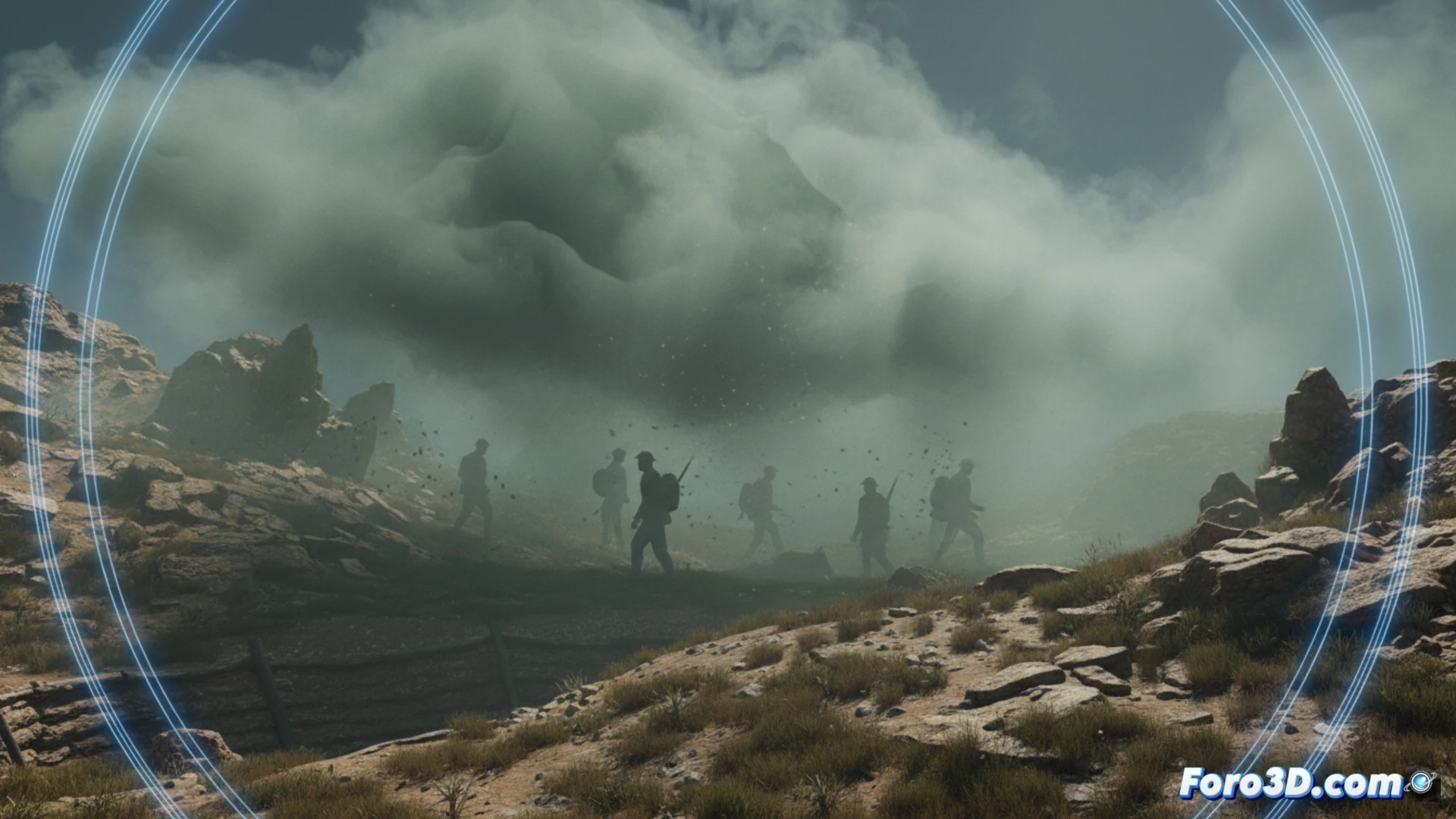
Terrain simulation and atmospheric dispersion model 🌫️
To address the case, we have generated a digital elevation model (DEM) of the Gallipoli peninsula, using LIDAR data from the area and topographic references from 1915. On this terrain, we applied a computational fluid dynamics (CFD) simulation to recreate the fog cloud. Parameters include sea surface temperature, relative humidity of 98%, and katabatic winds typical of the Dardanelles Strait. The result shows how an orographic fog could form in seconds, channeling through the Kilitbahir depression. The simulation reveals that, under these conditions, visibility would drop to less than one meter, completely disorienting the unit. The battalion's route, plotted with historical coordinates, intersects with the fog flow at a point where the terrain forms a natural sinkhole, which would explain the lack of subsequent witnesses.
Hypothesis contrast and disaster prevention 🧠
The interactive infographic we have developed allows the user to toggle between three theories: fatal disorientation, extreme meteorological phenomenon, or enemy intervention. Simulation data supports the natural phenomenon theory, as the cloud would have concealed a 40-meter-deep ravine, where the soldiers could have fallen en masse. However, the absence of archaeological remains suggests that the sea may have claimed the bodies hours later. This analysis not only sheds light on a myth but also serves as a lesson in risk management in hostile terrains, where local meteorology should be a critical factor in operational planning.
What photogrammetry or volumetric modeling techniques would allow digitally recreating the fog that enveloped the Norfolk Battalion at Gallipoli, considering the lack of precise meteorological data from 1915?
(PS: Simulating disasters is fun until the computer crashes and you are the disaster.)