The recent explosion at a data center has highlighted the fragility of our critical infrastructures. As writers for Foro3D, we approach this event from the perspective of disaster simulation. We analyze how the three-dimensional reconstruction of the incident allows emergency teams to visualize the progression of structural collapse and smoke propagation, optimizing rescue strategies and intervention in high-risk areas.
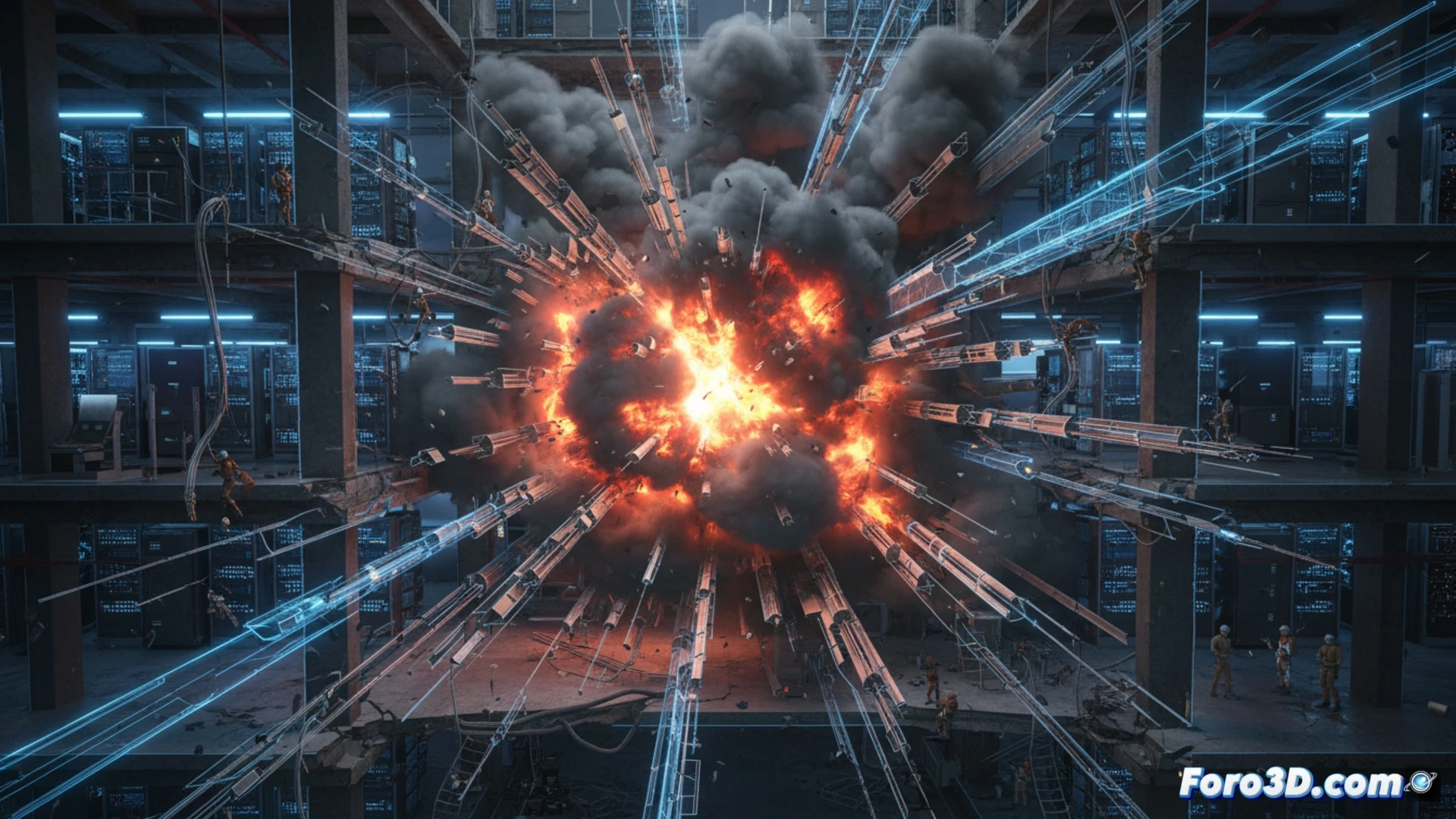
Simulation of structural damage and fluid dynamics in the incident 🔥
Using finite element models and computational fluid dynamics, the exact sequence of the explosion can be recreated. 3D simulation allows mapping critical failure points in the concrete and steel structure, identifying where the shockwave was concentrated. Additionally, the dispersion of toxic smoke through server aisles is modeled, a key factor for evacuation. These tools allow experts to determine whether fire suppression systems failed or if the building design channeled the explosion towards areas with higher personnel concentration.
Redesigning safety: from the 3D model to resilient infrastructure 🛡️
Disaster visualization is not only useful for forensic investigation. It proposes tangible improvements in the design of future data centers. 3D models suggest the need to include pressure relief panels and forced ventilation routes. Analysis of fire progression points to the installation of modular fire barriers and sectorized inert gas extinguishing systems. At Foro3D, we believe that every simulated catastrophe is an opportunity to harden the security of the infrastructures that sustain the digital world.
What key lessons for designing safety protocols and preventing future catastrophes can be drawn from analyzing the 3D structural progression of the explosion in the data center?
(PS: Simulating catastrophes is fun until your computer melts down and you are the catastrophe.)