The A-42, near Illescas (Toledo), was the scene of a chain of three traffic accidents in less than 24 hours, between April 30 and May 1. The first incident occurred at 19:55, generating over 4 kilometers of traffic jams. At 9:09 the following day, a second impact added 2 kilometers of congestion heading towards Madrid, followed by a third crash at kilometer 33 that added another 3 kilometers of queues. Fortunately, no serious injuries were confirmed, but the sequence poses a technical challenge for forensic reconstruction.
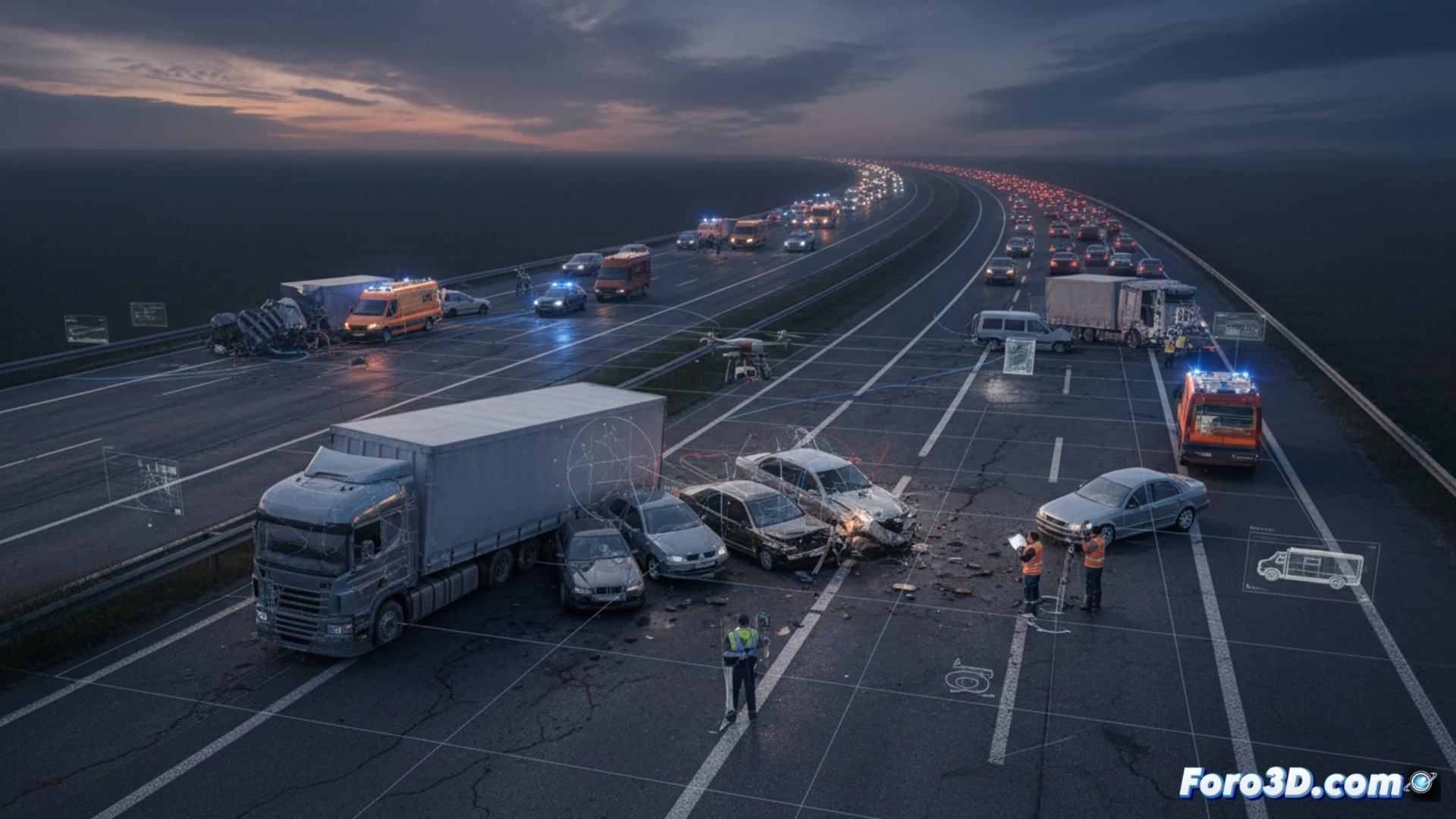
Photogrammetry and dynamic simulation of chain collisions 🚗
To analyze this sequence, 3D tools allow breaking down each event. Using photogrammetry of road images and LiDAR scanning of the area, the asphalt, skid marks, and final positions of the vehicles can be modeled. In a game engine, such as Unreal Engine, the kinematics of each impact are simulated: the first at 19:55 with low nighttime visibility, the second at 9:09 with dense traffic, and the third at km 33 due to rear-end collision. Safety distances (estimated speeds between 80 and 100 km/h) and reaction times are calculated, visualizing how the congestion from the first accident may have caused the following two.
Technical lessons for road safety 🛡️
The 3D reconstruction reveals a classic pattern of rear-end collision on a highway: lack of safe distance and visual fatigue under changing light conditions. The simulation allows traffic engineers to propose improvements, such as installing section speed cameras or dynamic signage at black spots like Illescas. For 3D professionals, this case demonstrates how scene analysis not only documents what happened but also anticipates solutions to prevent future chain incidents.
Would you place scale markers before scanning?