Osaka police are investigating the death of a woman found in a hotel room, with marks on her neck suggesting possible third-party involvement. The alert, received in the early morning, was based on the testimony of an acquaintance who claimed to have heard a man confess to the crime. For a Pipeline Forense team, this case represents an ideal scenario for applying three-dimensional documentation technologies to capture every detail of the scene and cross-reference the versions of those involved.
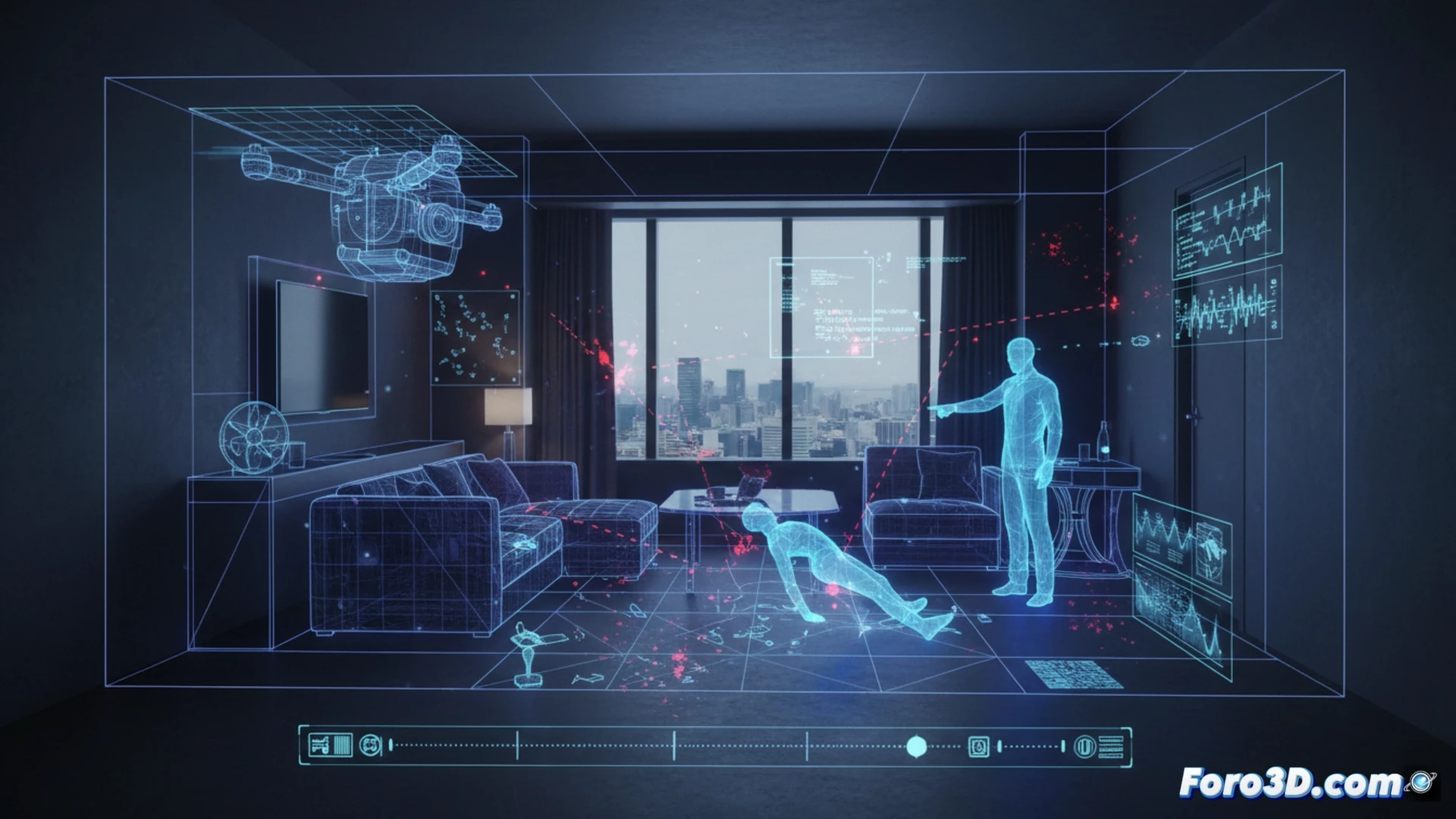
Photogrammetry and laser scanning to document the crime scene 🔍
The first step would be to perform a scan with a terrestrial laser scanner (TLS) to obtain a point cloud of the hotel room, capturing the exact arrangement of furniture, doors, and windows. In parallel, hundreds of high-resolution photographs would be taken from multiple angles to generate a detailed photogrammetric model of the victim's body, paying special attention to the marks on the neck. This high-resolution model would allow forensic experts to analyze the morphology of the injuries, such as the width and depth of possible grooves, and compare them with objects present at the scene (cables, straps, or fabrics). The combination of both datasets, aligned in processing software like RealityCapture or Agisoft Metashape, would create an exact digital twin of the room.
Simulation in game engines to validate testimonies 🎮
Once the 3D model is generated, it would be imported into a game engine like Unreal Engine 5 to recreate the scene interactively. Investigators could simulate different movement trajectories for the victim and the aggressor, based on the position of the marks on the neck and the distribution of the furniture. For example, they could test whether the height of the marks matches a struggle while standing or whether the arrangement of the bed suggests immobilization. This simulation, presented as a forensic animation at trial, would allow judges and juries to clearly visualize whether the suspect's testimony is compatible with the documented physical evidence.
How would you integrate this finding into an existing forensic pipeline?