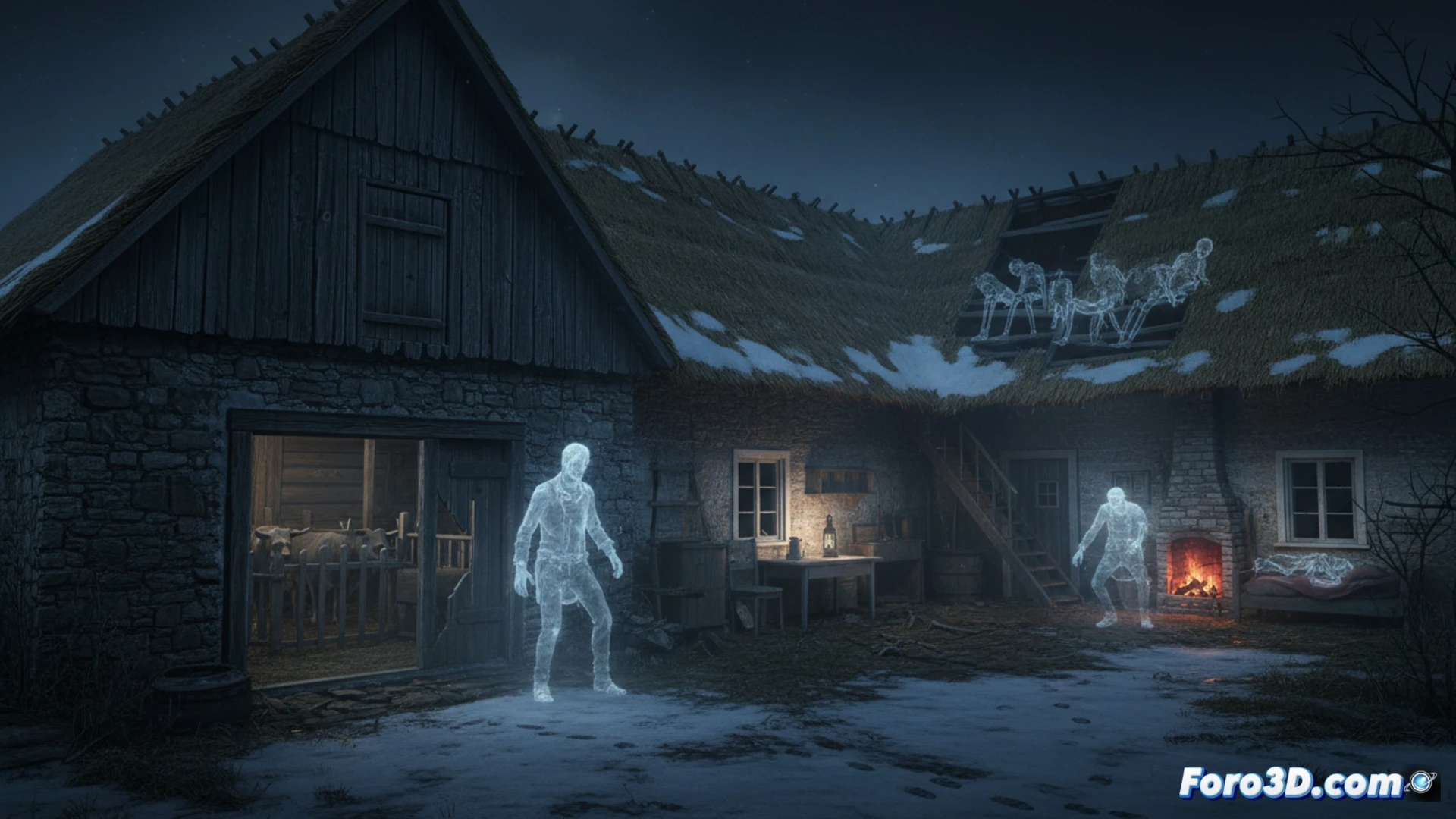
In March 1922, six people were brutally murdered at the remote Hinterkaifeck farm in Germany. What makes this case unique is not only the violence of the crime, but the perpetrator's behavior: days after the massacre, the killer continued to inhabit the property. He fed the livestock, lit fires, and slept in the victims' beds without being detected. As forensic pipeline specialists, we can apply 3D scanning and modeling technologies to unravel how this macabre coexistence was possible.
Technical workflow for hidden scene analysis 🛠️
The first step is the volumetric reconstruction of the terrain and building based on historical plans and archival photographs. Using modeling software such as Blender or RealityCapture, we generate a digital twin of the farm, including the barn, the house, and the access path. The next step is the simulation of lighting and lines of sight. Using real-time rendering engines, we can map blind spots from neighboring windows and public paths. This allows us to calculate escape routes and the criminal's activity schedules, contrasting their mobility with the testimonies of villagers who claimed to see smoke from the chimney without suspecting the intruder.
The paradox of the invisible witness 👁️
The central question is not only who killed, but how the killer became invisible. Our 3D simulation reveals that the layout of the walls and the topography of the surrounding forest created a perfect visual corridor to conceal daily movements. By recreating the final positions of the bodies and displaced objects, we can infer the sequence of attacks and the subsequent period of occupation. This exercise demonstrates that digital forensic documentation not only solves crimes but also forces us to rethink the logic of space and human perception at the crime scene.
Would you use laser scanning or photogrammetry to document this case?