The fracture of a metallic component in a fairground structure is not a simple accident; it is the culmination of a fatigue process that finite element simulation (FEM) can reveal. This technical article details how 3D modeling and virtual analysis allow forensic engineers to reconstruct the failure, digitizing the fractured part and applying cyclic loads to identify the exact point of crack initiation.
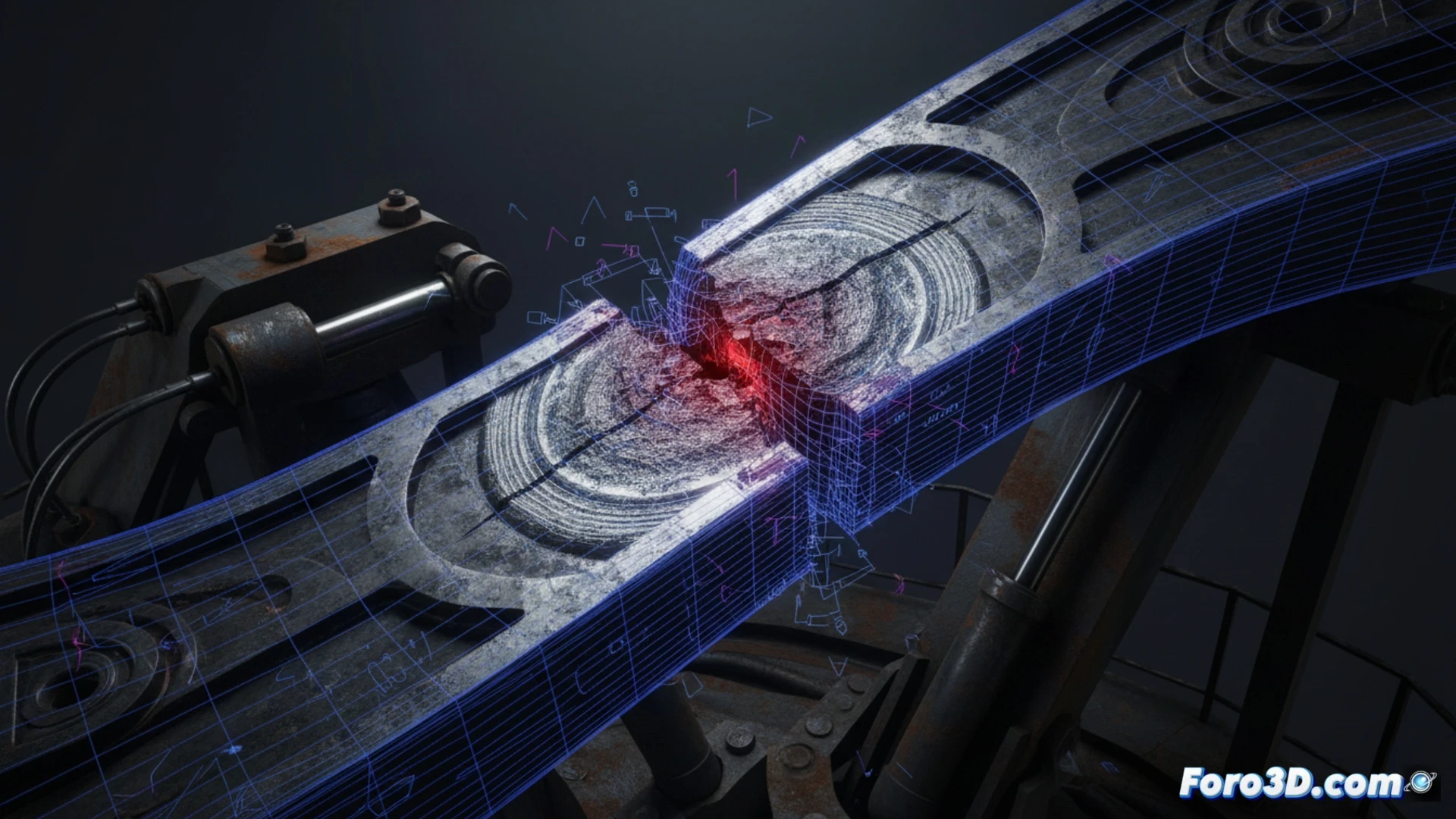
Forensic digitization and finite element meshing 🔍
The process begins with the three-dimensional capture of the damaged part using laser scanning or photogrammetry, generating a point cloud that is converted into an editable solid. On this model, a refined FEM mesh is applied in the fracture zone to capture stress concentrations. Load data is extracted from the ride's operational records and safety regulations. By simulating the load history, the software predicts the material's service life and locates the fatigue crack initiation zone, contrasting it with the beach marks visible on the fracture surface.
Lessons for preventive simulation ⚙️
This case demonstrates that 3D simulation is not only useful for design but also for investigating incidents. By correlating the morphology of the actual fracture with the virtual stress map, fatigue models are validated. For the simulation engineer, the lesson is clear: inadequate meshing or the omission of dynamic loads in the model can hide critical failure points, jeopardizing structural safety.
How can the 3D reconstruction of a metallic fracture visually differentiate between a cyclic fatigue failure and an instantaneous brittle fracture in the forensic inspection of a fairground ride?
(PS: Material fatigue is like yours after 10 hours of simulation.)