The High Court of Justice of Aragon has ratified the permanent disability of a cashier, annulling the INSS review that alleged a supposed improvement. The ruling emphasizes that, despite functional progress, residual limitations in her upper limbs and spine prevented her from performing essential tasks such as handling loads or repetitive movements. This case opens the door to new evidentiary tools in the field of digital compliance and the protection of vulnerable groups.
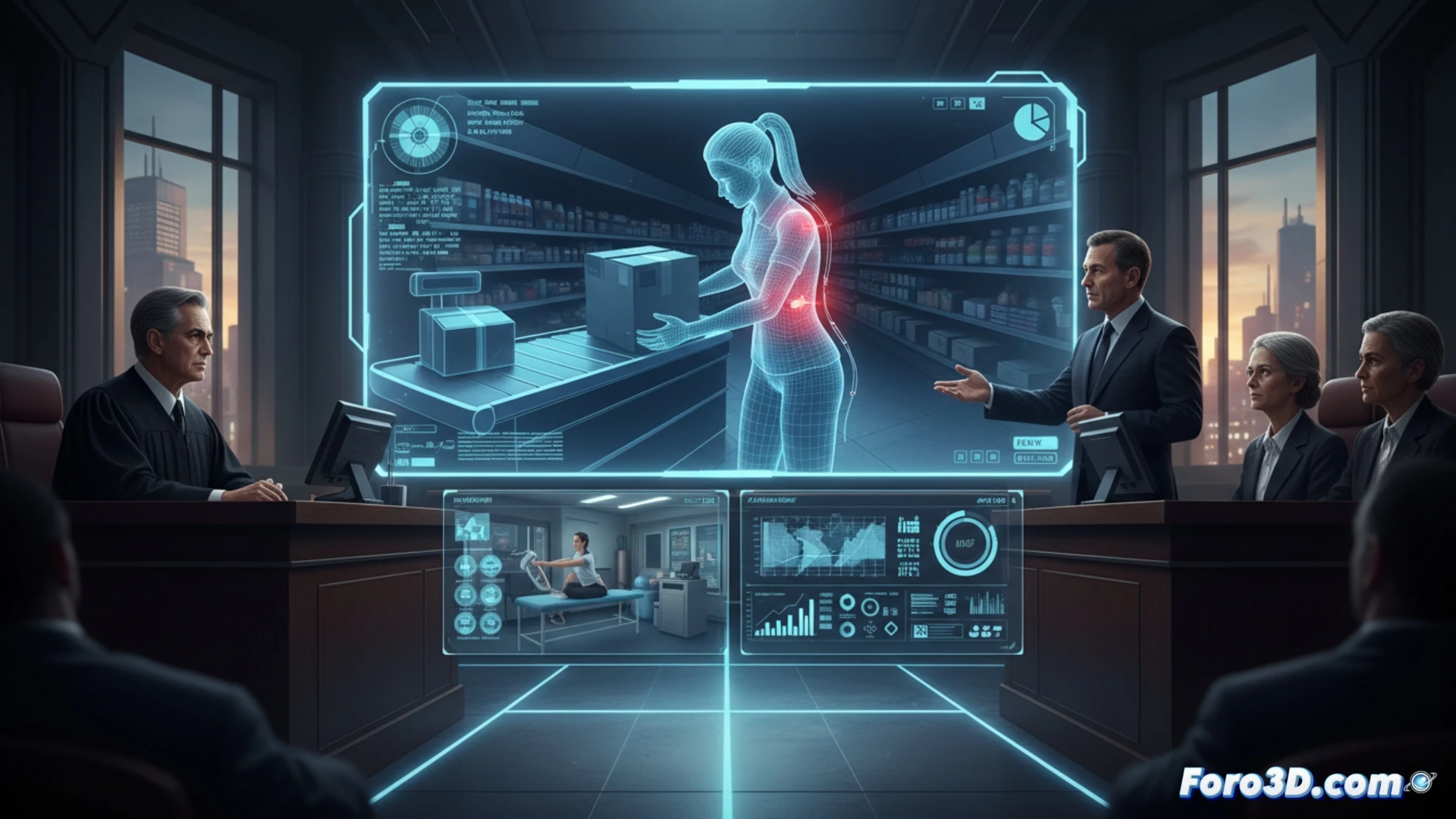
3D simulation of repetitive movements and expert ergonomics 🖥️
Three-dimensional modeling technology allows for the precise reconstruction of a cashier's work environment, capturing every gesture and posture during a standard workday. Using motion capture sensors and biomechanical simulation software, the loads on joints and the spine can be quantified. In this practical case, a 3D visual expert report would have shown the court how tasks such as scanning products, lifting boxes, or twisting the trunk constantly exceed the worker's safe functional range, demonstrating objective incompatibility with their usual profession beyond any partial improvement.
Digital compliance and protection of the vulnerable worker ⚖️
The decision of the High Court of Justice of Aragon reinforces the need for INSS review processes to incorporate objective technical criteria, avoiding abstract assessments of improvement. Integrating expert evidence based on 3D reconstructions and digital ergonomic analyses not only brings transparency to the procedure but also ensures regulatory compliance in the protection of people with disabilities. This technology is consolidating itself as a legal ally to visualize realities that traditional medical reports do not always manage to convey.
As a legal professional, what technical and legal criteria must 3D reconstructions meet to be admitted as valid evidence in disability trials, considering the precedent set by the High Court of Justice of Aragon?
(PS: at Foro3D we know that the only compliance that works is the one that is tested beforehand, not afterwards)