Transforming household plastic waste into 3D printer filament is now possible with compact recycling machines. This process allows you to reuse everyday containers to create useful objects, reducing the amount of waste we generate and the cost of printing materials. A practical solution that brings creative recycling to any home.
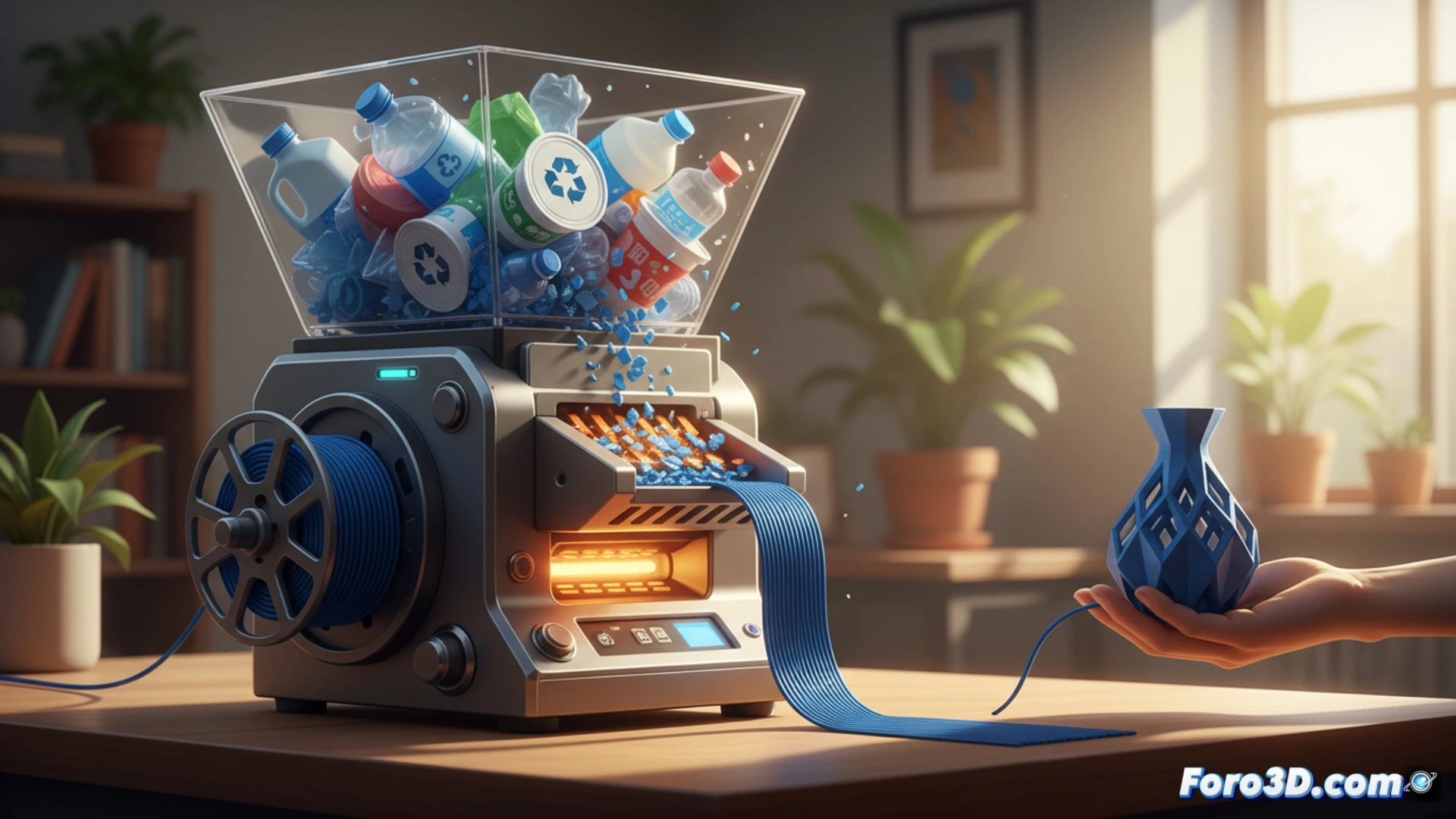
How a home filament recycler works ♻️
These machines consist of a shredder that reduces plastic into small fragments, an extruder that melts the material, and a pulling system that transforms it into filament of constant diameter. The process requires adjusting the temperature according to the type of plastic (PLA, PET, ABS) and maintaining a stable extrusion speed. The result is a spool ready to use in any standard 3D printer, with a production cost much lower than commercial filament.
From water bottle to wonky vase 😂
The first attempt usually ends up with filament that looks like overcooked spaghetti and a burnt plastic smell that would scare off even the flies. But after a few adjustments, you manage to turn a detergent bottle into a flower pot. The best part is your neighbor's face when you tell them their new coaster used to be a yogurt container. That said, avoid recycling the office Tupperware: your boss won't appreciate it.