Indie horror has reached a new level of immersion with The Mortuary Assistant, a title developed in Unity that fully exploits volumetric post-processing and dynamic lighting. The team combined hyper-realistic modeling in ZBrush with photorealistic textures generated in Blender to create a claustrophobic environment. The result is an experience that borders on the uncanny valley, where every shadow and reflection is calculated to unsettle the player, demonstrating that a well-optimized Unity engine can compete with AAA solutions in the horror genre. 🎮
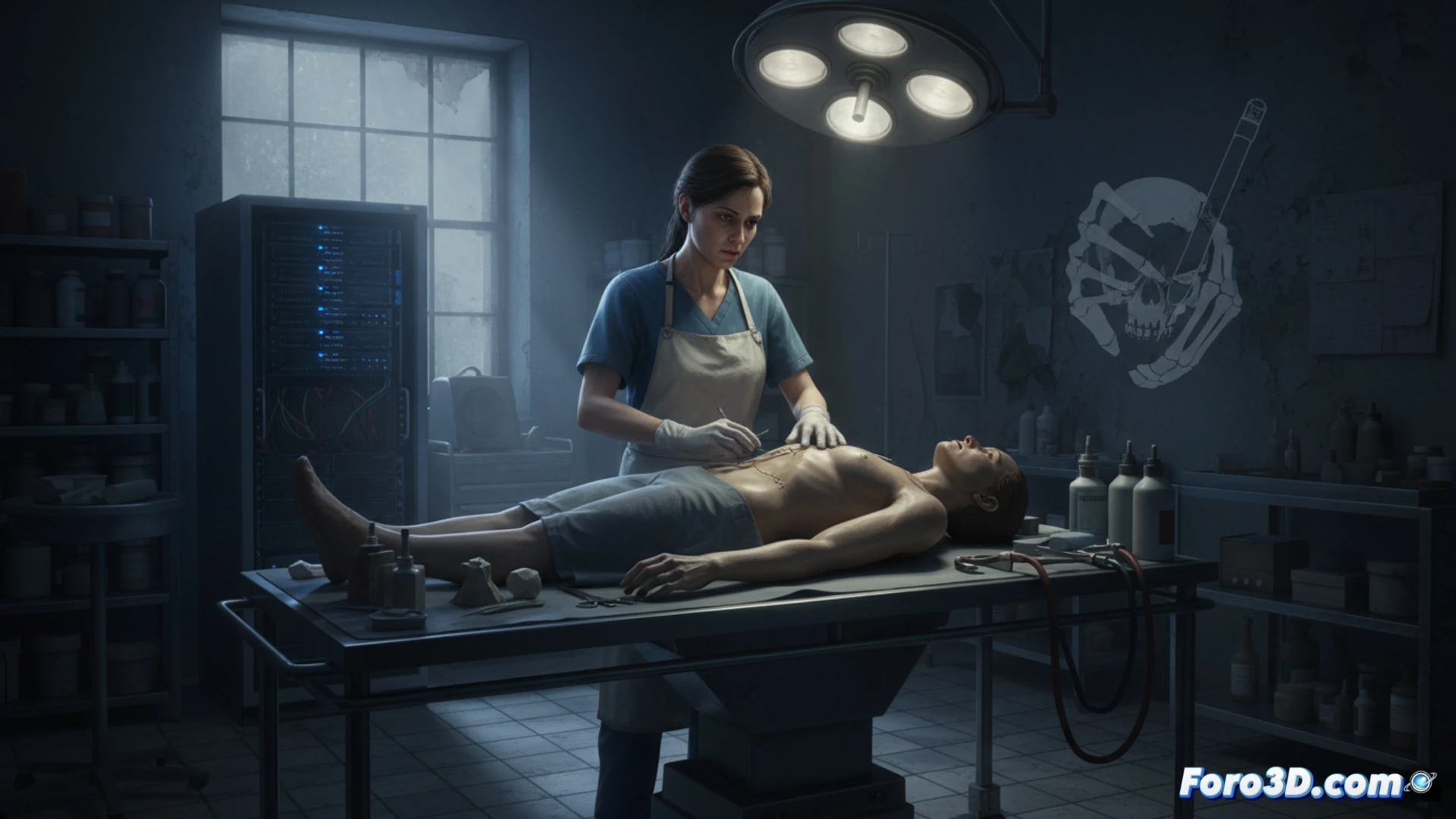
Post-processing and lighting design in Unity for horror 💡
To achieve the constant unease effect, the developers applied intense post-processing based on desaturated color profiles and a subtle bloom that blurs the edges of light sources. Real-time volumetric lighting, combined with soft shadows and a dynamic fog system, hides and reveals scene elements depending on the camera's position. Modeling in ZBrush focused on the facial details of the corpses, using normal and displacement maps to generate pores, wrinkles, and ambiguous expressions. In Blender, the textures of organic materials (skin, eyes, blood) were retouched to react realistically to light, while Unity managed the rendering with an HDRP pipeline that allows granular control over the reflectivity and roughness of each surface.
Lessons for indie developers on the uncanny valley 🧟
The case of The Mortuary Assistant demonstrates that effective horror does not require a huge budget, but a deep understanding of visual psychology. For indie developers, the key is to prioritize lighting over geometry: a simple but well-lit scene generates more tension than a complex model with flat lights. Furthermore, using the uncanny valley as a narrative tool, where human faces subtly deform, triggers an immediate emotional response. We recommend investing time in the color profile and camera effects (vignette, chromatic aberration) to break the player's visual comfort, creating an atmosphere that feels alive and hostile.
How they managed in The Mortuary Assistant to translate detailed human anatomy from ZBrush into game mechanics in Unity without sacrificing performance on modest hardware
(PS: shaders are like mayonnaise: if they break, you start all over again)