Ready or Not has established itself as a benchmark in the tactical shooter genre thanks to its meticulous focus on realism. The title, developed by VOID Interactive, fully exploits the capabilities of Unreal Engine 4 to deliver an immersive visual experience. The secret to its graphical success lies in a specialized workflow that combines precision modeling, physical texturing, and detailed environments, raising the standard of what we understand as police simulation.
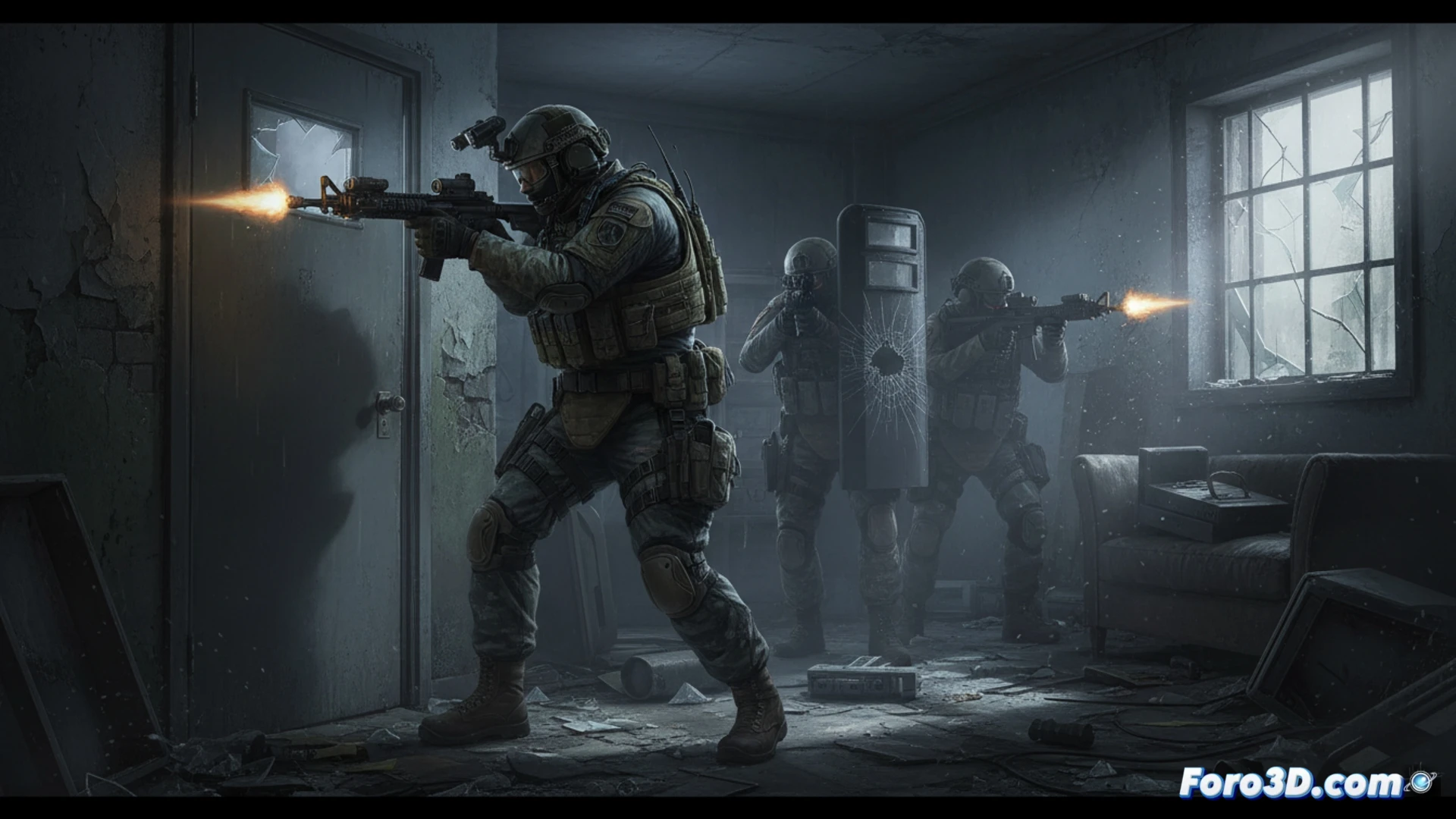
Technical Pipeline: Maya, Substance Painter, and 3ds Max 🛠️
The realism of the weapons in Ready or Not is no coincidence; it is the result of a meticulous process in Autodesk Maya. Modelers focus on high-resolution geometry to capture every screw and mechanism of real firearms. Subsequently, these assets are imported into Substance Painter, where multi-layer materials and procedural wear are applied to mimic real tactical use. For scene construction, the team uses 3ds Max, optimizing level geometry to support Unreal Engine 4's dynamic lighting without sacrificing detail in ballistic equipment textures, such as vests and helmets.
Dynamic Lighting and Player Immersion 💡
The true magic of Ready or Not lies in how dynamic lighting interacts with hyper-realistic materials. Tactical flashlights cast sharp shadows that reveal surface roughness, while reflections on visors and holographic sights respond to the environment in real-time. This level of detail is not just aesthetic but functional: it forces the player to read the environment as a real operator would, where a glint in a pool of blood or the texture of a door can be the difference between life and death.
As a developer, what key technical lessons from Ready or Not regarding lighting and materials in Unreal Engine 4 do you consider indispensable for achieving tactical photorealism without sacrificing performance in complex scenarios?
(PS: game jams are like weddings: everyone is happy, no one sleeps, and you end up crying)