The Razer Kraken V4 Pro arrives on the market as an enthusiast-grade wireless headset promising total immersion. Its offering includes a control station with an OLED screen and Sensa haptic vibration technology. For a 3D modeling and rendering professional, the key question is not just whether it sounds good, but whether these technical features can be integrated into a productive workflow.
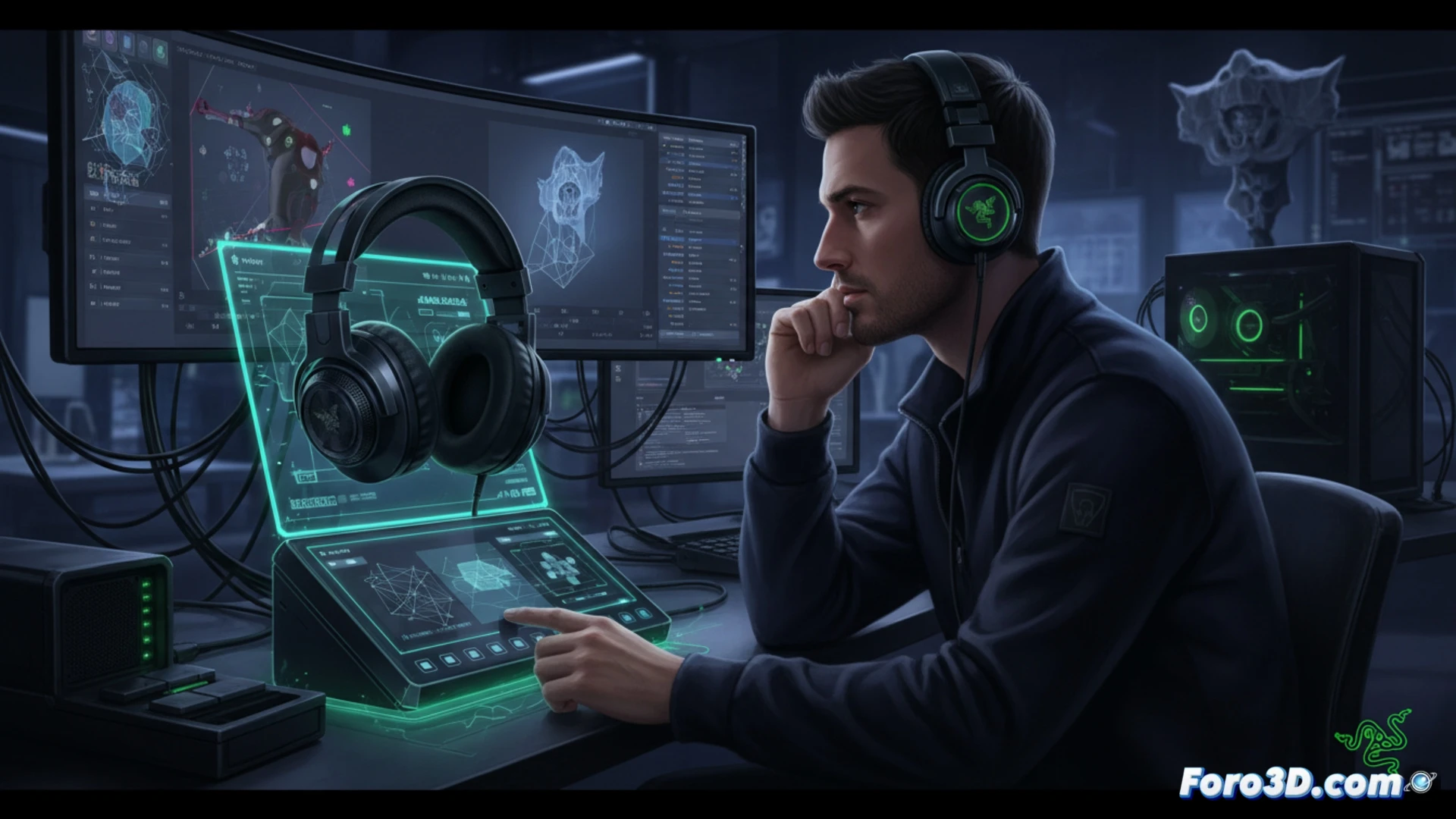
Technical analysis: OLED station and Sensa haptics in rendering 🎧
The OLED control station is the most interesting point for a 3D user. It allows real-time monitoring of volume, equalization profile, and crucially, battery status without interrupting the viewport. During long rendering sessions, being able to quickly switch between audio profiles (for example, to isolate GPU or fan noise) from a physical interface is an advantage over software menus. The Sensa haptic vibration, on the other hand, offers tactile feedback that can be useful in assembly simulations or when reviewing collisions in animations, but its implementation in standard modeling software (Blender, Maya, 3ds Max) is non-existent out of the box. It works best in games or virtual reality environments.
Are they suitable for the 3D professional? 🖥️
Compared to reference headphones like the Beyerdynamic DT 990 Pro, the Kraken V4 Pro sacrifice flat audio precision for extra features. For a professional who needs to hear exact frequencies when editing sound for animation, these are not the best choice. However, for an artist who works long hours and values wireless comfort, OLED monitoring, and haptic isolation, the V4 Pro becomes a versatile desktop companion. It is not a replacement for studio monitors, but rather a high-end peripheral for intensive work sessions where immersion and quick control matter more than acoustic neutrality.
Can a headset designed for gaming, like the Razer Kraken V4 Pro, offer a real advantage in 3D modeling or rendering tasks, beyond simple ambient audio playback?
(PS: remember that a powerful GPU won't make you a better modeler, but at least you'll render your mistakes faster)