The Razer Kiyo Pro Ultra promises to revolutionize desktop capture by integrating the Sony Starvis 2 sensor, the largest in its category. This webcam aims to deliver natural bokeh and image quality that rivals a DSLR. For 3D professionals, the question is clear: can this hardware replace a dedicated camera for capturing references, textures, or performing real-time facial scanning? We analyze its technical viability. 🎥
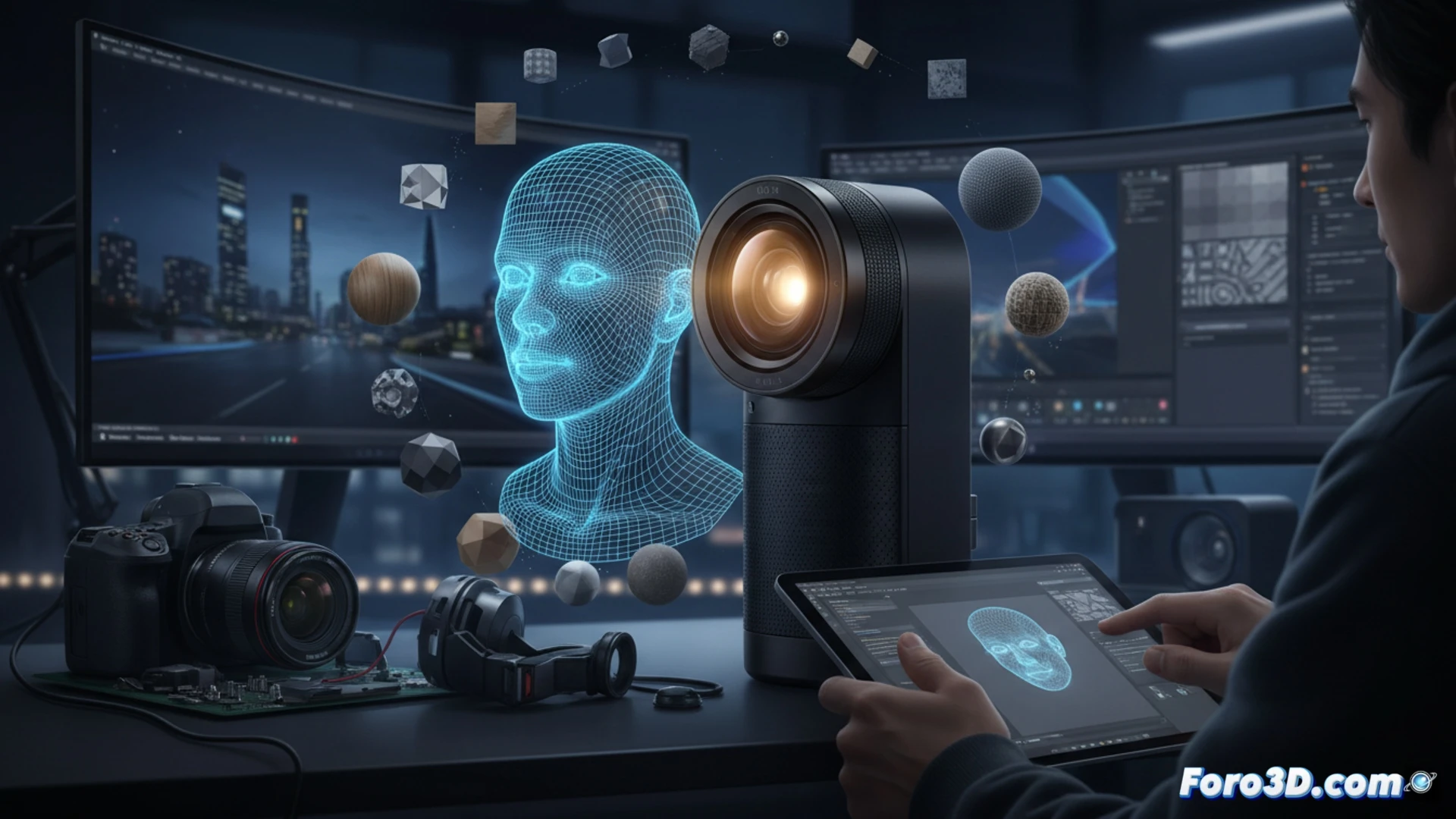
Sony Starvis 2 sensor and natural bokeh: Technical performance vs. DSLR 🔬
The heart of the Kiyo Pro Ultra is the 1/1.2-inch Sony Starvis 2 sensor, an unusual size for a webcam that allows it to capture more light and detail. This translates into real optical background blur, without relying on artificial portrait algorithms that often fail with complex objects. For a 3D modeler, this feature is key: it allows isolating the presenter or reference object from the background without digital artifacts. However, while image quality approaches that of an entry-level DSLR under controlled lighting conditions, it lacks the versatility of interchangeable lenses. For capturing flat textures or high-fidelity references for photogrammetry, a DSLR remains superior in resolution and edge sharpness. But for technical video conferencing, streaming live workflows, or facial capture for basic rigging, this webcam offers minimal latency and a depth of field that no direct competitor matches.
Real improvement for a 3D artist's workflow? 🎨
The Razer Kiyo Pro Ultra does not replace a mirrorless camera for professional scanning work, but it does close an important gap. Its real value lies in consistency: by offering natural bokeh without software processing, it eliminates the distraction of noisy backgrounds during project reviews or live tutorials. For an artist who needs to show wireframes or mesh details without the background competing visually, this camera is a solid tool. If you're looking for an all-in-one solution for communication and light reference capture, the Sony Starvis 2 justifies its price. For high-precision scanning, stick with your reflex camera.
How could the Sony Starvis 2 sensor of the Razer Kiyo Pro Ultra improve the accuracy of texture and detail capture for 3D models compared to a traditional webcam or a conventional DSLR camera
(PS: RAM is never enough, like coffees on a Monday morning)