The simulation of trajectories in virtual environments has reached an unprecedented level of detail, allowing the analysis of human movement beyond simple locomotion. Barefoot gait tracking has become a critical field, where the absence of footwear eliminates artificial cushioning, exposing the pure biomechanics of the foot. This article explores how 3D technologies enable capturing, visualizing, and reconstructing these movement paths for forensic and training applications.
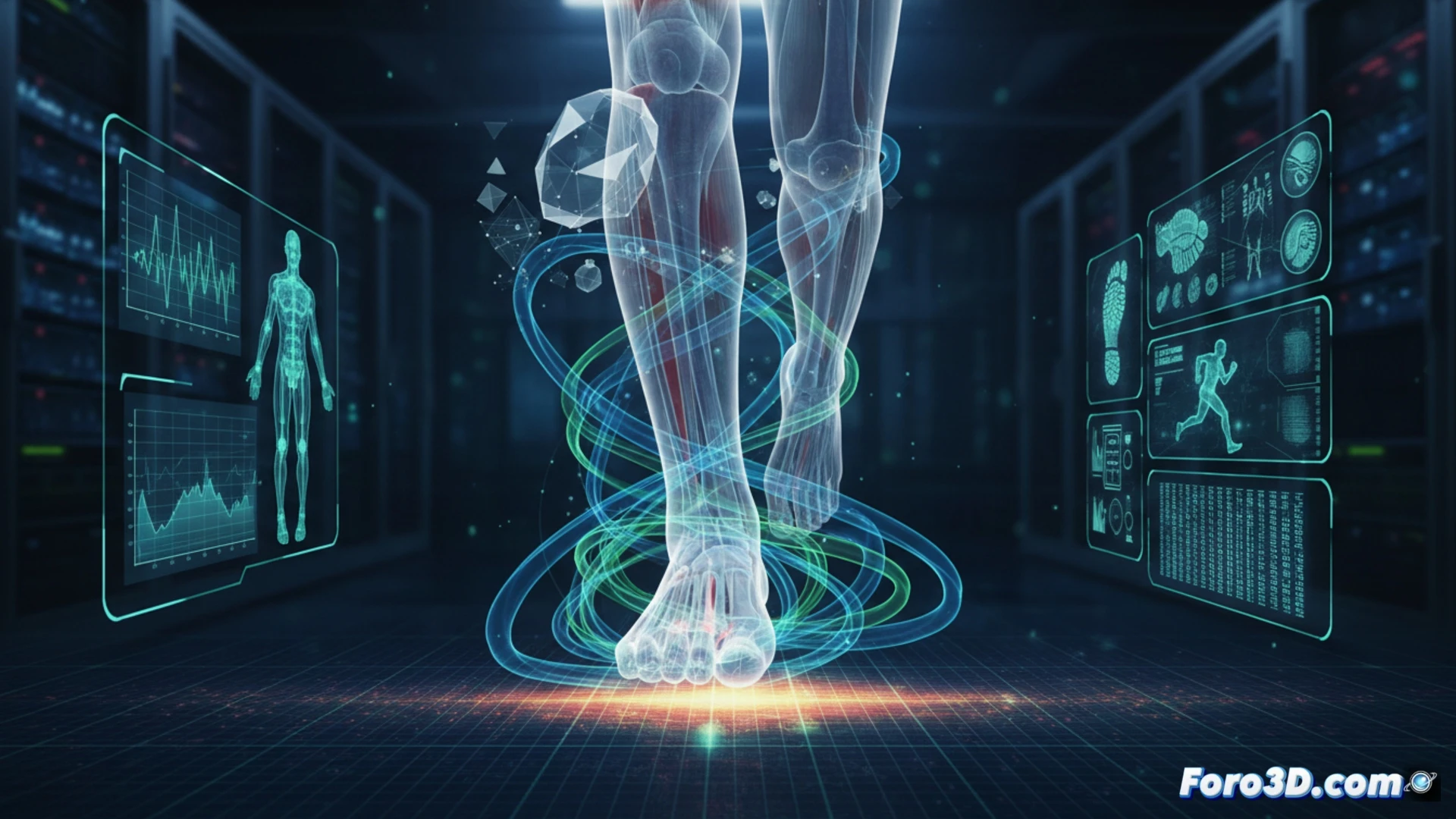
Motion Capture and Footprint Reconstruction 🦶
The main technique for barefoot gait tracking combines optical motion capture systems with plantar pressure sensors. Reflective markers placed on anatomical points of the foot allow infrared cameras to record the three-dimensional kinematics of each step. In parallel, force platforms and instrumented insoles capture pressure distribution, generating a thermal map of the footprint. 3D simulation software processes this data to create a kinematic model that reproduces the exact trajectory of the heel, arch, and toes, enabling visualization of the stance and swing sequence in real time.
The Digital Footprint and the Narrative of the Ground 🗺️
Beyond technical precision, 3D barefoot gait tracking allows reconstructing an invisible narrative: the interaction between the foot and the surface. Each variation in footprint depth, each deviation in the trajectory, reveals information about the subject's speed, load, and intention. This technology transforms the ground into a digital canvas of data, where the trail of a barefoot person not only marks a path but tells the story of their effort, balance, and response to the virtual environment.
How does the absence of footwear affect the precision of virtual trajectories generated by 3D barefoot gait tracking in simulated environments?
(PS: Simulating trajectories is like playing billiards, but without having to clean the table afterwards.)