Rare Flavours, a work by Ram V and Filipe Andrade, features a demon chef traveling through India in search of pure flavors. Beyond the narrative, the comic is a digital art experiment where textured watercolor and a warm palette seek to activate the reader's palate. This article analyzes how digital tools manage to translate taste and smell into a visual language, exploring synesthesia as a technical resource in contemporary comics.
Rendering and texturing techniques for sensory evocation 🎨
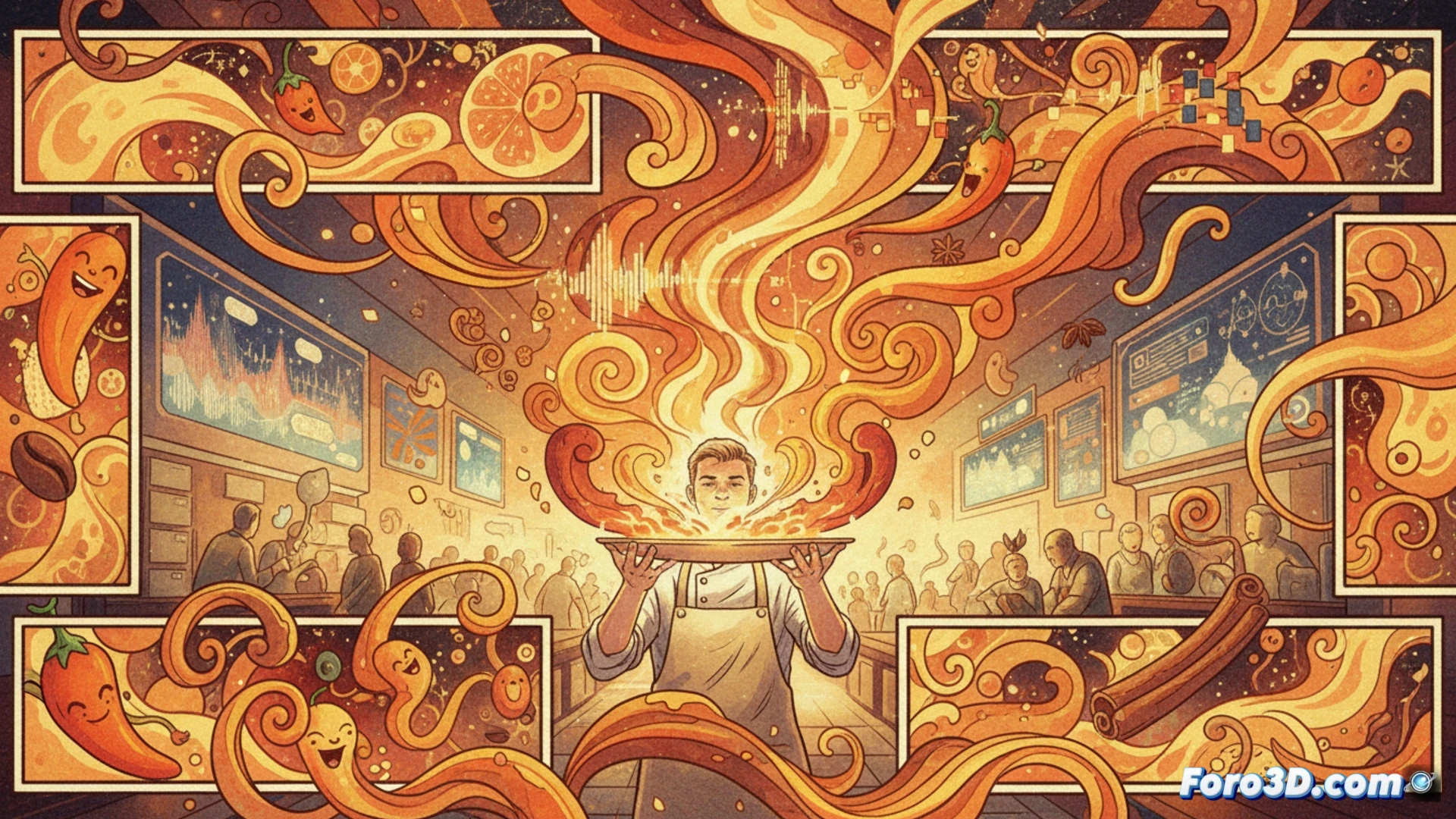
Filipe Andrade uses a digital art process that simulates organic watercolor through textured brushes and layers of transparency, avoiding the hard outlines typical of vector art. The color palette, dominated by ochres, reds, and golds, not only sets the scene in India but also generates a visual temperature that the brain associates with spices and heat. Unlike works such as Anthony Bourdain's Flavor in digital format, Rare Flavours employs controlled blurring and grainy overlays that mimic the roughness of ingredients like cardamom or turmeric. This technique, close to textured 3D in its pursuit of volume, allows each panel to function as a visual tasting note, where the background fades to prioritize the texture of the edible object.
Activism of the senses in the digital age 🌶️
Rare Flavours engages in digital activism by reclaiming cooking as intangible cultural heritage. By using digital watercolor techniques that mimic the imperfection of paper, the work challenges the cold aesthetic of AI-generated imagery. This artisanal approach within the digital medium is a political act: it defends slowness, error, and warmth in the face of immediacy. Thus, the comic not only narrates a demon's quest but also demonstrates that digital art can be a vehicle for preserving and transmitting complex sensory experiences, turning the screen into a canvas capable of smelling and tasting.
As a digital artist, how could I translate the sensory synesthesia of Rare Flavours into an interactive experience that explores the tension between Indian culinary tradition and the aesthetic of politicized digital art?
(PS: at Foro3D we believe all art is political, especially when the computer freezes)