The radiology profession faces a critical paradox: it uses cutting-edge technology to diagnose, yet its own health is exposed to severe cumulative risks. Exposure to ionizing radiation, strain from mobilizing patients, forced postures during interventional procedures, diagnostic stress, biological risk from fluids, and visual fatigue are constant threats. However, the revolution of 3D biomedicine offers concrete solutions to mitigate these dangers at their root.
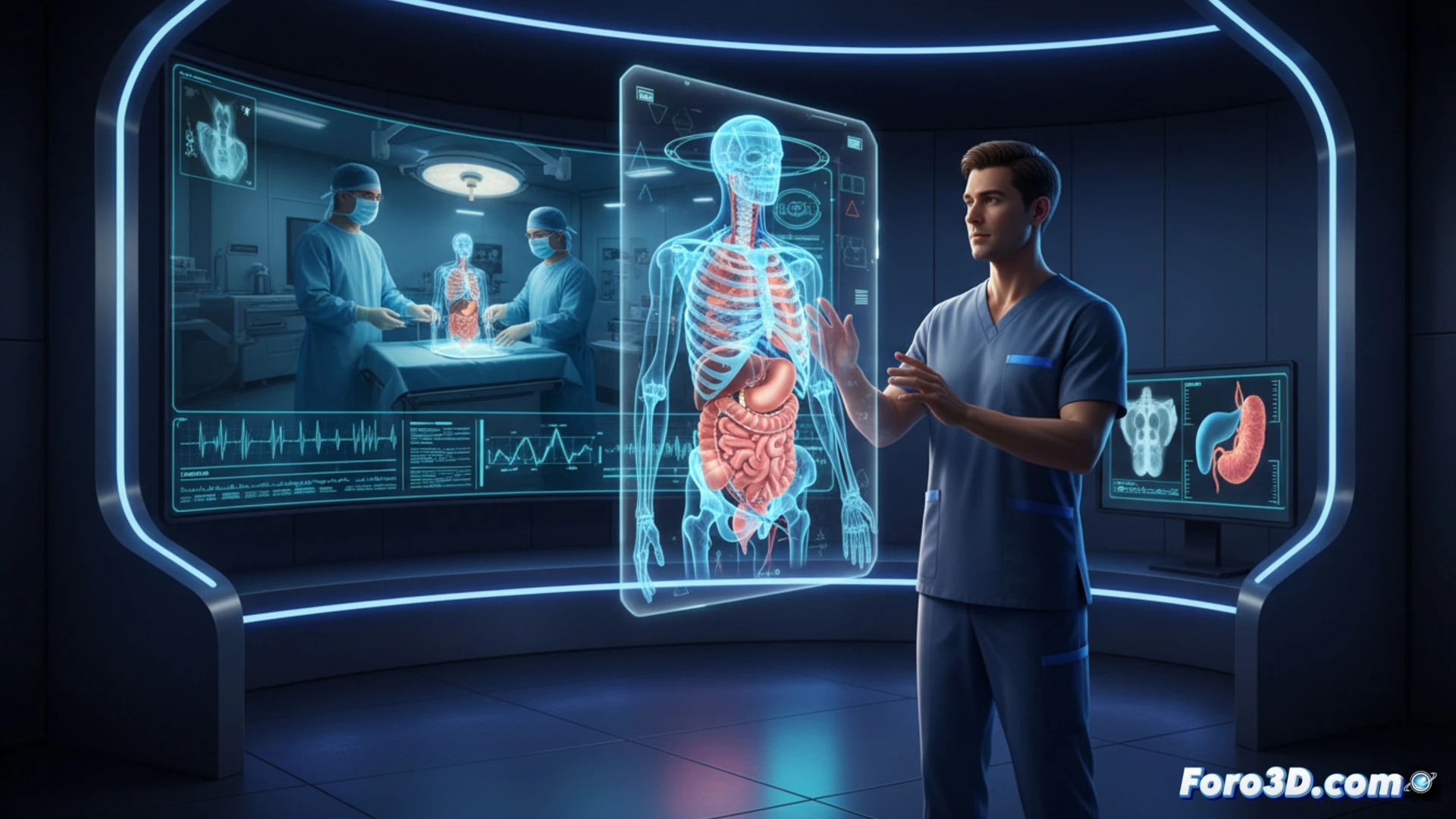
Virtual ergonomics and dose reduction through 3D simulation 🩻
Physical and radiological risks can be drastically minimized with 3D anatomical models and virtual reality. Instead of performing multiple tomographic scans to confirm a trajectory, the radiologist can plan interventions on a digital twin of the patient, reducing exposure to ionizing radiation by up to 40% in certain procedures. Furthermore, prior simulation of patient mobilization or vascular access in a virtual environment allows the specialist to rehearse optimal ergonomic postures, avoiding the strain and forced positions that cause chronic musculoskeletal injuries.
3D screens and safer workflows 🖥️
Visual fatigue and stress from diagnostic overload also find relief in 3D visualization. Optimized three-dimensional dashboards allow the radiologist to navigate data volumes with fewer repetitive eye movements, reducing eye strain. At the same time, 3D printing of vascular or tumor models facilitates collaborative surgical planning, decreasing the pressure for quick interpretations. The result is a work environment where technology not only saves patients but also protects the professional who diagnoses them.
As a radiologist, when implementing 3D printing to plan interventions, what specific safety protocols should be followed to minimize radiation exposure during the digitization process of medical images?
(PS: If you 3D print a heart, make sure it beats... or at least that it doesn't cause copyright issues.)