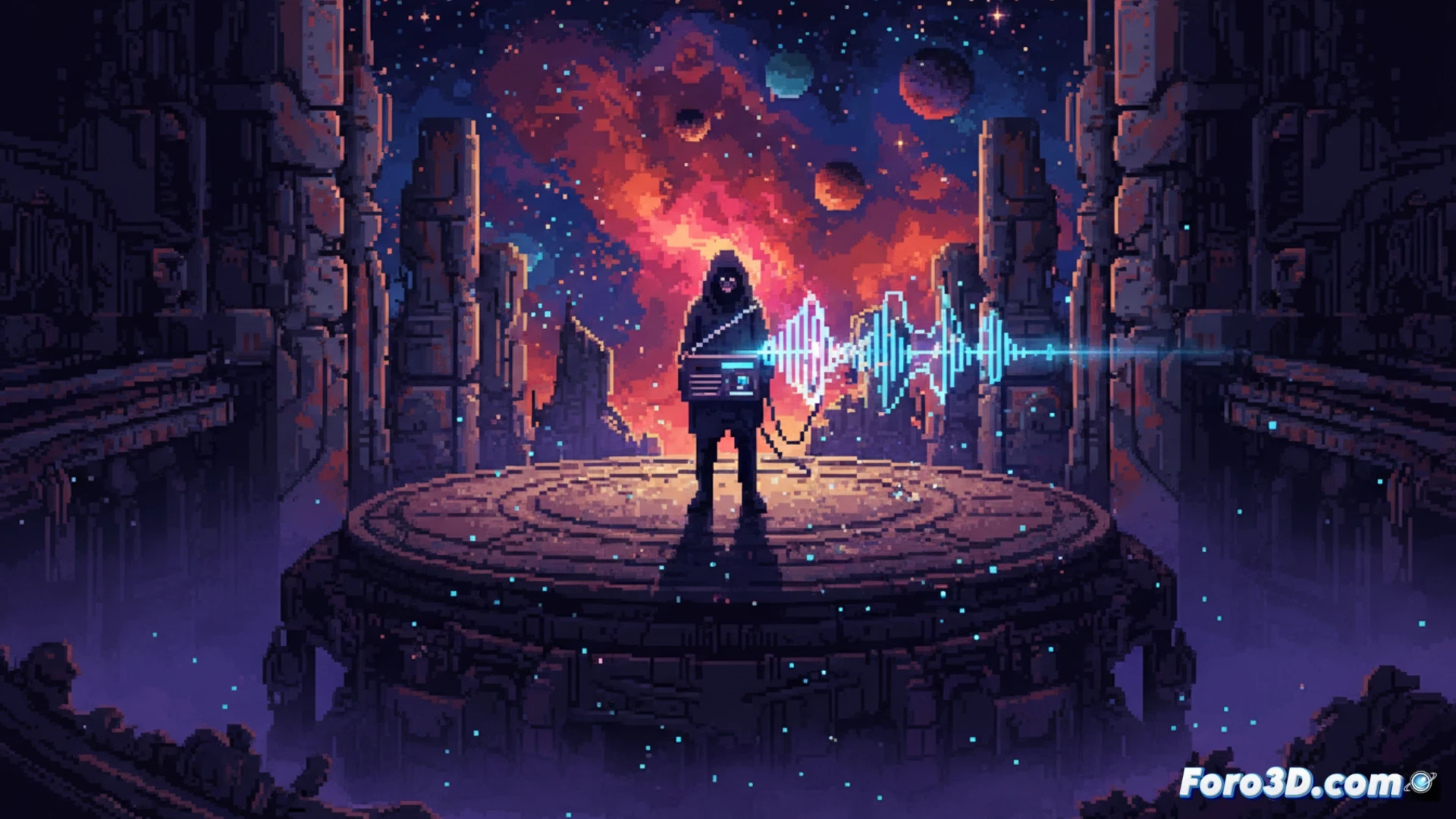
Radio the Universe is an indie title that demonstrates how a custom engine in C# with MonoGame can elevate pixel art to a higher technical level. The game stands out for its dynamic lighting calculated pixel by pixel, transforming static scenes into melancholic and futuristic atmospheres. Far from relying on commercial engines, its team has opted for absolute control over rendering, achieving animated backgrounds that react to light and generate an unusual depth in two-dimensional art.
The technical pipeline between Photoshop and Aseprite 🎨
The artistic workflow of Radio the Universe combines two key tools. Photoshop is used for creating the base art, allowing detailed control over color palettes and high-contrast textures that define its cyberpunk aesthetic. Subsequently, these sprites are imported into Aseprite, where animations are refined frame by frame. The C# engine then applies a per-pixel lighting system that overlays layers of light and shadow in real time, a computationally intensive process that MonoGame handles efficiently. This separation of tasks allows artists to focus on visual design while the code takes care of the dynamic atmosphere.
The technical solitude of a custom engine ⚙️
The decision to use a custom engine with MonoGame is not trivial. It means giving up the conveniences of visual editors and pre-built physics in exchange for optimized performance tailored to a very specific artistic vision. In Radio the Universe, this choice is fully justified: the technical lighting and dynamic background animations are the soul of its visual narrative. For niche developers, this case demonstrates that when atmosphere is the cornerstone of the game, building from scratch with C# can be the most direct path to originality.
As an indie developer, what specific C# and MonoGame techniques did you use to achieve real-time dynamic lighting that interacts so organically with pixel art without sacrificing the visual coherence of the retro style.
(PS: game jams are like weddings: everyone is happy, no one sleeps, and you end up crying)