The fabrication of scaffolds for lung tissue in vitro has been a constant technical challenge. PyVoroGen addresses this problem through advanced 3D printing, achieving an architecture similar to alveoli. This technology allows reproducing the complex alveolar structure, facilitating regeneration studies and pharmacological tests in controlled environments.
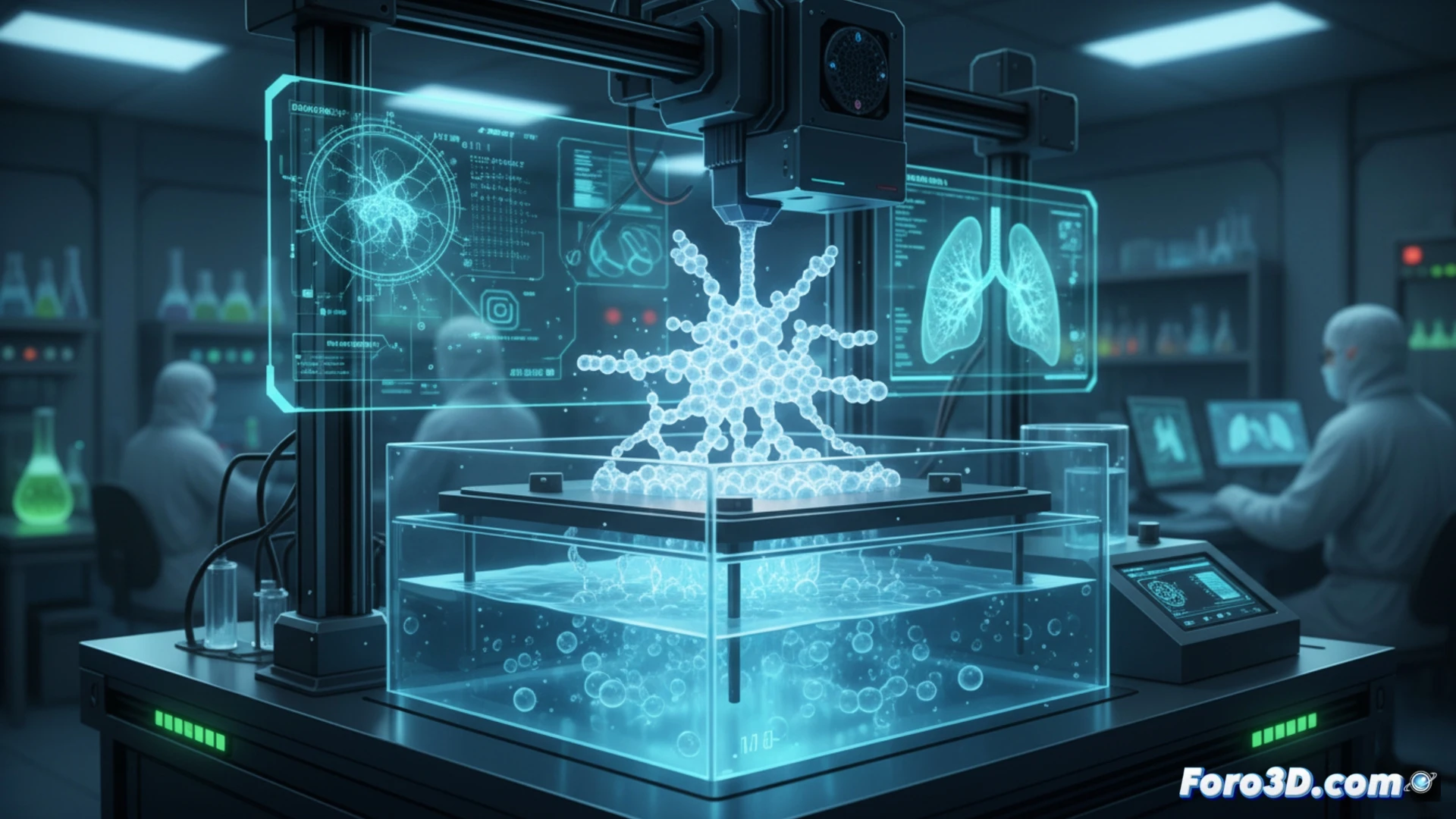
3D printing of functional alveolar microstructures
The system uses a combination of biocompatible hydrogels and photopolymerizable resins. Through a two-photon polymerization process, PyVoroGen generates interconnected pores of micrometric size. The resolution reaches 10 micrometers, replicating the geometry of alveolar sacs. The resulting scaffolds maintain cell viability for more than 30 days, allowing the formation of functional epithelial monolayers.
Your spare lungs will arrive in 2045 (or sooner, if the printer doesn't jam)
Meanwhile, PyVoroGen promises laboratory alveoli that don't cough or complain about traffic smoke. Of course, we'll have to wait for the printer to finish its work without the filament jamming, something that 3D printing users know well. For now, scientists can breathe easy: they have an alveolar model that doesn't need oxygen to keep working.