Alibi verification has taken a quantum leap. We no longer rely solely on witnesses or phone records; now, biometric and location data from a smartwatch can dismantle a politician's statement in minutes. The recent case of cross-referencing an alibi with a smartwatch log opens a fascinating technical and legal debate: can a consumer device become evidence for or against a case in a communication crisis 🕵️
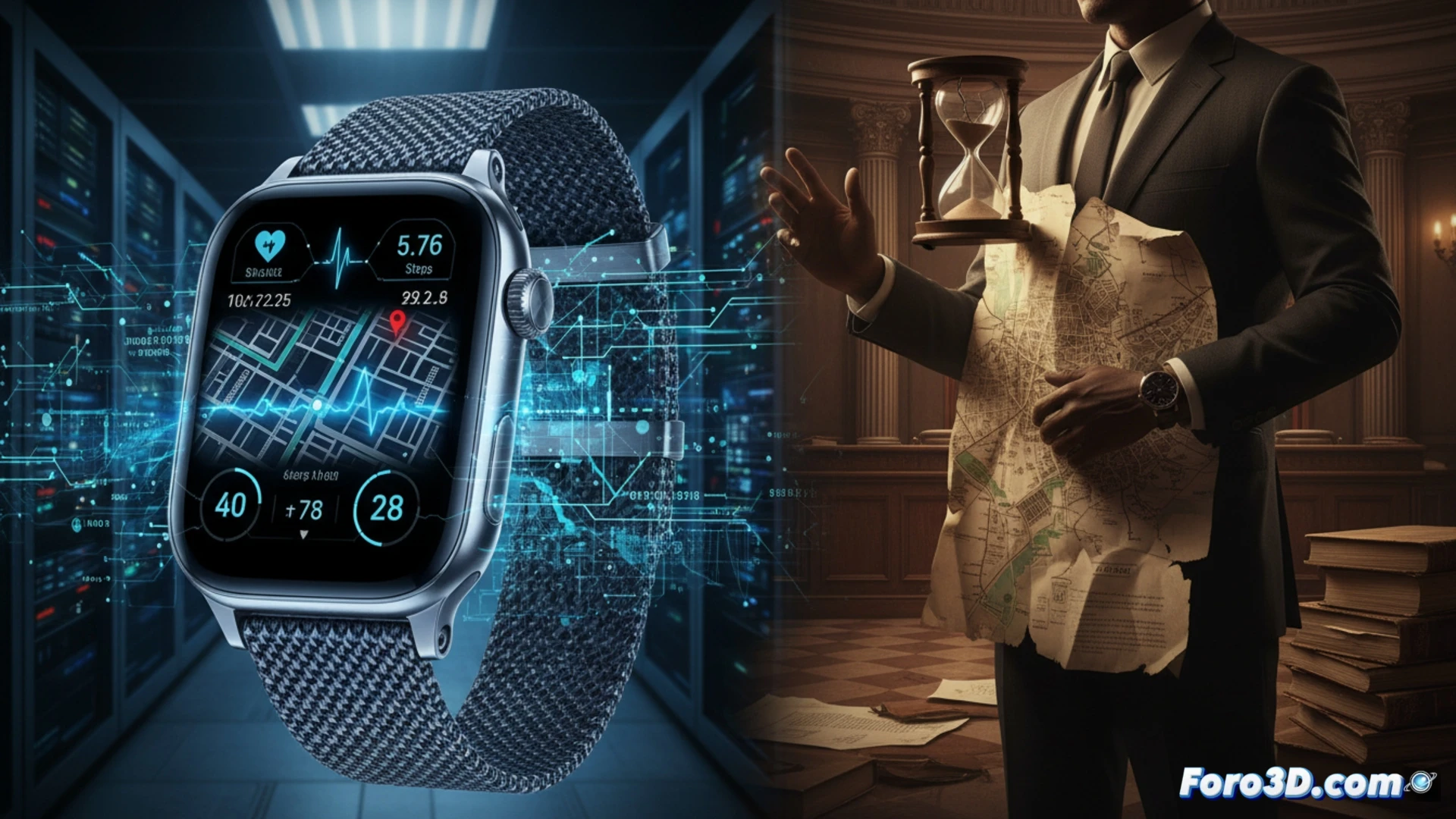
4D Reconstruction of Trajectories and Physiological Variables 🗺️
From a visual analysis standpoint, the key lies in synchronization. A smartwatch records GPS, heart rate, and accelerometry at intervals of seconds. By importing this data into 3D visualization software, we can reconstruct not only the person's geographic route but also their physiological state at each point. For example, a statement claiming rest at a residence can be refuted if the heart rate shows a peak of physical activity coinciding with the time of the event. Overlaying movement heat maps onto the timeline of an official statement allows for detecting inconsistencies with millimeter precision.
Between Digital Truth and the Right to Opacity ⚖️
However, the forensic use of these wearables faces critical limitations. Indoor GPS accuracy remains poor, and data can be manipulated if the device lacks a forensic chain of custody. Furthermore, an inevitable ethical question arises: to what extent is it legitimate to scrutinize the heartbeats and steps of a public figure to verify their word. In political communication, technology gives us powerful tools, but it also forces us to redefine the boundary between transparency and surveillance.
How smartwatches, by recording biometric and location data in real-time, can challenge the credibility of a political alibi and what legal implications their use as digital expert evidence has in high-profile media trials
(PS: analyzing political micro-expressions is like looking for inverted normals: everyone sees them, no one fixes them)