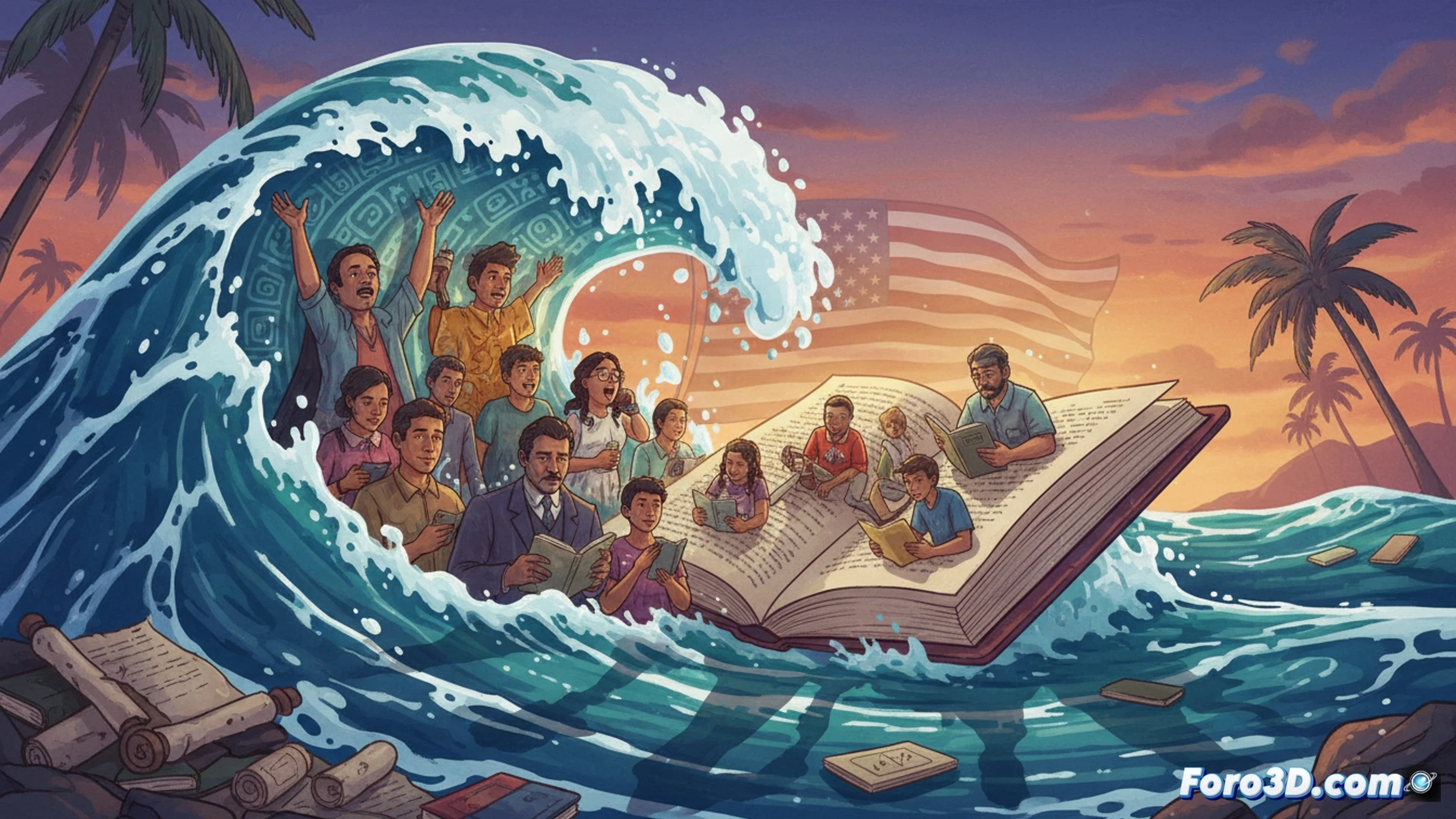
Puerto Rican literature exists, resists, and strikes with the force of a Caribbean wave, but outside the island it is often a ghost in publishing catalogs. From Eugenio María de Hostos to the raw verses of urban poets, there is a corpus that defies the logic of oblivion. Being a U.S. territory does not dilute the language; it sharpens it. To reclaim Puerto Rico is, above all, an act of linguistic and cultural affirmation that asks for no permission.
How the algorithm rewards silence and punishes the Boricua accent 📉
Digital distribution platforms and literary recommendation systems operate with market biases. A book written in Spanish from San Juan competes at a disadvantage against metropolitan titles because metadata and genre categories prioritize English and major publishing centers. The artificial intelligence that drives catalogs does not distinguish quality, but traffic volume. For a Boricua author, uploading a text to a global store is like shouting at a rock concert with a microphone turned off.
Bad Bunny and the prince of letters: same neighborhood, different algorithm 🎤
While Bad Bunny fills stadiums and breaks streaming records, the classics of Boricua literature remain a well-kept secret. It is curious: the whole world chants lyrics in Spanglish about perreo and heartbreak, but if you mention Luis Lloréns Torres, they look at you as if you were talking about a distant cousin. The paradox is that both speak of the same island. One bills millions, the other barely survives in pocket editions. That is how the market works: reggaeton sells; verses, not so much.