The Outer Port of A Coruña, known as Langosteira, represents a paradox of modern engineering: a 150-hectare giant of esplanade and a 3.3-kilometer breakwater that for years operated as an incomplete logistics system. Its initial lack of rail connection was not a simple oversight, but a structural burden that forced the 3D modeling of alternative road routes, revealing how a node without multimodal integration loses competitiveness before it even begins operations. 🚢
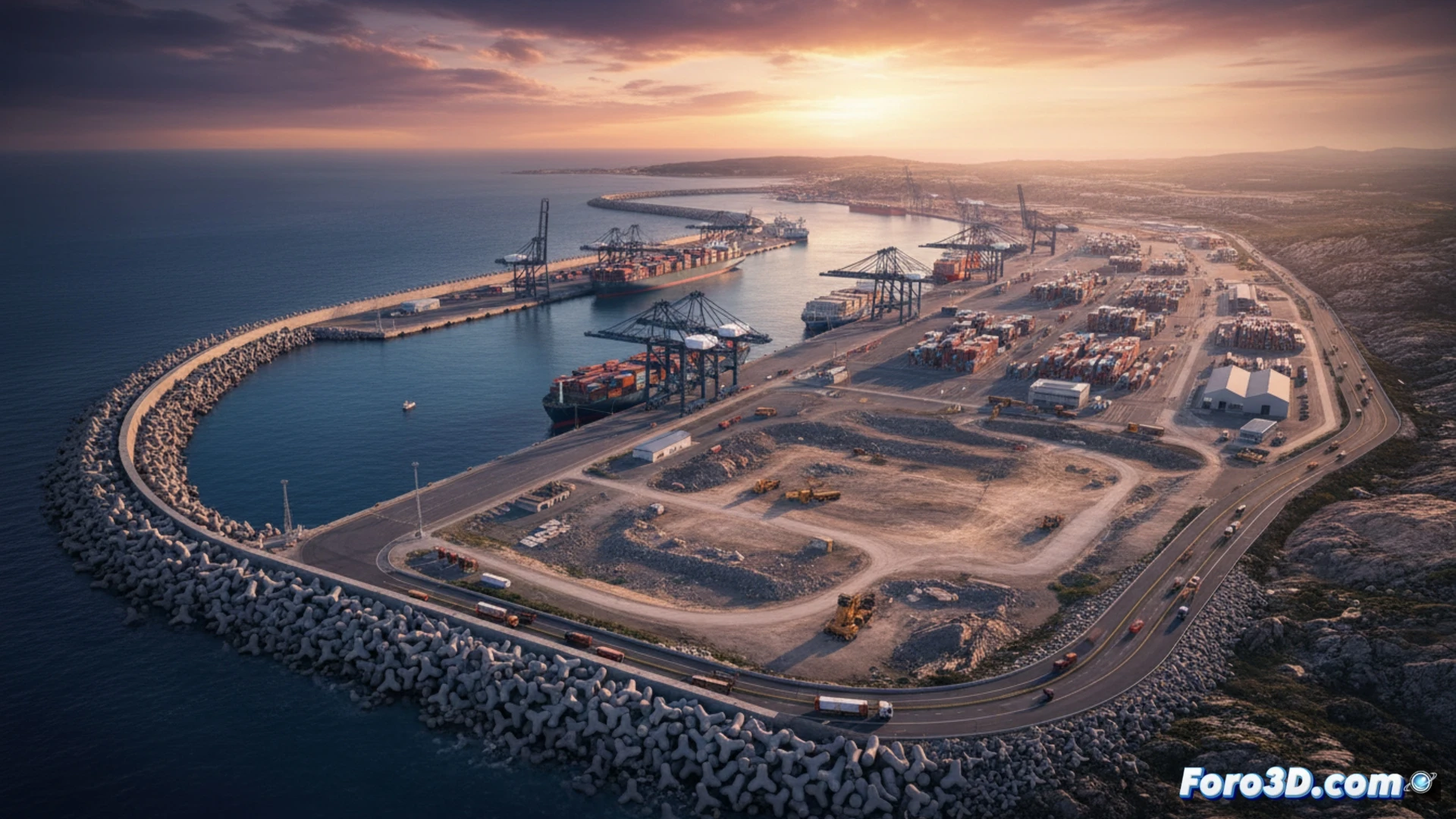
Flow simulation: The bottleneck of intermodality 🚛
When modeling the port in a 3D environment, the problem emerges with geometric clarity. Without rails, every container or solid bulk must travel via the AC-14 highway, a road of limited capacity that collapses during peak hours. Freight flow simulations show that truck transport increases logistics costs by up to 30% compared to the rail option, while also generating a larger carbon footprint. Technical visualization allows comparing the current layout, where docks discharge their cargo directly onto the road network, against the future project with a railway siding, where 750-meter trains would absorb 40% of heavy traffic, decongesting the southern entrance to the city.
Lessons for modular infrastructure design 🏗️
Langosteira teaches us that a mega-project is not just concrete and dredging; it is a system of connected nodes. The lack of railway foresight transformed a deep-water port into a high-performance but low systemic efficiency coastal warehouse. For the 3D industry, this case is a reminder that supply chain simulation must integrate every mode of transport from the design phase, or else the perfect model on screen becomes a traffic jam in reality.
Considering that Langosteira moves 3.5 million tons annually without a rail connection, how does the 3D industry justify investment in logistics infrastructure when the absence of rails triples the land transport costs of raw materials such as polymers and resins?
(PS: at Foro3D we optimize routes like we optimize polygons: until the computer says enough)