The 2026 Audi RS 6 Avant, priced at $158,865, was tested in rural Virginia to verify its adaptability beyond the urban asphalt of Los Angeles. This trial reveals the limitations of a high-performance wagon that, according to industry reports, will no longer be manufactured due to a lack of interest in an electric version. Its disappearance marks the end of an era for pure combustion vehicles in a market dominated by hybrid alternatives.
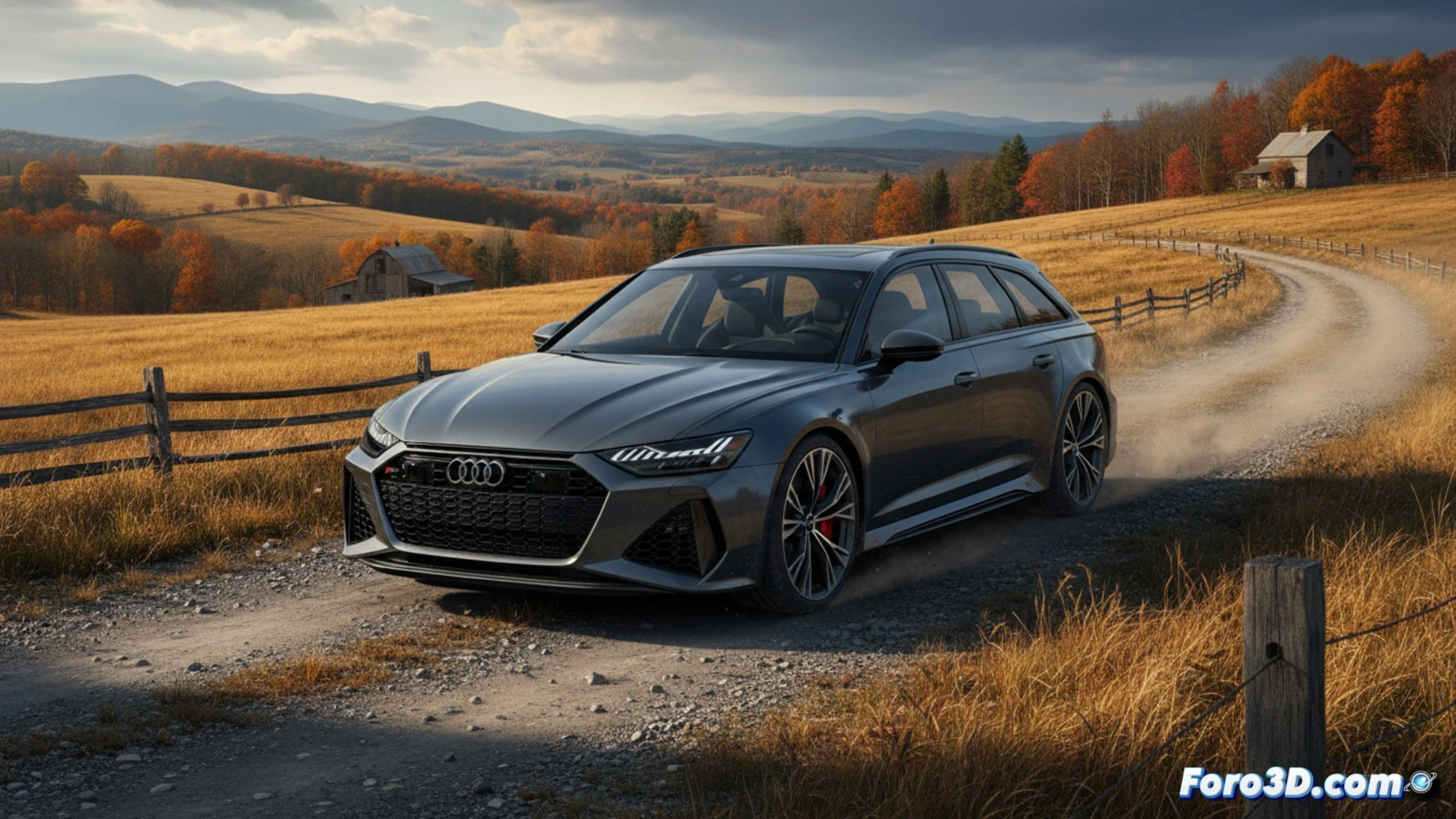
Technical development and terrain adaptation 🚜
Under the hood, the 4.0-liter twin-turbo V8 engine delivers 621 horsepower, paired with an eight-speed automatic transmission and Quattro all-wheel drive. On Virginia's gravel and mud roads, the adaptive air suspension showed excessive stiffness, while the low-profile tires lost traction on loose surfaces. The carbon-ceramic braking system, designed for high speeds, proved sensitive on uneven terrain. The technology is not intended for the countryside, but for devouring highway miles.
The SUV that wanted to be a tractor and couldn't 🐔
When attempting to transport a load of hay in the rear, the RS 6 Avant demonstrated two things: that the trunk is ideal for designer suitcases, not hay bales, and that the sport exhaust scares the chickens in the neighboring farmyard. The driver, dressed in borrowed work clothes, received confused looks from local farmers, who couldn't understand why anyone would spend $158,865 on a wagon that can't tow a tractor. A reminder that some vehicles are specialists in their natural habitat: the city.